By Kunal Sinha
There is a new rule circulating quietly through the most creative marketing departments in the world: if you fear that your campaign will be ignored, manufacture something that cannot be. The influencer gets scrolled past. The pre-roll gets skipped.
But a capybara plushie named Chiket who carries a KFC bucket on his back? That sits on a desk for six months, reminding its owner every single day who made them laugh.
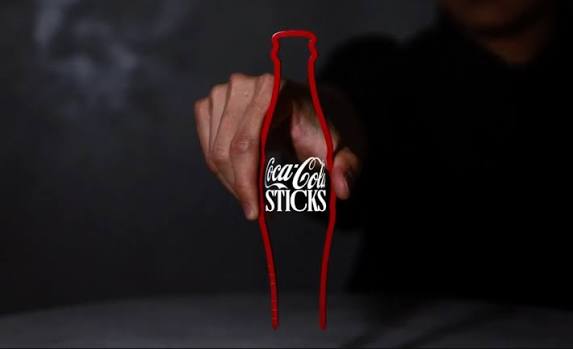
This is Product-vertising, the deliberate creation of a new product not to extend a business line, but to do the job that advertising used to do.
Heinz put a bottle of ketchup inside a Heineken six-pack for the World Cup. McDonald’s Turkey built a gaming controller that lets players order food without going AFK. Heinz gave McDonald’s France fry boxes a dedicated ketchup pocket. These are not product launches. They are ideas that happen to be objects.
The practice is gaining sharp momentum across Southeast Asia, where brands have discovered that a consumer market fluent in social media, collectibles culture and value-for-money psychology is unusually receptive to objects that carry story, scarcity, and shareability in equal measure.
Malaysia’s Plushie Economy
No market in the region has leaned into Product-vertising quite as enthusiastically as Malaysia, where 2025 went down in marketing history as the Year of the Plush. At least 35 brand campaigns anchored by plush toys were tracked between April and December 2025 alone. It’s a figure that speaks to something deeper than a fad.
KFC Malaysia launched Kepcibara in July 2025, a trio of 3.5-inch capybara plushies named Chiket, Buck Buck, and Zingi, each with a distinct character and backstory, available exclusively in a blind box format with every Bucket Berbaloi meal purchase for RM15.99.
The brilliance of the execution lies in the layers. The blind box format, borrowed from the Pop Mart generation of collectors, turns every meal into a game of chance.
The characters have lore – escaped zoo animals who fell helplessly in love with the smell of fried chicken – giving parents something to narrate to children and giving content creators something to unbox.
The campaign leaned into character-driven storytelling to strengthen KFC’s emotional connection with younger fans and families, with creators deployed to release unboxing content that seeded organic reach before the product hit shelves.
ZUS Coffee, Malaysia’s homegrown challenger coffee chain, has been running a parallel plushie strategy across multiple product iterations. From June to July 2025, ZUS ran a promotion releasing six distinct ZUS Buddy plushies – one per week, at random – with a minimum RM25 spend on handcrafted beverages.
The staggered weekly release was a masterclass in repeat-visit engineering: each week’s character creates a new reason to return, and the randomised allocation drives the kind of “which one did you get?” conversations that no media buy can replicate.
By December, ZUS had evolved the format into the ChubbyBara Plushie Blanket, a plushie that unfolded into a functional blanket, available exclusively via the ZUS app, strictly one per user. A product that was simultaneously merchandise, loyalty mechanic, and social object.
Gong Cha Malaysia’s 14th anniversary campaign took the product conceit in an irreverently brilliant direction: four plushies inspired by music superstars, released weekly from June to July 2025, each named as a punning pop culture homage – Brownie Mars, Berry Eilish, Boba Marley, and Taro Swift. The naming alone generated social conversation without a single paid media impression.
Available as a purchase-with-purchase at RM20 per plushie, the campaign also ran RM7 Friday specials and a cashback challenge called “Make 14 Lucky”, a fully integrated 360-degree celebration structured around the collectibles as its emotional core.
At Ampersand Advisory, we took a more narrative approach for Resorts World Genting, introducing Tian Ma as a new character in its Highland Heroes family, releasing limited-edition plush toys exclusively to Genting Rewards members via redemption.
But rather than stopping at merchandise, Tian Ma was woven into an immersive brand film and deployed across Genting SkyWorlds’ Immersive Studio, turning a product object into the anchor of an entire storytelling ecosystem.
The pattern across all these campaigns is consistent: the product is not a giveaway. It is the campaign.
Singapore: Fashion Meets Functionality
In Singapore, UNIQLO partnered with local kopi culture for a limited-edition collaboration that let shoppers customise T-shirts in-store for the first time, with limited-edition keychains as collectible keepsakes, merging fashion, heritage, and foodie identity into a single transaction. The product served the campaign’s cultural brief with more precision than any poster could.
Meanwhile, Coca-Cola and OREO executed a mutual Product-vertising exchange: OREO released cookies with a creamy filling and popping candy to mimic drinking Coca-Cola, while Coca-Cola released a zero sugar drink with flavour hints inspired by OREO cookies. Each product was essentially the other brand’s campaign delivered in edible form.
Thailand: Honda Invents a New Product to Solve a Real Problem
The most functionally intelligent piece of Product-vertising in the region in 2026 came from an unexpected source. Honda Thailand, in partnership with Dentsu Thailand, launched the Inner Cap, a hygienic liner worn beneath shared motorcycle taxi helmets, distributed free at motorcycle taxi hubs across Bangkok from February to May 2026.
The insight behind it was arrived at through rigorous research rather than creative instinct. An online survey of 100 people and in-depth interviews with 20 respondents found that passengers’ reluctance to wear helmets was driven less by inconvenience than by the hygiene of sharing a helmet passed between dozens of strangers each day.
Honda did not run a road safety ad. Honda manufactured a solution to the precise barrier standing between the audience and the behaviour the brand wanted to encourage.
“Road safety can only happen when there is a helmet on a head, and what we have learnt is that people do not make unsafe choices because they do not care, but rather that the safe choice has a barrier in the way,” said Suphot Phonphongkhachon, General Manager, Traffic Safety Promotion, Thai Honda. The Inner Cap is both the product and the proof.
The Underlying Logic
What unites Kepcibara and the Inner Cap, Taro Swift and the Heinz ketchup pocket, is a single strategic insight: the most effective advertising of the 2020s does not describe a brand’s value. It embodies it in an object that consumers choose to keep, share, or seek out.
The shift matters because attention is now a scarcer resource than media inventory. A 30-second spot competes with everything the internet contains. A blind box plushie with a lore-rich character and a name like Zingi competes with nothing, because nothing else is quite like it.
Southeast Asian consumers – young, social-media-native, trained by Pop Mart and Labubu to understand the value of limited-edition collectibles – are particularly well-primed to receive this form of marketing not as advertising but as culture.
The brands winning here are asking a different question at the start of the creative process. The old question was: what should we say? The new question is: what should we make?
Kunal Sinha is Chief Knowledge Officer at Ampersand Advisory, based in Kuala Lumpur, Malaysia. He is the author of several books including The Future of India’s Rural Markets and Raw – Pervasive Creativity in Asia and a recent winner of Campaign Asia’s 50over50 award.
Share Post:

The APPIES is where Malaysia’s boldest campaigns, brightest ideas, and most impactful storytellers take the stage.
More than an awards show, it is the industry’s ultimate platform for creative, media, digital and marketing excellence, where live presentations meet live judging.
This is your chance to showcase work that moved audiences, shaped conversations, and delivered real results.
From breakthrough brand campaigns to innovative digital experiences, the APPIES celebrates the work that defines the future of marketing.
Step into the spotlight alongside the industry’s leading agencies, brands, creatives, strategists and changemakers.
Whether you are aiming for Gold, Silver, Bronze or the prestigious Best of the Best recognition, this is your moment to make history.
Your campaign deserves to be seen.
Your ideas deserve the stage.
Your work deserves the legacy.
KEY DATES
Haven’t subscribed to our Telegram channel yet? Don’t miss out on the hottest updates in marketing & advertising!