

One minute, the global advertising industry is celebrating trillion-dollar ad spend forecasts. The next, oil tankers are stalled in the Strait of Hormuz, stock markets wobble, and CFOs begin sharpening their knives.
If that sounds dramatic, welcome to modern marketing.
For years, advertisers have behaved as if tomorrow will look suspiciously like yesterday. Annual media plans. Predictable festive spikes. Stable consumer sentiment. Quarterly confidence. A neat PowerPoint universe where assumptions stay obedient and plans unfold according to schedule.
But somewhere between pandemics, wars, inflation, tariffs, political upheavals, AI disruption, and climate shocks, one uncomfortable truth has emerged:
Business as usual is no longer usual. Yet much of Malaysian marketing still behaves as if stability is guaranteed. That may be the most dangerous fantasy in the room.
Hormuz Is Closer Than You Think
The average Malaysian marketer may not spend much time worrying about the Strait of Hormuz. It is, after all, thousands of kilometres away.
But when oil tankers stall there, Malaysia feels it.
Energy prices shift. Supply chains tighten. Consumer confidence softens. Inflation anxieties quietly creep back into WhatsApp groups and mamak conversations.
Suddenly, consumers begin delaying car purchases, trading down at supermarkets, rethinking holidays, and watching every ringgit more carefully.
When uncertainty rises, advertising budgets are often among the first casualties.
It happens with almost mechanical predictability.
Marketing teams begin hearing familiar phrases in boardrooms:
“Can we pause this for now?”
“Let’s revisit in Q4.”
“What’s the immediate ROI?”
“Do we really need this campaign?”
The irony, of course, is that uncertain times are often when brands should become more visible, not less. History repeatedly shows that brands maintaining visibility during downturns often emerge stronger when confidence returns.
But fear has a habit of making short-term caution feel sensible.
Especially when finance enters the conversation.
The warning signs are already visible in Malaysia.
Many advertisers are quietly navigating a cocktail of anxieties: subsidy rationalisation, rising operating costs, currency fluctuations, global trade tensions, and increasingly cautious consumers.
Retail brands are watching discretionary spending nervously. Automotive marketers are confronting affordability concerns. Property players are discovering that hesitation has become a permanent consumer behaviour rather than a temporary mood.
Even fast-moving consumer goods brands, traditionally resilient, are seeing shoppers scrutinise every purchase more carefully than they did just a few years ago.
Then comes AI.
Today’s CMO is not merely competing for attention. They are also being asked to justify headcount, automation investments, media efficiency, and whether artificial intelligence can somehow make marketing cheaper, faster, and infinitely measurable.
That pressure creates dangerous instincts.
Because during uncertain periods, organisations often retreat into performance marketing. Clicks become king. Short-term conversions become religion.
Brand-building suddenly feels like a luxury to be postponed until “things improve”.
But this is where panic often disguises itself as prudence.
The End of Predictable Marketing
Here is a quietly radical thought:
The annual marketing plan may already be obsolete.
In a world where geopolitics can reshape fuel prices overnight, tariffs can rewrite supply chains, and consumer moods swing unpredictably, planning twelve months ahead with rigid certainty feels oddly nostalgic.
The future belongs to marketers who can move.
Quickly. Adaptively. Intelligently.
Instead of static campaigns locked six months in advance, brands may need more flexible systems with campaigns built to bend according to economic sentiment, cultural mood, or unexpected disruptions.
Think of it less like a railway track and more like jazz.
There is still strategy. But there is also improvisation.
Malaysian marketers, in particular, may need to rethink their overdependence on festive predictability.
Hari Raya cannot be treated as an automatic spending crescendo. Chinese New Year is no longer guaranteed to unlock carefree consumption. Even year-end retail periods are becoming increasingly mood-dependent.
Consumers are emotionally exhausted, economically cautious, and digitally distracted.
Old formulas no longer guarantee old outcomes.
Agencies, too, need to stop selling certainty.
Too often, the industry still packages confidence in beautifully designed decks: guaranteed impact, guaranteed engagement, guaranteed effectiveness.
The language sounds reassuring. But increasingly, it feels detached from reality.
No one can promise certainty anymore. Not in a world where geopolitics can erase consumer confidence faster than a viral TikTok trend.
Perhaps agencies need to become less like architects and more like navigators.
Less obsessed with fixed destinations.
More capable of helping brands respond when storms arrive.
The agency of the future may not necessarily be the most creative.
It may be the most resilient.
The one able to pivot messaging overnight. Read shifting cultural moods. Help brands remain visible without sounding tone-deaf.
Because advertising today is no longer merely persuasion.
It is situational awareness.
Stop Waiting for “Normal”
Perhaps the biggest mindset shift for Malaysian marketers is this:
Stop waiting for normal. It is not coming back.
The pandemic changed consumers. Inflation changed spending psychology. AI is reshaping attention. Geopolitics is rewriting risk, while media fragmentation has permanently altered influence.
Younger consumers, meanwhile, are increasingly sceptical of polished promises and more responsive to authenticity, utility, and cultural relevance.
The companies that thrive in the next decade may not necessarily be the biggest spenders.
They will be the fastest learners.
The brands able to detect anxiety early. Shift messaging quickly. Stay culturally alert. Resist the temptation to disappear when times feel uncomfortable.
Because if uncertainty has taught marketers anything, it is this:
Silence rarely builds strong brands. Especially when consumers are looking for reassurance.
The real danger is not instability.
The real danger is pretending stability still exists.
Share Post:

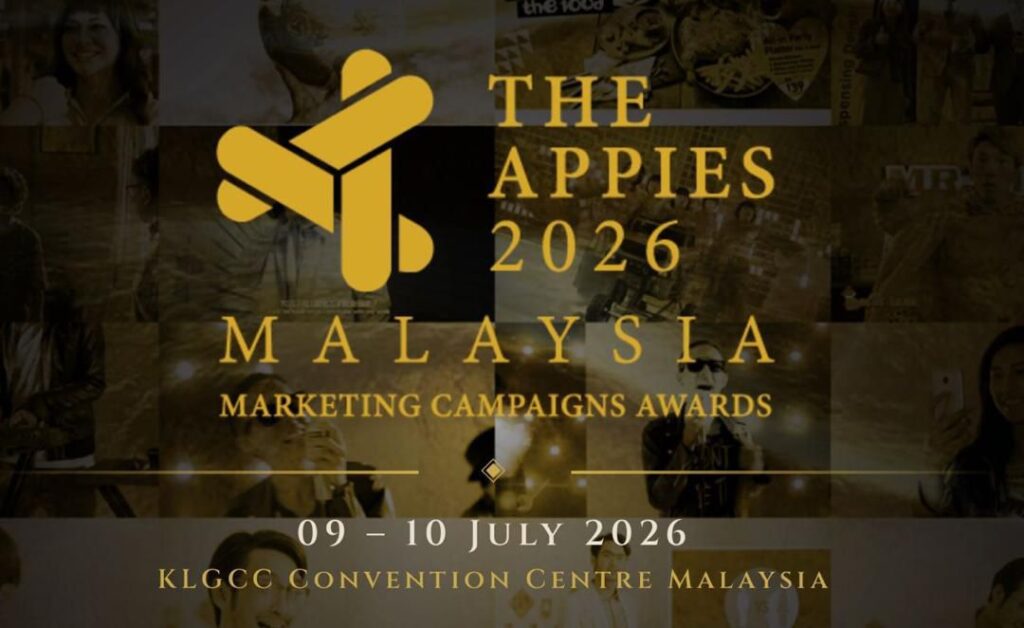
The APPIES is where Malaysia’s boldest campaigns, brightest ideas, and most impactful storytellers take the stage.
More than an awards show, it is the industry’s ultimate platform for creative, media, digital and marketing excellence, where live presentations meet live judging.
This is your chance to showcase work that moved audiences, shaped conversations, and delivered real results.
From breakthrough brand campaigns to innovative digital experiences, the APPIES celebrates the work that defines the future of marketing.
Step into the spotlight alongside the industry’s leading agencies, brands, creatives, strategists and changemakers.
Whether you are aiming for Gold, Silver, Bronze or the prestigious Best of the Best recognition, this is your moment to make history.
Your campaign deserves to be seen.
Your ideas deserve the stage.
Your work deserves the legacy.
KEY DATES
Haven’t subscribed to our Telegram channel yet? Don’t miss out on the hottest updates in marketing & advertising!


