But for a few surreal hours in Bangkok, it did.
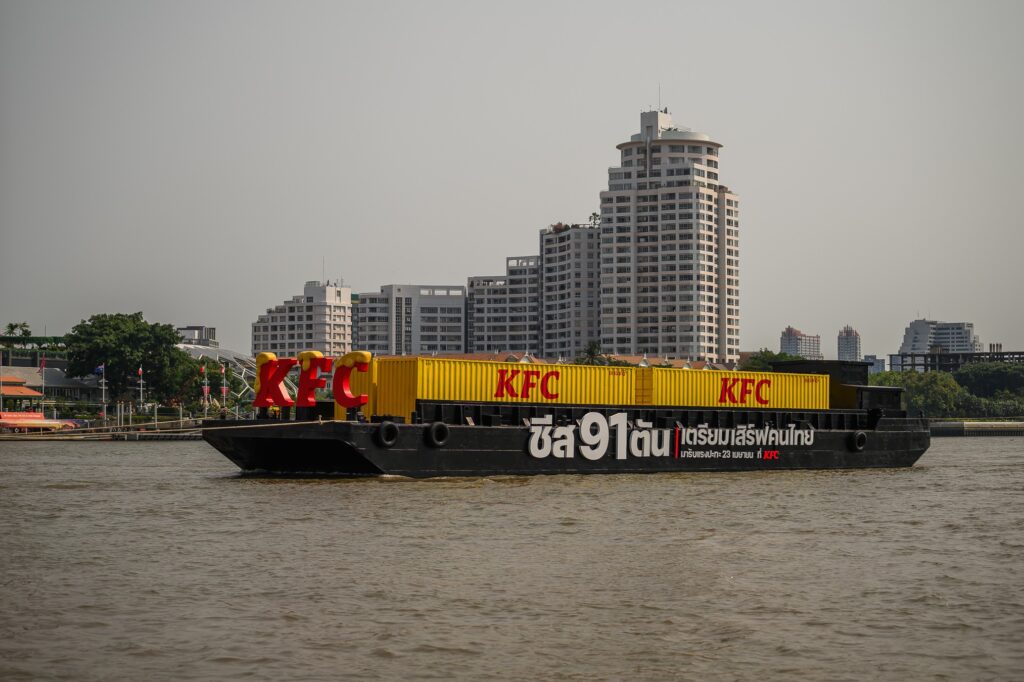
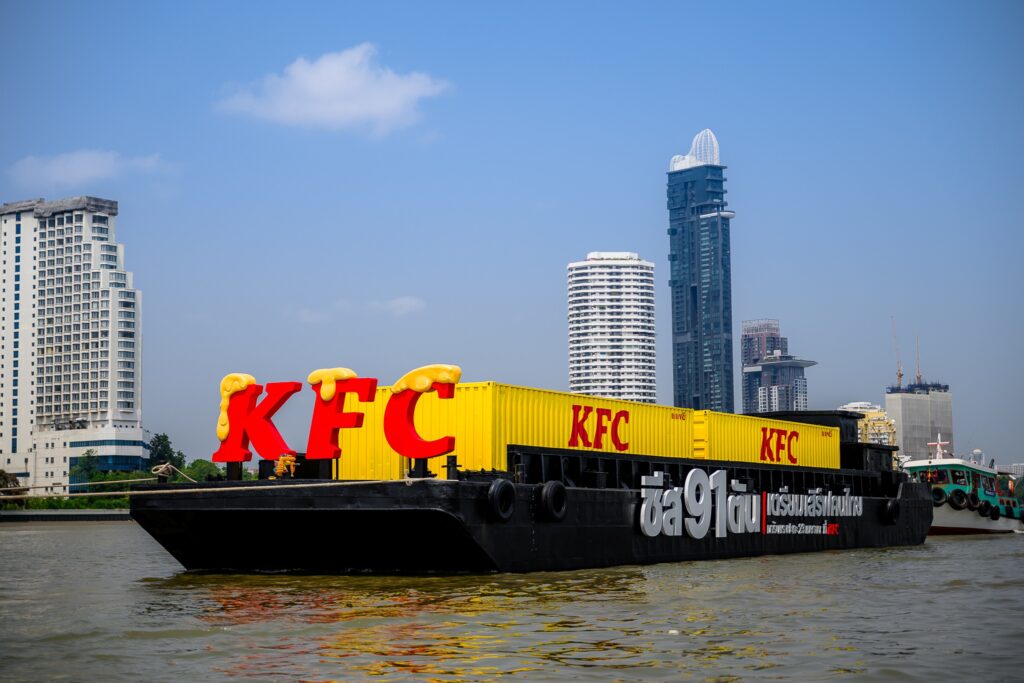
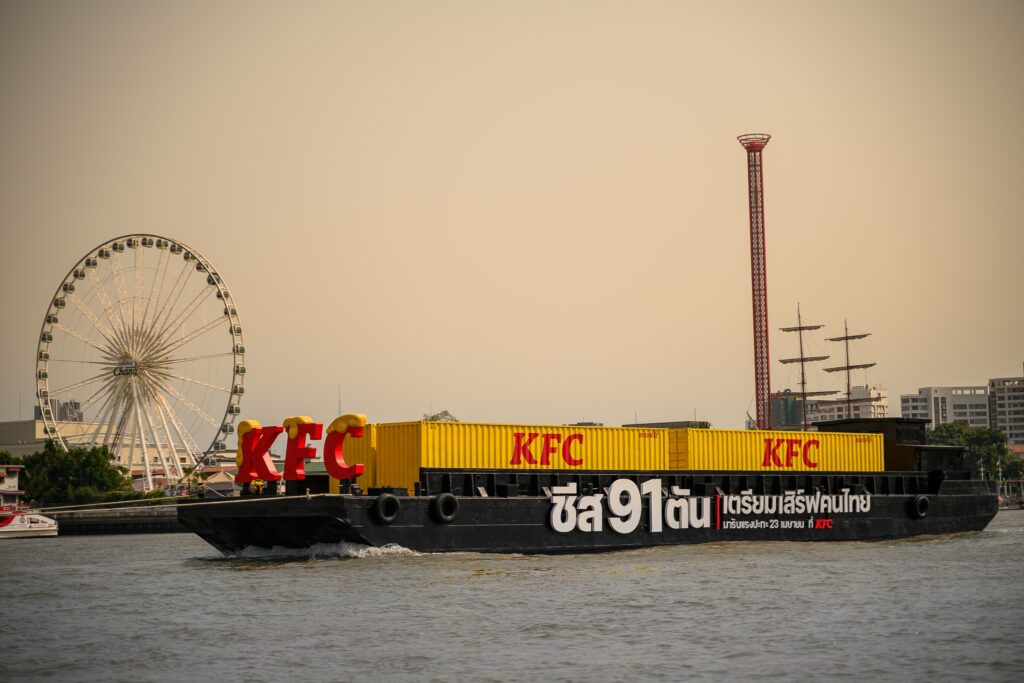
In a city known for spectacle, KFC Thailand managed to turn heads with something both absurd and oddly strategic. Giant branded containers floated down the river, packed with what the brand claimed was 91 tonnes of cheese.
Commuters paused. Phones came out. Social feeds filled up. A simple question began doing the rounds: what exactly is KFC about to launch that needs this much cheese? That question was the campaign.
When Spectacle Does The Selling
For decades, fast food marketing has relied on appetite appeal. Close-ups of crunch. Steam rising. That slow-motion tear of fried chicken. But this time, KFC Thailand reversed the order. It built curiosity first, then revealed the product.
The stunt wasn’t subtle. Ninety-one tonnes is not a number you arrive at quietly. It’s designed to feel excessive, almost comical. The kind of figure that doesn’t invite scrutiny so much as conversation.
According to the brand, that volume equates to more than 48,000 buckets of cheese, a statistic that sounds less like logistics and more like folklore. That is precisely the point.
In an era where attention is fragmented, exaggeration has become a form of shorthand. You don’t explain indulgence. You demonstrate it at a scale that feels impossible to ignore.
The Product Behind The Noise
Behind the river stunt sits a fairly straightforward product idea. “Cheesy Lava” is essentially a heightened version of KFC’s Hot & Spicy chicken.
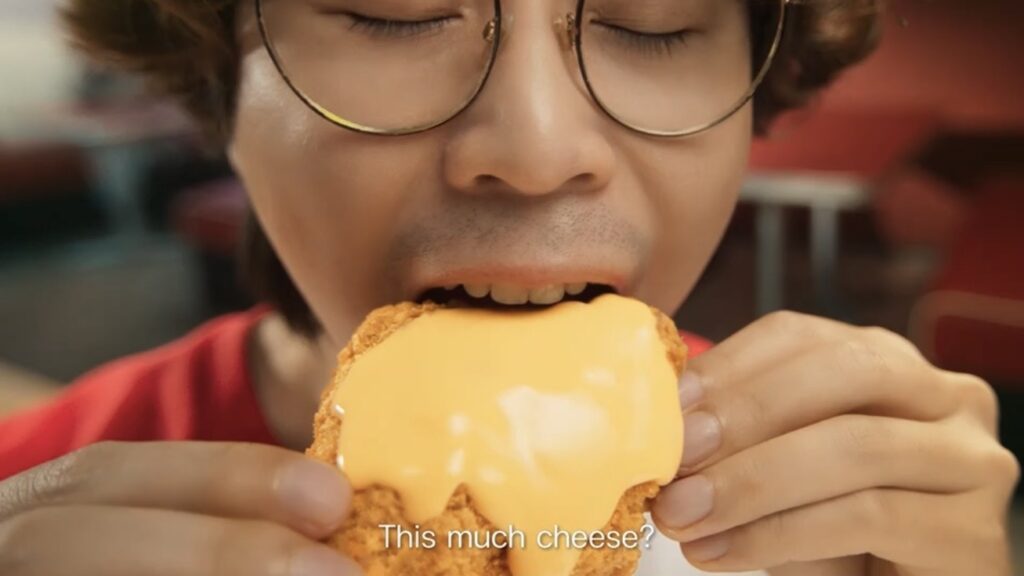
Crispy exterior, juicy interior, but pushed further with a heavy dusting of spicy cheese powder and finished with molten cheddar poured over the piece. It is not reinventing fried chicken. It is amplifying a familiar craving.
That’s where the campaign shows a certain discipline. The spectacle is loud, but the product insight is simple. People like cheese. They like it more when it feels excessive.
The brand has taken that truth and dialled it up until it becomes theatre. Patra Patrasuwan, Associate Marketing Director at KFC Thailand, frames it in more emotional terms.
The aim, she says, is to create something people feel before they taste. Something they want to share in their own way. It’s a telling line. Because in this case, sharing is not a by-product of the campaign. It is the campaign.
From River To Reel
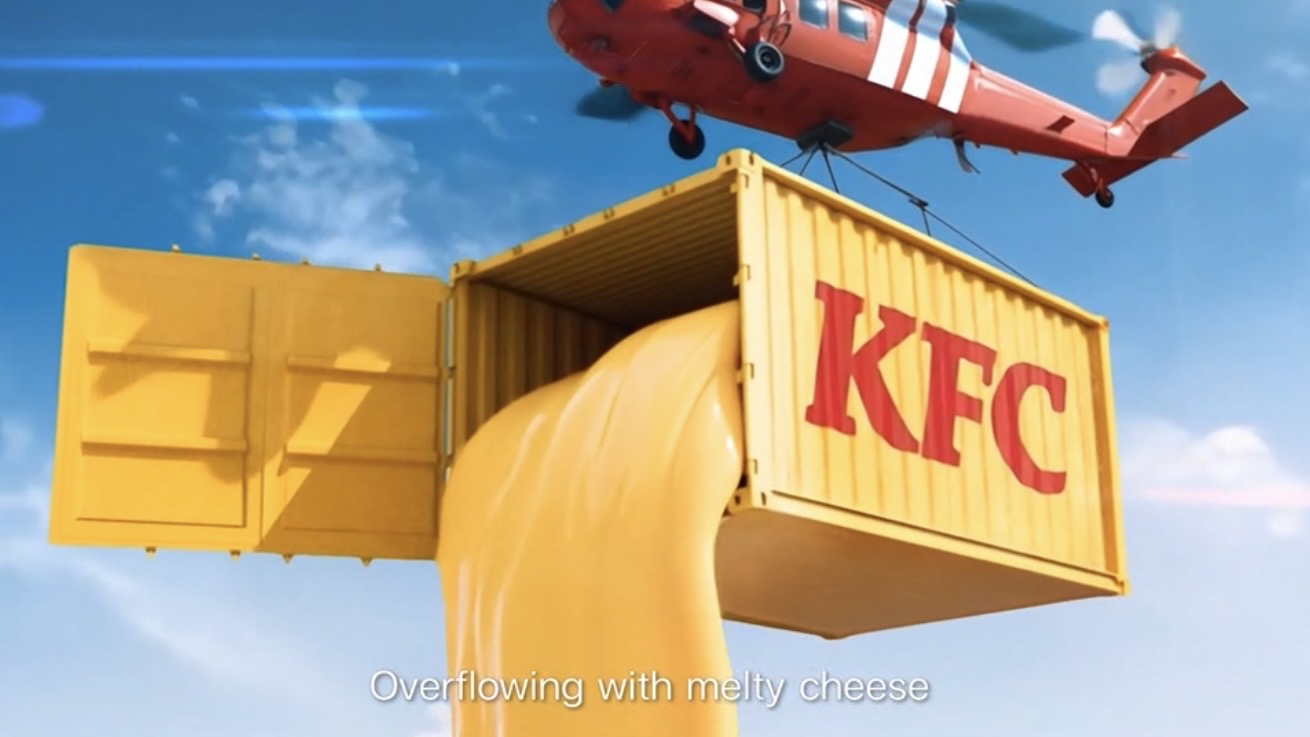
The offline stunt didn’t exist in isolation. It fed directly into an online film that leans fully into the absurdity.Helicopters carry oversized KFC containers across the sky.
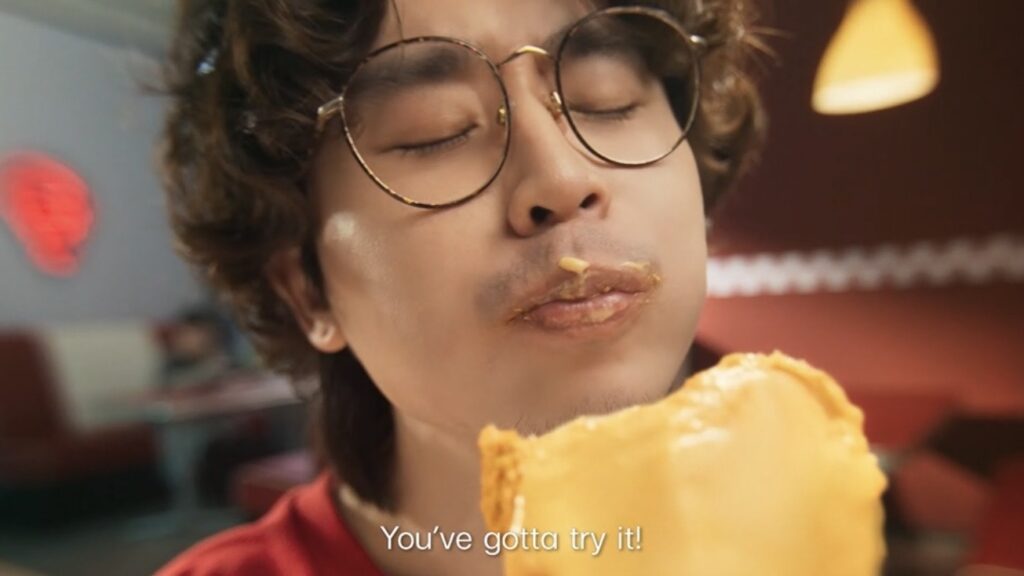
They burst open mid-air, raining down cheese in exaggerated, almost dreamlike fashion, before cutting to close-ups of the product being drenched and devoured.It’s not realism. It’s exaggeration as entertainment.
Traditional food advertising tries to convince. This kind of work tries to amuse first, then tempt. The logic is simple. If people are entertained, they will stay. If they stay, they might crave.
The “Extra” Economy
There’s also a cultural nuance at play. Across much of Asia’s youth market, “extra” is not a criticism. It’s a compliment. Bigger, richer, more indulgent. It signals value, even when the product itself remains accessible.
At a starting price of 55 baht, Cheesy Lava is not positioned as a premium indulgence. It’s everyday excess. The kind that feels affordable enough to try, but dramatic enough to post about.
That balance is difficult to get right. Too premium and it alienates. Too ordinary and it doesn’t travel socially. KFC Thailand seems to have found a middle ground where the story does the heavy lifting.
A Familiar Brand, Retold Loudly
There is something else worth noting. KFC is not a challenger brand. It is one of the most recognisable quick service chains in the world, with more than a thousand outlets in Thailand alone.
When a brand of that scale chooses to behave this playfully, it sends a signal. It suggests that even legacy players understand the need to earn attention, not assume it.
The river stunt may feel excessive. It is. But it also reflects a broader shift in how food brands are thinking about launches. It is no longer enough to introduce a product. You have to stage a moment.
The Aftertaste
Whether Cheesy Lava becomes a long-term menu success is almost secondary. The campaign has already done its job if it gets people talking, filming, and, eventually, ordering.
Because in today’s marketing climate, the first bite often happens with the eyes, on a screen, long before it reaches the mouth. Sometimes, all it takes to get there is a river full of cheese.