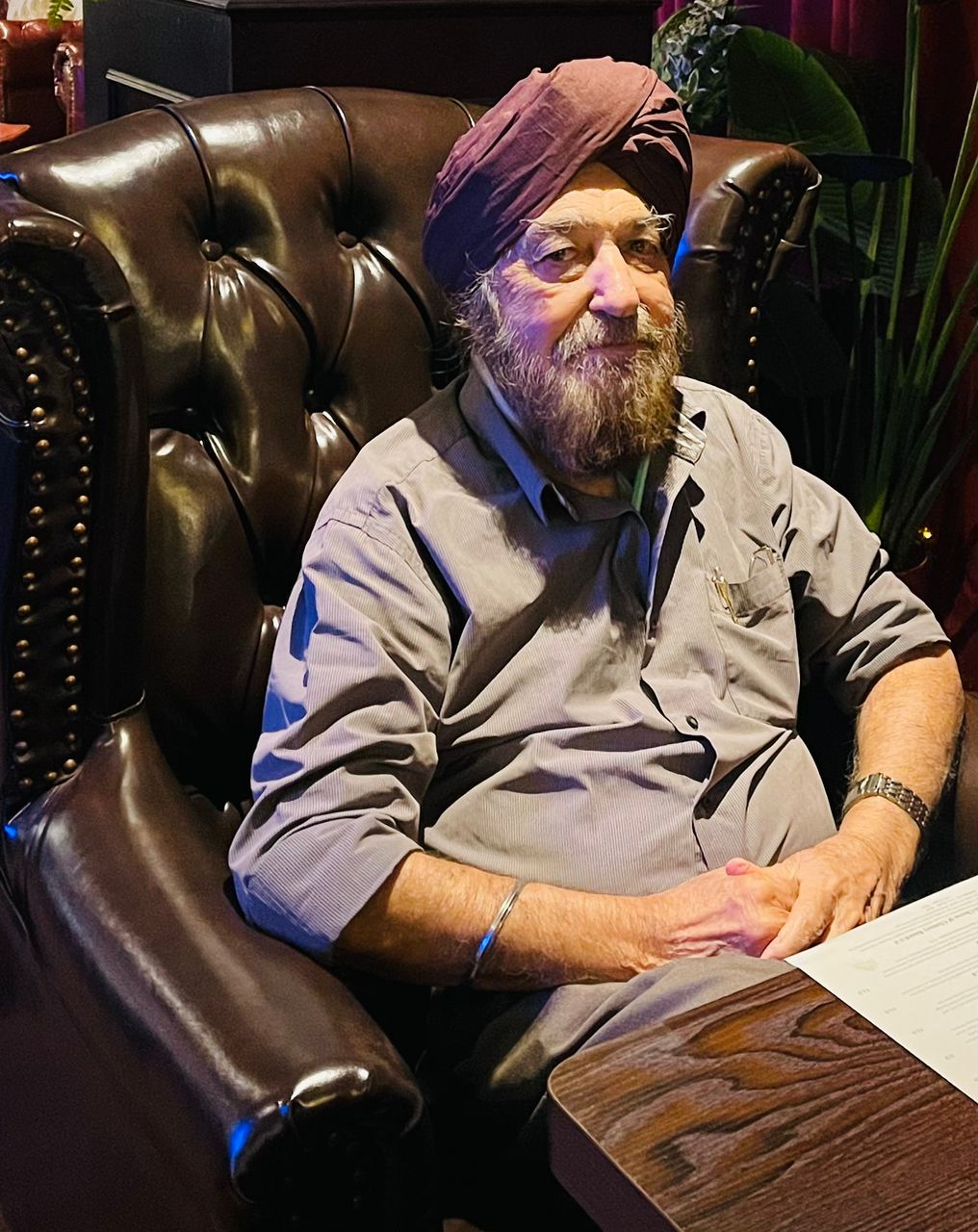
Everyone says they want to be fearless. Until the moment arrives.
Until the numbers don’t quite add up. Until the room goes quiet. Until someone asks, carefully, whether this might be too much. That’s when the word begins to change shape.
Because fearless is easy to admire from a distance. Easy to write into a strategy deck. Easy to applaud when it belongs to someone else.
Up close, it feels different. Up close, it looks like a decision you cannot fully defend yet still have to make. There is a word for this kind of fearless that English does not quite hold properly.
Nirbhau.
A word rooted in Gurmukhi, drawn from Sanskrit — nir (without) and bhau (fear) — though it has never meant the simple absence of it. It speaks instead to something more difficult to carry: the refusal to let fear decide.
And that refusal is rarely clean. It does not arrive with certainty attached. It is rarely loud when it matters. It does not announce itself as courage in the moment it is needed. It arrives quietly. As a choice.
A small one, often. The point at which something must move forward without the comfort of full agreement. When the data hesitates. When the room holds back. When the safer version of the idea is already waiting to take its place.
And still, something else is chosen. That is nirbhau. Not the absence of fear. But the decision to move through it. And this is precisely where most marketing begins to falter.
We have trained ourselves to reduce risk. To smooth edges. To align, refine, and circulate ideas until they are acceptable to everyone involved and unforgettable to everyone else.
Safe work has become a system. A reliable one. It rarely offends. Rarely fails spectacularly. Rarely draws attention for the wrong reasons.
It simply does not move anything. And in quieter times, that might have been enough. These are not quieter times.
The world now moves in surges. Markets react before they understand. Narratives shift mid-sentence. Trust builds and collapses in shorter cycles than most campaigns are planned for.
In such conditions, safety does not feel safe. It feels slow. Worse, it feels irrelevant.
Because when everything around you is shifting, clarity becomes more valuable than caution. Not clarity that is loud, but clarity that is unmistakable. The kind that risks being disagreed with in order to be remembered.
That is where nirbhau begins to matter.
For brands, it means deciding what you stand for before the data fully confirms it. It means resisting the quiet pull of optimisation when it starts to flatten distinction.
It means allowing ideas to carry enough edge to be noticed, even if that edge makes the room slightly uncomfortable.
For marketers, it is less romantic.
It shows up in meetings that do not resolve neatly. In decisions made without perfect information. In the willingness to accept that not every outcome can be controlled once something is released into the world.
It is, in other words, the opposite of how most organisations are built to operate. Which is why it is so rare. And why it is so necessary.
The 15th Malaysian Marketing Conference on 21 May at the KLGCC Convention Centre arrives in the middle of this tension. Not as a celebration of boldness, but as an examination of it.
Across the programme, speakers will talk about AI, creativity, B2B, teams and the mechanics of marketing in a fragmented, accelerated world. But underneath those topics runs a quieter thread.
What does it mean to act when certainty is no longer guaranteed?
When Jamshed Wadia speaks about AI, the question is not just about technology, but about control. How much of it we are willing to hand over, and what happens to brand voice when optimisation begins to outweigh judgement.
When VJ Anand speaks about creativity, the question is simpler, and harder. Can ideas still survive the systems designed to neutralise them?
And when younger voices like Mia Goh and her peers step in, the conversation shifts closer to reality, where decisions land quickly and consequences arrive without delay.
There is no buffer there. Only response.
Which is perhaps the most honest place to understand nirbhau. Not as an ideal. But as a choice.
A choice made in the presence of doubt. A choice that may not resolve comfortably. A choice that carries forward, long after the meeting has ended.
Because fearless marketing is not a mindset. It is a decision.
And like all decisions that matter, it comes with a cost. The question, as always, is not whether brands understand that. It is whether they are willing to pay it.
Share Post:

The APPIES is where Malaysia’s boldest campaigns, brightest ideas, and most impactful storytellers take the stage.
More than an awards show, it is the industry’s ultimate platform for creative, media, digital and marketing excellence, where live presentations meet live judging.
This is your chance to showcase work that moved audiences, shaped conversations, and delivered real results.
From breakthrough brand campaigns to innovative digital experiences, the APPIES celebrates the work that defines the future of marketing.
Step into the spotlight alongside the industry’s leading agencies, brands, creatives, strategists and changemakers.
Whether you are aiming for Gold, Silver, Bronze or the prestigious Best of the Best recognition, this is your moment to make history.
Your campaign deserves to be seen.
Your ideas deserve the stage.
Your work deserves the legacy.
KEY DATES
Haven’t subscribed to our Telegram channel yet? Don’t miss out on the hottest updates in marketing & advertising!