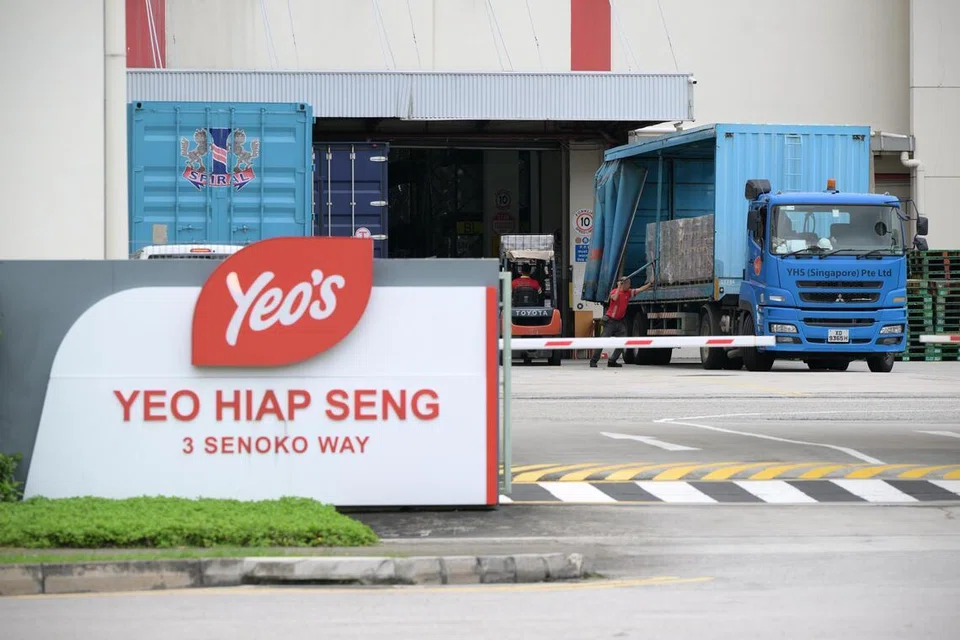
There’s a quiet shift happening behind the familiar green cartons of Yeo Hiap Seng — one that says as much about modern marketing as it does about manufacturing economics.
The heritage beverage brand has laid off 25 employees at its Senoko, Singapore facility, consolidating its can production in Malaysia as part of a broader efficiency drive.
On the surface, it’s a straightforward operational decision. Beneath it, however, lies a story marketers should pay attention to: how legacy brands navigate cost realities without eroding trust, identity, or emotional equity.
The New Geography of Efficiency
Yeo’s is not retreating — it is recalibrating.
By centralising can manufacturing in Johor and Selangor, the company is optimising capacity across its regional footprint. Singapore remains its headquarters and logistics nerve centre, but the heavy lifting — quite literally — is moving across the Causeway.
This is textbook supply chain logic:
But in 2026, such decisions are no longer just operational. They are reputational. Consumers today don’t just buy beverages. They buy stories — and increasingly, they scrutinise where those stories are made.
The Tightrope: Cost vs. Brand Trust
Yeo’s has been careful to control the narrative.
It has explicitly stated that:
That last point matters more than most brands realise. Because in an age of hyper-transparency, how a company treats its people often becomes part of the brand story itself.
Quietly mishandled layoffs can undo years of brand-building faster than any competitor. Yeo’s, to its credit, appears to be managing the transition with union engagement and structured support — signalling responsibility rather than retreat.
A Pattern, Not a One-Off
This isn’t happening in isolation.
The restructuring reflects broader pressures:
Even with a rebound in net profit, revenue has dipped — a classic signal of tightening demand and margin pressure. More tellingly, Yeo’s is not alone.
Across Southeast Asia, manufacturers are quietly redrawing production maps, moving towards lower-cost, higher-efficiency hubs while retaining brand and commercial functions in premium markets. For marketers, this signals a structural shift: “Made here” is no longer the default — but “trusted here” must remain.
Malaysia’s Moment in the Value Chain
For Malaysia, this move is more than a footnote. It reinforces the country’s growing role as a regional manufacturing backbone — particularly for FMCG brands balancing cost with proximity.
Selangor and Johor are becoming strategic extensions of Singapore’s industrial ecosystem:
In short, Malaysia is no longer just a production base. It is part of the brand delivery system.
What This Means for Marketers
This is where the story sharpens. Because decisions like these don’t stay in boardrooms anymore — they leak into perception.
Three implications stand out:
1. Origin is evolving
Consumers may still associate Yeo’s with Singapore, but production is now regional. Brands must redefine “origin” — less about geography, more about consistency and trust.
2. Transparency is no longer optional
Yeo’s proactive communication — on pricing, supply, and employee support — is not PR polish. It’s risk management in a socially aware market.
3. Brand equity must absorb operational change
If the product tastes the same, arrives on time, and the brand behaves responsibly, most consumers won’t object. But any misstep — pricing, quality, or ethics — will be amplified.
The Real Question: Does the Story Still Hold?
Yeo’s has over a century of brand equity — built on familiarity, reliability, and cultural resonance across Asia. The challenge now is not whether it can produce more efficiently.
It’s whether the brand story remains intact when production shifts. Because in today’s market, consumers don’t just ask: “Where is this made?” They ask: “What does this brand stand for now?” And that is no longer a manufacturing question. That’s a marketing one.
Share Post:

The APPIES is where Malaysia’s boldest campaigns, brightest ideas, and most impactful storytellers take the stage.
More than an awards show, it is the industry’s ultimate platform for creative, media, digital and marketing excellence, where live presentations meet live judging.
This is your chance to showcase work that moved audiences, shaped conversations, and delivered real results.
From breakthrough brand campaigns to innovative digital experiences, the APPIES celebrates the work that defines the future of marketing.
Step into the spotlight alongside the industry’s leading agencies, brands, creatives, strategists and changemakers.
Whether you are aiming for Gold, Silver, Bronze or the prestigious Best of the Best recognition, this is your moment to make history.
Your campaign deserves to be seen.
Your ideas deserve the stage.
Your work deserves the legacy.
KEY DATES
Haven’t subscribed to our Telegram channel yet? Don’t miss out on the hottest updates in marketing & advertising!