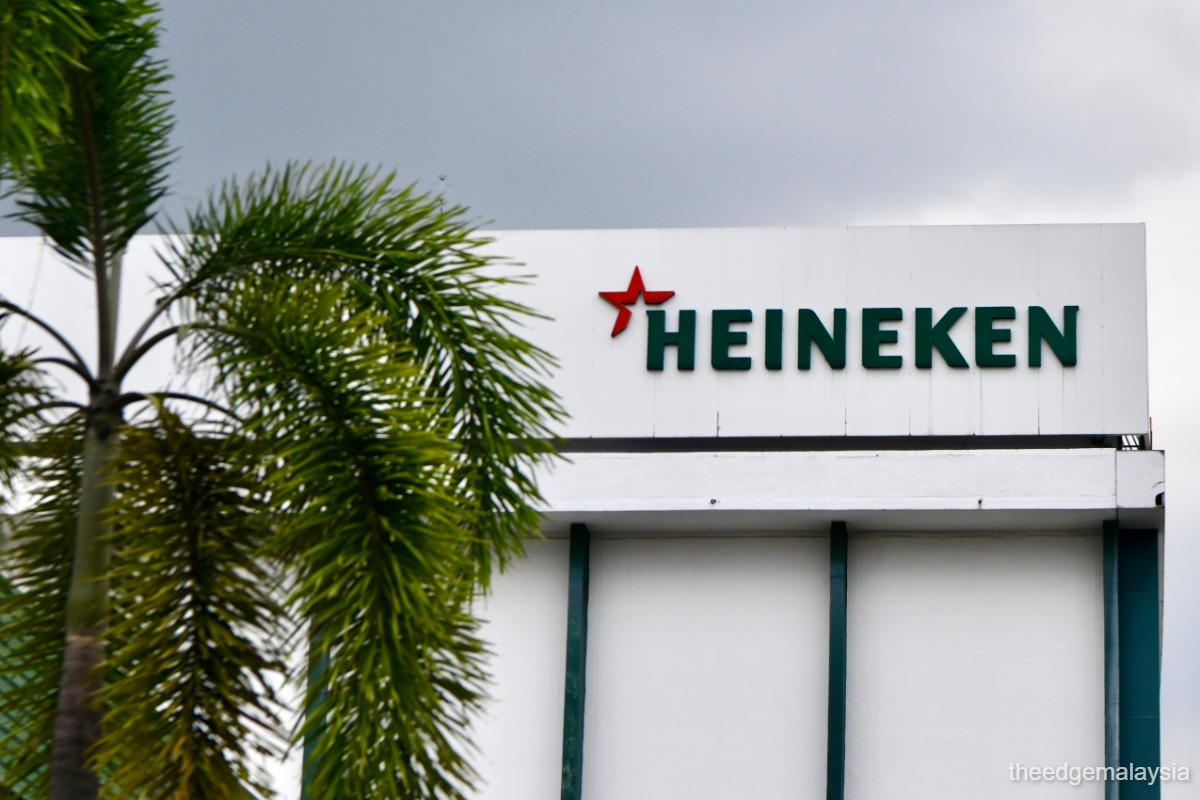
Heineken’s decision to wind down its Singapore brewing operations by 2027, and shift production to Malaysia and Vietnam, looks at first glance, like a supply chain tweak. In reality, it’s a signal of where growth, margin, and marketing muscle are increasingly converging in ASEAN. And, quietly, it puts Malaysia in a more strategic position than it has held in years.
From Efficiency to Relevance
Singapore has long been the poster child for operational excellence—predictable, efficient, and premium.
But it is also expensive, land-constrained, and, crucially, a mature beer market. Heineken isn’t abandoning Singapore as a market. It’s simply acknowledging that brewing there no longer makes economic or strategic sense.
Instead, the company is leaning into an import-led model, with beers flowing in from regional hubs. That pivot reflects a broader truth: in today’s FMCG landscape, where you produce matters less than how flexibly you can respond to demand.
Singapore becomes a consumption and innovation node—complete with a redeveloped Tuas site housing logistics and a pilot brewery—while heavy production shifts to markets that can scale more efficiently.
Malaysia’s Quiet Advantage
For Malaysia, this is less headline-grabbing—but more consequential. Heineken Malaysia already operates a major brewery in Sungai Way, Selangor—well-placed logistically, with established distribution across Peninsular and East Malaysia.
The country offers a compelling middle ground: lower operating costs than Singapore, but stronger infrastructure and regulatory clarity than many regional peers.
This positions Malaysia as a regional stabiliser in Heineken’s supply chain—reliable, scalable, and close enough to key consumption markets. From a marketing perspective, that matters.
Because production proximity often translates into faster innovationcycles, more localised variants, and tighter coordination between brand, supply, and retail execution. In simple terms: the closer the brewery, the quicker the brand can move.
Vietnam: The Growth Engine
If Malaysia is the stabiliser, Vietnam is the accelerator. Vietnam remains one of the fastest-growing beer markets in the region, with a strong culture of consumption and a younger demographic profile.
Heineken’s expanded production footprint there is less about cost arbitrage and more about future-proofing volume growth. This dual-hub strategy—Malaysia for operational balance, Vietnam for expansion—creates a more resilient regional network.
It also reflects a broader shift: global brands are no longer building around single “hero” markets. They are designing multi-node ecosystems that can flex with demand, regulation, and consumer behaviour.
What This Means for Brands and Marketers
For marketers, this is where the story gets interesting. Heineken’s move isn’t just about brewing—it’s about rewiring how brands behave across borders.
The Human Cost, and the Strategic Trade-Off
Of course, this transition isn’t without consequence. Around 130 roles in Singapore are expected to be affected.
It’s a reminder that behind every supply chain optimisation is a workforce recalibration—one that global companies are increasingly willing to make in pursuit of efficiency and scale. But from a corporate standpoint, the calculus is clear: regional integration over local redundancy.
A Regional Playbook Emerging
What Heineken is doing here mirrors a wider pattern across industries—from tech to manufacturing to FMCG. ASEAN is no longer treated as a collection of isolated markets. It is being engineered as a connected operating system, where production, distribution, and marketing are synchronised across borders.
Singapore becomes the brain. Malaysia, the backbone. Vietnam, the engine. And the brands? They move between all three, faster than ever.
This isn’t a story about a brewery shutting down. It’s a story about how global brands are redrawing the map of Southeast Asia—not by exiting markets, but by redefining their roles.
For Malaysia, the opportunity is clear: not just to produce more, but to matter more. And for marketers watching closely, the message is even clearer: In ASEAN’s next chapter, geography isn’t just location—it’s leverage.
Share Post:


The APPIES is where Malaysia’s boldest campaigns, brightest ideas, and most impactful storytellers take the stage.
More than an awards show, it is the industry’s ultimate platform for creative, media, digital and marketing excellence, where live presentations meet live judging.
This is your chance to showcase work that moved audiences, shaped conversations, and delivered real results.
From breakthrough brand campaigns to innovative digital experiences, the APPIES celebrates the work that defines the future of marketing.
Step into the spotlight alongside the industry’s leading agencies, brands, creatives, strategists and changemakers.
Whether you are aiming for Gold, Silver, Bronze or the prestigious Best of the Best recognition, this is your moment to make history.
Your campaign deserves to be seen.
Your ideas deserve the stage.
Your work deserves the legacy.
KEY DATES
Haven’t subscribed to our Telegram channel yet? Don’t miss out on the hottest updates in marketing & advertising!