There is a moment, somewhere between the ketupat and the polite laughter, when Adam realises something is missing. Not from the table. Not from the house. From himself.
Created in collaboration with Chariot Agency and Reservoir Production, Tenaga Nasional Berhad’s Raya Pertama does not shout for attention. It doesn’t need to. It slips in quietly, like a guest who removes his shoes at the door and observes before speaking.
In doing so, it delivers something most Raya films forget in their rush for tears: truth. This is not a story about celebration. It is a story about participation.
A Stranger in a Familiar Celebration
Adam is not alone. He is surrounded by people, noise, food, ritual. Yet he stands slightly apart — the polite outsider navigating his first Hari Raya as a Chinese Muslim revert in his wife’s kampung.
We’ve all been Adam. The film understands that dislocation is not always loud.
Sometimes it is subtle. A hesitation before joining a conversation. A smile that arrives half a second too late. A hand unsure whether to reach for the rendang or wait.
Enter Ujang — a boy with no agenda, no awkwardness, no sense of social boundaries. In other words, the perfect guide. Through Ujang, Adam is introduced not just to people, but to belonging.
The Small Things That Carry Weight
The turning point is almost invisible. A container of kuah kacang. Delivered casually. Without ceremony. Ujang’s mother doesn’t stay. She doesn’t need to.
In this kampung, presence isn’t measured by how long you sit, but by whether you show up at all. It is here that Raya Pertama finds its sharpest insight: connection is not built in grand gestures.
It is assembled quietly, through small acts repeated over time. And it asks a question many Malaysians would rather not answer: When was the last time you knocked on your neighbour’s door — not to complain, but to connect?
A Mirror Held Up to Modern Malaysia
Urban Malaysia prides itself on convenience. Gated communities. Digital payments. Food delivered to your doorstep without a single human exchange. Efficient, yes. Connected? Not quite. TNB’s film draws a gentle but unmistakable contrast.
In the kampung, people arrive unannounced and uninvited — and are still welcomed. In the city, we schedule connection like a meeting, if we remember to at all.
Adam’s realisation is not about Raya. It is about how far we have drifted from one another. And how easily that distance could be closed.
Branding That Knows Its Place
Here is where many brands would fumble. A forced logo. A contrived product moment. A line that tries too hard to link electricity with emotion. TNB does something far more disciplined.
It stays in the background. Because the metaphor is already doing the work: connection is a form of power. Not the kind that runs through cables, but the kind that runs between people.
When Samsul Ariffin Zainuddin, TNB’s Head of Group Corporate Communications speaks of “illuminating lives,” the film quietly reframes it.
Light is not just what brightens homes. It is what brightens relationships. Unlike electricity, this kind of power requires human effort to keep flowing.
The Real Message, After the Lights Go Out
By the time Adam smiles — genuinely, fully — the film has already made its point.
Raya is not about being invited. It is about being included. And inclusion is rarely announced. It is felt. Raya Pertama leaves you with an uncomfortable thought, the kind that lingers after the screen fades to black:
Perhaps the problem isn’t that communities are disappearing. Perhaps it’s that we’ve stopped showing up. TNB may keep the lights on. But this Raya, they’re asking something more difficult of Malaysians: To switch ourselves back on.
Share Post:
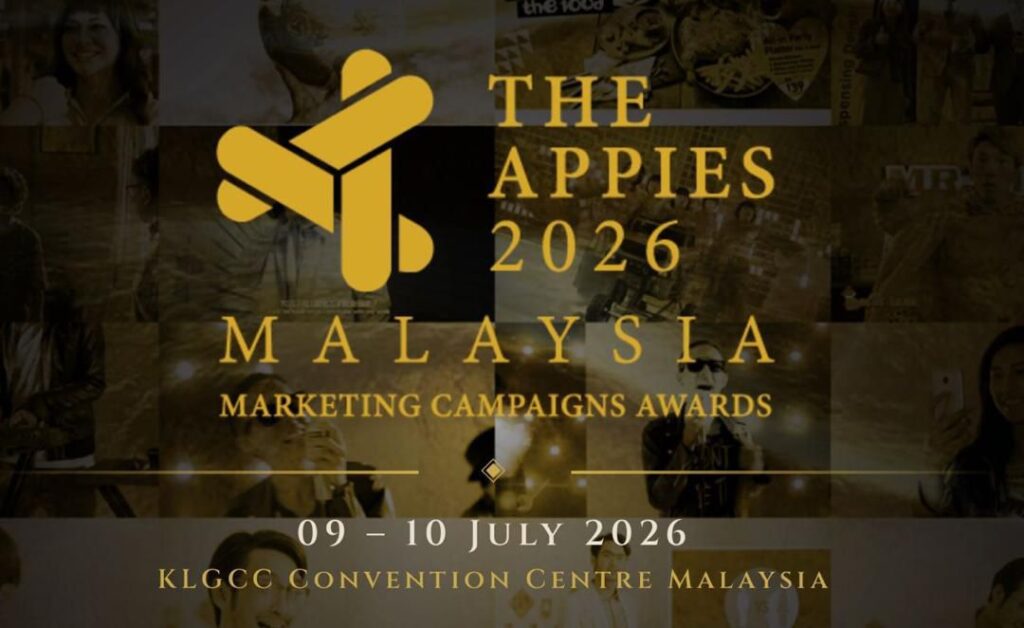
The APPIES is where Malaysia’s boldest campaigns, brightest ideas, and most impactful storytellers take the stage.
More than an awards show, it is the industry’s ultimate platform for creative, media, digital and marketing excellence, where live presentations meet live judging.
This is your chance to showcase work that moved audiences, shaped conversations, and delivered real results.
From breakthrough brand campaigns to innovative digital experiences, the APPIES celebrates the work that defines the future of marketing.
Step into the spotlight alongside the industry’s leading agencies, brands, creatives, strategists and changemakers.
Whether you are aiming for Gold, Silver, Bronze or the prestigious Best of the Best recognition, this is your moment to make history.
Your campaign deserves to be seen.
Your ideas deserve the stage.
Your work deserves the legacy.
KEY DATES
Haven’t subscribed to our Telegram channel yet? Don’t miss out on the hottest updates in marketing & advertising!