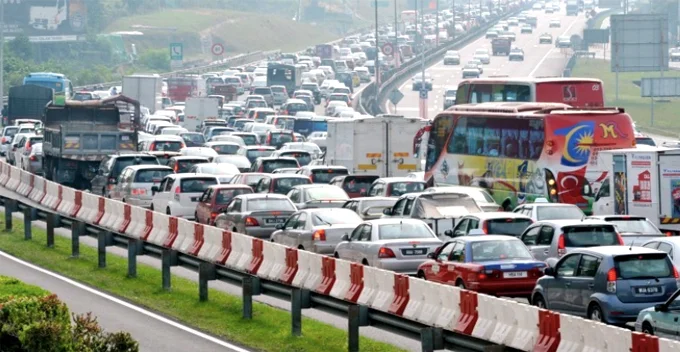
By early evening, just after buka puasa, the highways out of Kuala Lumpur begin to tell a familiar story. Brake lights stretch like a red river. Engines idle. Tempers simmer.
Somewhere between Rawang Selatan and Bukit Beruntung, traffic slows to a near standstill—this time worsened by an accident choking the emergency lane. But to call it “traffic” would be missing the point entirely.
This is balik kampung—Malaysia’s great annual homecoming. A ritual. A test. A pilgrimage.
The Long Road Home Begins
Every year, as Aidilfitri approaches, the country moves. From Johor Bahru to Kelantan. From Klang Valley to Kedah. From Singapore checkpoints to Perlis border towns.
Entire families pack their cars—sometimes beyond reason—with kuih raya tins, balik kampung bags, and children already asking, “Are we there yet?” This year is no different. If anything, it is more intense.
PLUS highways are expected to carry up to 2.3 million vehicles daily during peak days. With vehicle ownership in Malaysia growing steadily—now exceeding the population—the roads are no longer just busy; they are overwhelmed.
A Malaysian Highway Authority spokesman has already warned that congestion will build well into the early hours. For many, the journey has already begun.
“Nine Hours? That’s on Paper Only”
Speak to any seasoned Malaysian driver, and you’ll hear the same refrain: whatever Google Maps says, double it.
Nik Kamal, a graphic designer travelling from Johor Bahru to Bachok, Kelantan, knows this well. “Normally it’s nine hours,” he says. “But during Raya, it becomes 15, sometimes even 18.” And that’s assuming things go smoothly. Children get restless. Toilets become urgent. R&R stops overflow.
Petrol stations turn into bottlenecks of their own. What should be a journey becomes a negotiation—with time, with fatigue, and sometimes, with each other.
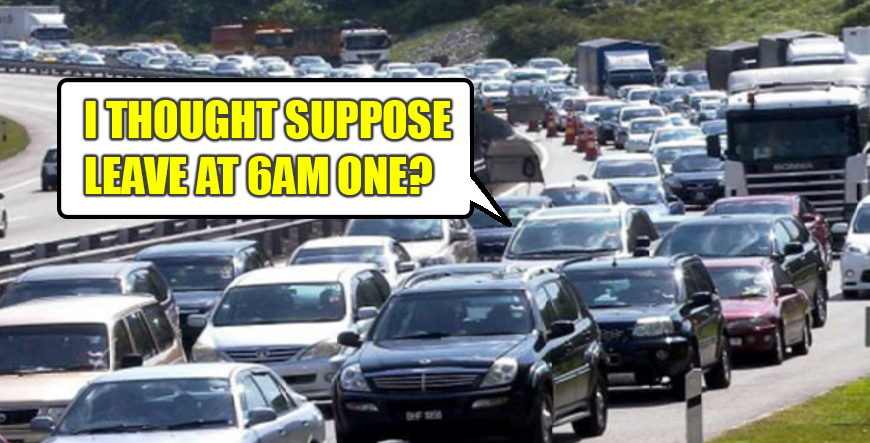
One Rawang-based driver, who had planned a simple evening departure, shared bluntly: “I thought I was smart leaving after buka. But from Sungai Buaya onwards, it was crawling. At one point, we switched off the engine and just waited.”
A Nation on Wheels
Why do Malaysians still choose to drive? The answer is both practical and deeply cultural.
Flights are expensive. A family of five could easily spend RM5,000 to RM6,000 for a return trip. Train tickets sell out weeks in advance. Even ETS, while efficient, doesn’t solve the last-mile problem.
“You can take the train,” says one traveller, “but once you reach kampung, how do you move around?” So Malaysians default to what they trust most: their own vehicles.
It’s not just convenience—it’s control. The ability to stop when you want, eat where you like, and arrive on your own terms. Even if that means arriving exhausted.
When Congestion Turns Dangerous
The irony of balik kampung is this: the most dangerous moments often come after the traffic clears. Experts warn that fatigue, frustration, and the urge to “make up time” lead to speeding, tailgating, and risky lane changes.
Last year alone, Malaysia recorded over 15,000 accidents and more than 100 fatalities during the festive travel period.
A highway patrol officer, speaking off record, put it plainly: “People survive the jam, then lose patience when the road opens up.” Motorcyclists remain the most vulnerable—accounting for the majority of fatalities. And yet, every year, the same pattern repeats.
More Than a Journey
To understand balik kampung, you have to look beyond the mechanics of travel. This is not just movement—it is meaning.
It is the son returning to kiss his mother’s hand. The daughter bringing grandchildren home. The reunion that only happens once a year, no matter how far life has taken you.
“Going back at any other time doesn’t feel the same,” one traveller reflected.
There is something about Raya. Something that pulls. Even if it means sitting in traffic for hours, staring at the same car bumper, inching forward metre by metre.
The Shared Struggle
There is also, strangely, a sense of unity in the gridlock. At R&R stops, strangers become temporary companions. People share tables, exchange stories, even joke about how long they’ve been stuck. A young couple travelling to Penang laughed:
“We’ve been on the road for six hours and haven’t even reached Ipoh. At this point, we just enjoy the playlist and surrender.” Another driver added:
“Balik kampung teaches patience. You can’t fight it. You just go with the flow.”
A System Under Strain
Still, the bigger question looms: how sustainable is this?
Malaysia’s road infrastructure, while extensive, is struggling to keep pace with the sheer number of vehicles. The upcoming East Coast Rail Link (ECRL), expected to cut travel time between Gombak and Kota Bharu to four hours, may offer relief—but not yet. Until then, the burden remains on highways designed for a different era.
Why We Still Go
Despite the jams. Despite the fatigue. Despite the risks. Malaysians will still drive. Because balik kampung is not optional. It is emotional. It is cultural. It is, in many ways, spiritual. A pilgrimage not to a place—but to people.
And so tonight, as the highways clog once again from Rawang to Bukit Beruntung, from Gombak to Bentong, from Sedenak to Simpang Renggam—millions inch forward.
Not just towards their kampung. But towards something that no traffic jam can ever delay.
Home.