For years, digital marketing strategy revolved around one assumption: if you win Google search, you win discovery.
That assumption is now being quietly rewritten.
Airbnb’s latest earnings commentary signals a structural shift in how consumers begin their purchase journeys.
According to CEO Brian Chesky, traffic arriving from AI chatbot platforms is behaving much like traditional search — but with one important difference: it is converting at a higher rate.
In other words, conversational AI is no longer just an information tool; it is becoming a high-intent acquisition channel.
For marketers, that changes the economics of the funnel.
Discovery Is Moving Upstream — And Becoming Conversational
Chesky describes large language model platforms as a new “discovery layer” for travel, helping users explore destinations, compare stays, and shortlist experiences before ever reaching a booking site.
That early-stage influence mirrors the role Google played in the early 2000s, when search engines first became the gateway to ecommerce.
The difference today is behavioural.
Users interacting with AI assistants often arrive with richer context: travel preferences, budget expectations, past behaviour, and conversational queries such as “family-friendly beach towns within four hours of Kuala Lumpur” rather than isolated keywords.
By the time they land on Airbnb, the decision journey is already partially shaped — which explains the stronger conversion patterns the company is observing.
Instead of treating AI platforms as competitive threats, Airbnb is positioning them as incremental demand generators.
That mindset reflects a growing recognition across industries: traffic sources are fragmenting, and discovery is no longer owned by any single platform.
Building an “AI-Native” Customer Journey
Airbnb’s response is not to build its own foundational models, but to layer AI across the entire user experience — from discovery and itinerary planning to booking and post-trip support.
The ambition, according to leadership, is an “AI-native experience” that learns from traveller preferences and continuously improves recommendations over time.
This strategy mirrors a broader shift that’s taking place across ecommerce and travel platforms.
Rather than focusing purely on front-end search features, companies are embedding AI deeper into customer journeys to personalise decision-making, simplify planning, and reduce friction across touchpoints.
In practice, this means platforms must compete not only on inventory and pricing, but on the intelligence of their recommendation engines.
Conversational search is becoming the next competitive battleground.
Efficiency First, Then Expansion
Airbnb’s AI rollout has followed a pragmatic sequence.
The company first focused on customer support automation, training internal AI agents on millions of historical service interactions.
Today, roughly one-third of customer issues are resolved without human intervention — a move that has improved response times while quietly building the data infrastructure required for more ambitious AI applications.
That operational foundation is critical.
Brands that deploy consumer-facing AI without first stabilising backend workflows often struggle with inconsistent experiences.
Airbnb’s phased approach suggests a recognition that AI transformation is as much an operational exercise as it is a marketing one.
The Marketing Implication: Discovery Is Becoming Platform-Agnostic
Perhaps the most important takeaway for marketers is not Airbnb’s technology roadmap, but its framing of AI chatbots as “top-of-funnel channels.”
For decades, acquisition strategies revolved around search optimisation, paid media, and marketplace visibility.
Now, conversational platforms are beginning to shape the earliest stages of consumer consideration — sometimes before traditional search even occurs.
If chatbot-driven traffic continues to outperform conventional referrals in conversion quality, brands will need to rethink optimisation strategies entirely: ensuring structured data is AI-readable, strengthening content authority signals, and designing experiences that integrate smoothly with conversational discovery environments.
The companies that adapt fastest will not necessarily be those with the best algorithms, but those that recognise the shift earliest.
Discovery is no longer a list of blue links.
Increasingly, it is a conversation — and the brands that learn to show up in that conversation will shape the next decade of digital marketing.
Share Post:


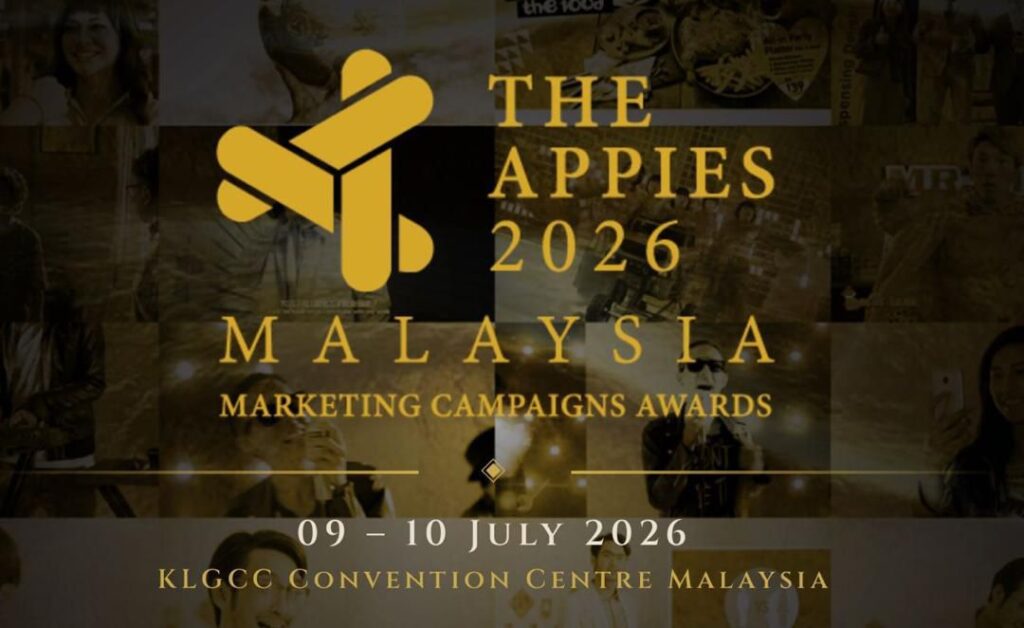
The APPIES is where Malaysia’s boldest campaigns, brightest ideas, and most impactful storytellers take the stage.
More than an awards show, it is the industry’s ultimate platform for creative, media, digital and marketing excellence, where live presentations meet live judging.
This is your chance to showcase work that moved audiences, shaped conversations, and delivered real results.
From breakthrough brand campaigns to innovative digital experiences, the APPIES celebrates the work that defines the future of marketing.
Step into the spotlight alongside the industry’s leading agencies, brands, creatives, strategists and changemakers.
Whether you are aiming for Gold, Silver, Bronze or the prestigious Best of the Best recognition, this is your moment to make history.
Your campaign deserves to be seen.
Your ideas deserve the stage.
Your work deserves the legacy.
KEY DATES
Haven’t subscribed to our Telegram channel yet? Don’t miss out on the hottest updates in marketing & advertising!