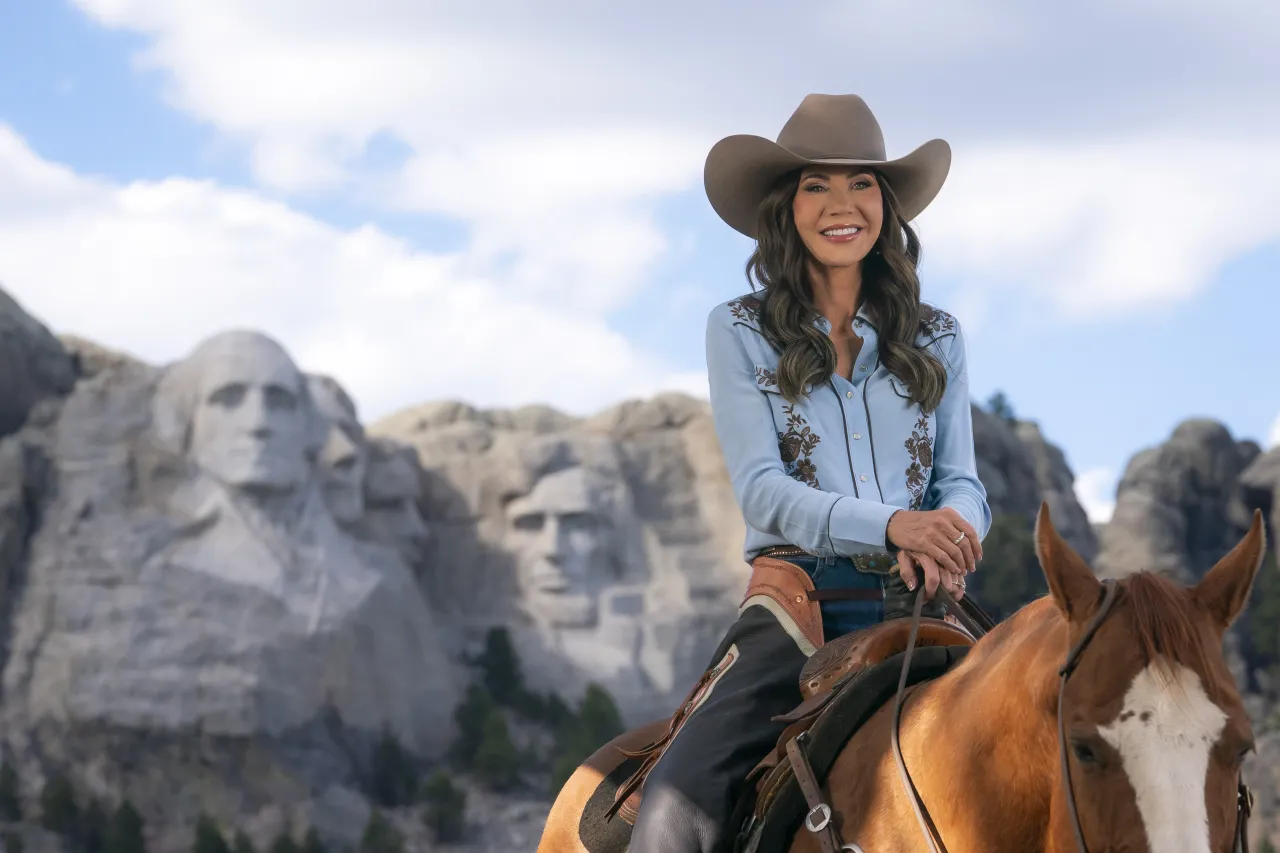
At first glance, it looked like political theatre.
A government official on horseback at Mount Rushmore, speaking sternly into the camera about law and order at America’s borders.
The message was simple and cinematic: break our laws and you will be punished.
But what began as a dramatic government advertising campaign has now evolved into something far more consequential — a controversy that ended with the removal of the United States Secretary of Homeland Security.
President Donald Trump dismissed Kristi Noem as DHS (Department of Homeland Security) Secretary following mounting criticism over her leadership, including scrutiny of a controversial US$220 million taxpayer-funded advertising campaign designed to deter illegal immigration.
For the global marketing industry, the episode reads like a cautionary tale of how political branding, public communications budgets, and government procurement can collide.
A Political Ad Campaign — Funded by Taxpayers
The DHS campaign was pitched as urgent communications aimed at discouraging illegal migration and countering misinformation spread by smuggling networks.
To accelerate the rollout, the department invoked a “national emergency” exemption, allowing it to bypass the usual competitive bidding process required for government contracts.
That decision opened the door to a US$220 million media blitz — one that tripled the agency’s advertising spending in a single fiscal year.
Investigative reporting later revealed that at least one company involved in producing the campaign had long-standing political ties to Noem and her advisers, raising red flags among government contracting experts.
Critics argued that the arrangement risked violating ethical standards designed to ensure impartial procurement.
For marketing professionals, the mechanics of the campaign were strikingly familiar: cinematic visuals, personality-driven messaging, and a narrative crafted to reinforce leadership authority.
But unlike commercial campaigns, the funding came directly from taxpayers.
A Secretive Media Supply Chain
One of the more curious elements of the advertising rollout involved a company called Safe America Media, which reportedly received roughly US$143 million from the DHS contracts despite being formed only days before the deal was finalised.
Behind the scenes, another political consulting firm — Strategy Group, closely tied to Noem’s political network — reportedly worked on producing advertising content, including the Mount Rushmore commercial.
Yet that firm was not listed in the main contract documentation, appearing instead as a subcontractor.
Subcontracting creative work is common practice across the marketing industry.
But watchdog groups noted that the firm’s CEO was married to the DHS official responsible for overseeing the agency’s communications office, intensifying concerns about potential conflicts of interest.
Contracting experts warned that such relationships could warrant further investigation into whether procurement rules were circumvented.
A Political Backlash That Reached the Streets
While the ad campaign attracted scrutiny in Washington, tensions were also escalating on the ground.
In Minnesota — where immigration enforcement operations had sparked widespread protests earlier in the year — activists had spent months organising demonstrations against federal crackdowns.
The killing of a US citizen during an Immigration and Customs Enforcement (ICE) operation and subsequent raids intensified public anger, triggering large-scale protests and the emergence of the “ICE Out” movement demanding the removal of federal immigration enforcement operations from the state.
When news of Noem’s dismissal broke, community activists gathered outside the Minneapolis federal courthouse, describing the development as the result of sustained grassroots pressure.
For many protest organisers, the firing was not simply a political reshuffle but a symbolic moment.
They argued it reflected months of civic mobilisation against policies they believed had harmed immigrant communities.
At the same time, leaders of the protest movement warned that removing one official does not automatically change the system behind it.
Calls for deeper investigations into immigration enforcement practices — and government communications strategies — remain ongoing.
When Government Communication Becomes Political Branding
For marketing professionals, the controversy underscores a larger transformation in public-sector communications.
Government advertising once focused primarily on public service announcements — road safety, health awareness, national tourism.
Today, however, many campaigns resemble full-scale political branding exercises, complete with cinematic storytelling, personality-led messaging and social media amplification.
The DHS ads starring Noem were widely viewed as blurring the line between policy communication and personal political promotion.
That blurred boundary ultimately proved politically costly.
The Bigger Lesson for the Marketing Industry
Public-sector communications represent one of the largest advertising markets in the world.
But unlike commercial campaigns, government marketing operates under strict transparency and procurement rules designed to protect public trust.
When those safeguards appear compromised — whether through emergency procurement, undisclosed subcontractors or political entanglements — the consequences extend far beyond the campaign itself.
They can reshape careers, spark investigations and even topple cabinet officials.
In this case, the fallout from a US$220 million advertising campaign ultimately reached the highest levels of government.
And for the marketing industry watching from the sidelines, it serves as a stark reminder:
When politics meets advertising, the creative brief can quickly become a constitutional crisis.
Share Post:

The APPIES is where Malaysia’s boldest campaigns, brightest ideas, and most impactful storytellers take the stage.
More than an awards show, it is the industry’s ultimate platform for creative, media, digital and marketing excellence, where live presentations meet live judging.
This is your chance to showcase work that moved audiences, shaped conversations, and delivered real results.
From breakthrough brand campaigns to innovative digital experiences, the APPIES celebrates the work that defines the future of marketing.
Step into the spotlight alongside the industry’s leading agencies, brands, creatives, strategists and changemakers.
Whether you are aiming for Gold, Silver, Bronze or the prestigious Best of the Best recognition, this is your moment to make history.
Your campaign deserves to be seen.
Your ideas deserve the stage.
Your work deserves the legacy.
KEY DATES
Haven’t subscribed to our Telegram channel yet? Don’t miss out on the hottest updates in marketing & advertising!