An App Built for Emergencies. A Lesson Built for Marketers.
If you’ve travelled recently, you’d know the modern Malaysian tourist packs two essentials: a passport and a phone.
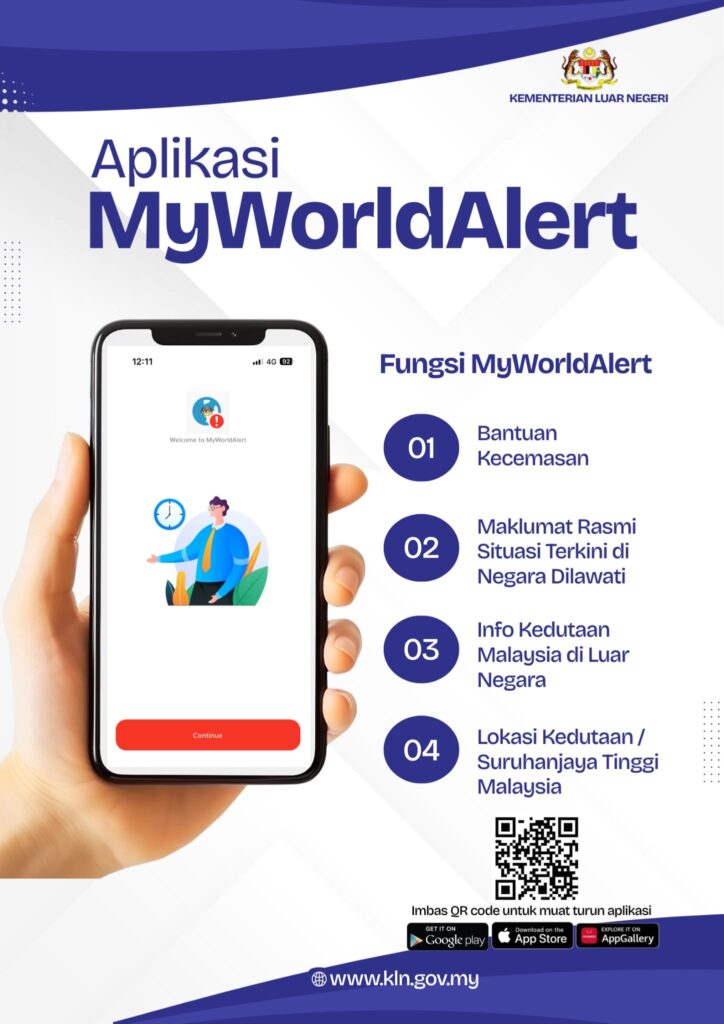
The Ministry of Foreign Affairs now wants to add a third — MyWorld Alert, an app designed to keep Malaysians safer abroad.
But beneath the surface of evacuation protocols and embassy hotlines lies a far more interesting story for marketers:
A public-sector product quietly rewriting what “citizen experience” looks like in 2026.
Because MyWorld Alert isn’t just an app.
It’s a case study on how governments can behave like brands — and what private-sector marketers can learn from it.
From Public Service to Product Thinking
The biggest surprise about MyWorld Alert is not that it exists, but how it behaves.
It behaves like a travel app. It behaves like a utility. It behaves — unexpectedly — like a brand that understands the emotional reality of its user.
The features are straightforward:
On paper, it sounds like compliance.
In practice, it’s customer experience design — the kind many corporations struggle to get right.
There’s a simple insight driving this: crises don’t allow for complicated UX.
When the floods in Hat Yai stranded Malaysians, the difference between panic and rescue was clarity of information.
Not a brochure. Not a hotline buried three layers deep on a website. Just one tap.
Governments rarely design with “one-tap” philosophies. MyWorld Alert does.
The Citizen Is the Customer — And the Data Story Is the Product
Marketers talk endlessly about “real-time consumer insight”.
The Foreign Ministry is now doing it out of sheer necessity. MyWorld Alert gives Wisma Putra what brands spend millions trying to achieve:
This is a sovereign version of the holy grail — just-in-time, context-specific engagement.
It’s designed for emergencies, yes. But the framework mirrors what the commercial world calls precision experience.
The public sector is now executing a version of what the private sector often romanticises.
Brand Trust: Built, Not Claimed
The MyWorld Alert proposition is not marketing copy. It’s not “your safety is our priority”. It’s: We know where you are when it matters and we will act.
That confidence only works if citizens believe the ministry can deliver.
During the recent Hat Yai floods, Malaysian officials evacuated more than 600 citizens — a logistical effort that relied heavily on people updating the ministry on where they were.
The lesson for brands is blunt: Trust is strongest when your user sees you working, not talking.
Insurance companies say “we’ll be there when things go wrong”. The Foreign Ministry actually was.
The Human Insight Marketers Miss
Both the Consul General in Songkhla, Ahmad Fahmi Ahmad Sarkawi, and Ambassador Datuk Wan Zaidi Wan Abdullah made the same point:
Travel safety collapses when the government doesn’t know where its people are.
Marketers should recognise the parallel. You can’t personalise, build relevance or deliver meaningful service if you’re operating blind.
The emotional truth is universal:
People feel safer when the people responsible for them know where they are.
That’s the behavioural core of MyWorld Alert — and the behavioural insight behind so many successful commercial apps.
Waze knows where you are. Grab knows where you are. Your bank app knows where you are.
Now your government does — but only when you leave the country and consent.
And in return, you get something consumers rarely get from tech companies: immediate public value.
A Soft-Power Case Study Hiding in Plain Sight
There is a reputational angle here too.
In an era where governments often appear sluggish, opaque or overstretched, MyWorld Alert signals something different — a ministry behaving more like a service brand than an institution.
This is soft power via UX. This is diplomacy via frictionless design. This is citizen engagement built on utility, not rhetoric.
Marketers often talk about “brand as service”. Wisma Putra is executing “government as service”.
It’s subtle. But it’s important.
Why This Matters for Malaysia’s Marketing Industry
Because MyWorld Alert is essentially a public-sector masterclass in:
Most brands could only dream of hitting all five.
If private-sector CMOs studied this app the way they study e-commerce benchmarks, they’d find a roadmap for designing products that earn loyalty rather than demand it.
Tech That Doesn’t Sell, But Saves
It’s rare to see a digital product in Malaysia whose success is measured not in downloads, DAUs or ad impressions — but in how fast it gets someone out of trouble.
And perhaps that is the real lesson for marketers: Utility is the new storytelling.
If you want your user to care, help them when it matters most.
MyWorld Alert isn’t glamorous. It’s not viral. It’s not crafted for awards.
But in a world crowded with apps built to monetise attention, this one is built to preserve life.
That’s a story worth paying attention to — and maybe, worth emulating.