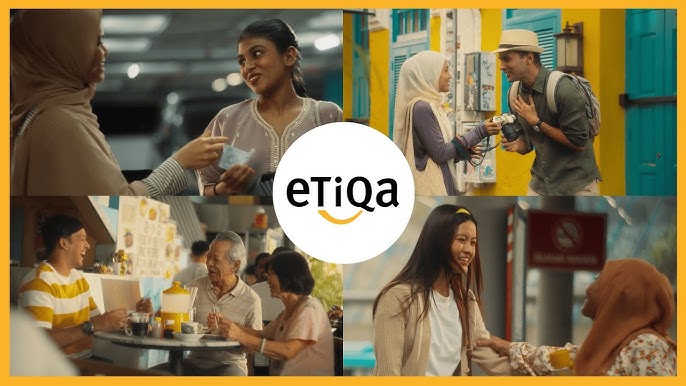
There’s a moment in Etiqa’s latest brand film, Born here with you. Always here for you, where no one is selling anything.
No policy. No premium breakdown. No “learn more” button screaming for attention.
Just a Pakcik sliding a plate across the counter and saying, “Makan dulu, bayar kemudian.” (Eat first, pay later.)
In that single line, more brand equity is built than most insurance ads achieve in three minutes of jargon.
Because what Etiqa has done here is not launch a campaign. They’ve stepped into a behaviour.
Etiqa didn’t make an ad. They recognised a cultural belief.
The Real Hero Isn’t Etiqa. It’s Malaysian Instinct.
The film doesn’t try to invent a new narrative. It simply holds a mirror up to one that Malaysians already live by.
A stranger passes RM1 to someone fumbling at a parking machine.
A stall owner waves a passer-by under his umbrella as rain suddenly crashes onto a night market.
A small act. A quiet gesture. No credits or applause.
These aren’t cinematic scenes. They’re everyday reflexes.
What Etiqa is tapping into is something deeper than emotional storytelling. It’s cultural muscle memory.
The unspoken understanding that going the extra mile isn’t extra in Malaysia. It’s expected — not because we’re taught to, but because it’s how communities survive, stay warm, stay human.
The voiceover never over explains it. It simply observes,“For us, trusting each other always comes naturally here. We never stay strangers for long.”
That line lands because it’s true. You don’t feel marketed to. You feel seen.
When Insurance Stops Selling Protection and Starts Reflecting It
Most insurance advertising makes a fatal mistake: it talks about protection like a product feature.
Etiqa flips that. Instead of listing what they cover, they show how Malaysians cover one another.
And in doing so, they reposition themselves not as a service provider, but as a cultural participant. Someone standing in the same rain. Under the same umbrella. In the same queue.
Notice the subtle shift in messaging.
This isn’t: “We insure Malaysians.” It’s: “We are Malaysian with you.”
That’s a big difference.
One is corporate. The other is communal.
It’s also strategic. Because in an era where trust in institutions is fragile, brands no longer win by shouting reliability. They win by demonstrating relatability.
The Power of Understatement in a Loud Advertising World
We’re living in a marketing climate obsessed with spectacle.
Big launches. Bigger claims. Loud creative.
Etiqa goes the other way.
Their film is quiet. Almost humble. No bombastic soundtrack. No forced tears. Just moments that feel like something you’ve personally witnessed or lived through.
This restraint is not accidental. It’s positioning.
In a world of overproduction, understatement becomes premium.
In a landscape of attention-grabbing, subtlety grabs something deeper — trust.
And for an insurance and takaful provider, trust isn’t a creative choice. It’s the product.
Going Agency-less Wasn’t a Cost Move. It Was a Meaning Move.
One of the more interesting decisions here wasn’t in front of the camera, but behind it.
Etiqa chose not to work with a conventional creative agency, instead partnering directly with Imagineers Film.
This is more than a production detail. It signals a shift.
Brands today are moving closer to their stories. Owning them. Living them. Not outsourcing soul.
By removing layers, Etiqa kept intimacy intact. The story feels personal because it probably was — closer to the brand’s internal heartbeat, not filtered through three decks and five rounds of client service translations.
Media placement by Invictus Blue ensured visibility, but the soul of it remained homegrown. Just like the message.
This Isn’t Nostalgia. It’s Cultural Continuity.
Some might see this as tapping into “kampung sentiment” or old-school Malaysian warmth. But that would miss the point.
This isn’t nostalgia marketing. It’s continuity marketing.
It reminds us that while platforms evolve, values don’t. And the brands that understand this don’t chase trends — they anchor into truths.
In a hyper-digital world, where interactions are algorithmic and relationships increasingly transactional, Etiqa chooses to dwell on acts that cannot be automated.
Kindness doesn’t scale through code. But it scales through culture.
And by tying their brand to that, they future-proof something many brands forget — emotional relevance.
A Campaign That Understands Its Job Isn’t to Speak. It’s to Belong.
When Michelle Wee, Etiqa’s Head of Brand and Communications, said the film celebrates “the quiet kindness and everyday gestures that make our communities strong,” she wasn’t quoting a brand line. She was defining a role.
Etiqa is positioning itself not as a company that shows up only when things go wrong, but as part of the everyday fabric — the small, unnoticed moments that keep life moving.
And that’s where insurance brands should live.
Not only in crises. But in the ordinary.
Because when a storm does come — literal or figurative — people don’t run to logos. They run to those they trust.
And trust isn’t built through contracts. It’s built through presence.
When Brands Stop Trying to Be Loved and Start Acting Like Family
Etiqa’s campaign doesn’t ask Malaysians to feel anything.
It reminds them of what they already do.
And in doing so, it quietly redefines what brand loyalty looks like in Malaysia’s next chapter: Not points. Not discounts. Not promises.
But a shared instinct.
Because when a brand doesn’t just operate in your country but understands how you behave in it — that’s not marketing.
That’s belonging.
Share Post:

Haven’t subscribed to our Telegram channel yet? Don’t miss out on the hottest updates in marketing & advertising!