By The Malketeer
Malaysia’s EV story just got even more interesting.
For years, the electric vehicle conversation here has felt like a dinner table topic for the urban elite: something to discuss over oat lattes, not a real buying decision.
But when Proton publicly teased an EV between RM60,000 and RM80,000, it stopped being talk.
It became a threat.
Not just to Perodua, but to the entire psychology of what a “Malaysian car” means.
Because in this price-sensitive market, RM80,000 is not just a number — it’s the invisible fence between aspiration and affordability.
Cross it, and you risk alienating half the population.
Stay below it, and you could change the game.
The EV Chessboard: Who’s Actually Playing Smarter?
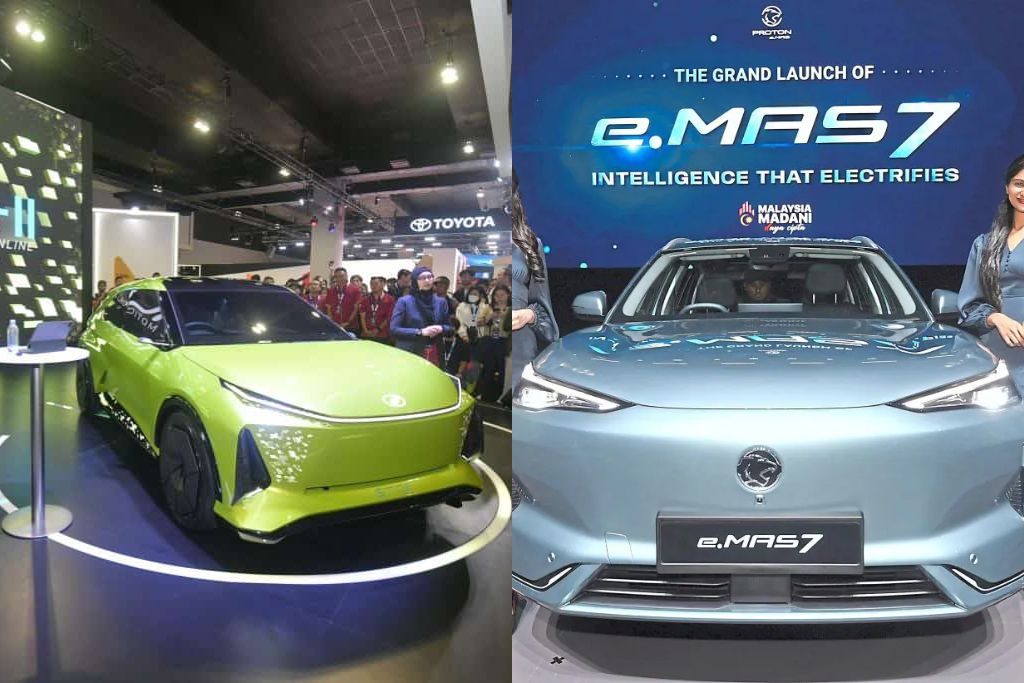
Proton’s e.MAS 5 feels like a calculated gambit.
By piggybacking on Geely’s proven EV architecture from China, Proton has skipped the growing pains most brands endure.
The play is classic Geely — rebadge, localise, and disrupt the pricing floor.
Perodua, meanwhile, is walking a lonelier road.
Its Q-VE (if that name holds) is said to be more ambitious — a home-grown EV with Battery-as-a-Service (BaaS).
In theory, it’s a masterstroke: take battery anxiety off the consumer’s shoulders and charge a small monthly fee.
In practice, Malaysians still think of a battery the way they think of a heart — they’d rather own it.
So, while Proton is playing fast and clever, Perodua is playing cautious and cultural.
Marketing Lesson #1: Price is Not a Strategy — Perception Is
When BYD detonated the RM100,000 Seal 6 bomb, it forced every carmaker in Malaysia into a boardroom rethink.
Proton’s counterpunch at RM60,000 wasn’t just a pricing tactic — it was a message: “EVs are not premium toys anymore. They’re your next Myvi.”
That’s what Perodua should fear.
Because for decades, Perodua’s marketing crown has rested on one simple truth: they understood the Malaysian middle class better than anyone else.
The Myvi wasn’t just a car — it was a rite of passage.
If Proton can offer an EV that feels like a Myvi in both price and reliability, the throne might shake.
Marketing Lesson #2: National Pride Still Sells
Proton knows something else that marketers often underestimate — emotion.
Every e.MAS ad and teaser is dripping with patriotic subtext: our EV, our time, our future.
Malaysians love that.
Just look at how the e.MAS 7 was received — not as a Geely clone, but as a comeback story.
Proton is smartly aligning with the “Malaysia Boleh” psyche while quietly leveraging China’s cost structure.
Perodua, in contrast, has never relied on nationalism — its strength is trust.
But trust doesn’t trend on TikTok.
If Proton can turn patriotism into purchase intent, Perodua’s spreadsheets might not save it.
The Consumer Crossroads
The truth is, most Malaysians aren’t ready to buy an EV but they’re ready to want one.
The recent RON95 subsidy reorganisation, which widened the price gap by 61 sen per litre, was a quiet catalyst.
Consumers may not switch overnight, but every refill now comes with a tiny pang of guilt or curiosity.
Add to that the RM99 booking gimmick (with RM100 preloaded on a Touch ‘n Go card — effectively paying you to book), and Proton has turned a transaction into theatre.
It’s a psychological masterclass: “You risk nothing, but feel part of something big.”
Marketing Lesson #3: Sell the Story, Not the Specs
Specs are boring. Stories move metal.
The battle between Proton and Perodua is not about kilowatt-hours or range; it’s about identity.
Proton’s message is “join the future.”
Perodua’s is “don’t be left behind.”
If the average first-time buyer — say a 28-year-old graduate in Shah Alam — can buy an EV that charges for RM12 at home instead of refuelling for RM120 a week, the shift is inevitable.
The question is no longer “if” Malaysians will switch to EVs, but “who they’ll buy from when they do.”
The Real Winner? The Malaysian Consumer
For once, the rivalry is good news.
Two local carmakers competing for the same electric future means the market will finally get affordable options, genuine variety, and less of the “imported luxury” narrative that’s long defined EVs.
If 2025 is the setup year, 2026 will be the inflection — when EVs cross the 10% mark of total sales.
After that, every marketing playbook will have to be rewritten.
Best of luck to both our boys but also, good luck to every marketer watching this duel.
Because if Proton and Perodua can electrify the middle class, your brand’s excuses for not adapting will run out of charge.
Three Takeaways for Brand Strategists from the EV War
This isn’t just Proton vs Perodua.
It’s the story of how Malaysia learns to fall in love with the future — at a price that finally feels like ours.
Share Post:

Haven’t subscribed to our Telegram channel yet? Don’t miss out on the hottest updates in marketing & advertising!