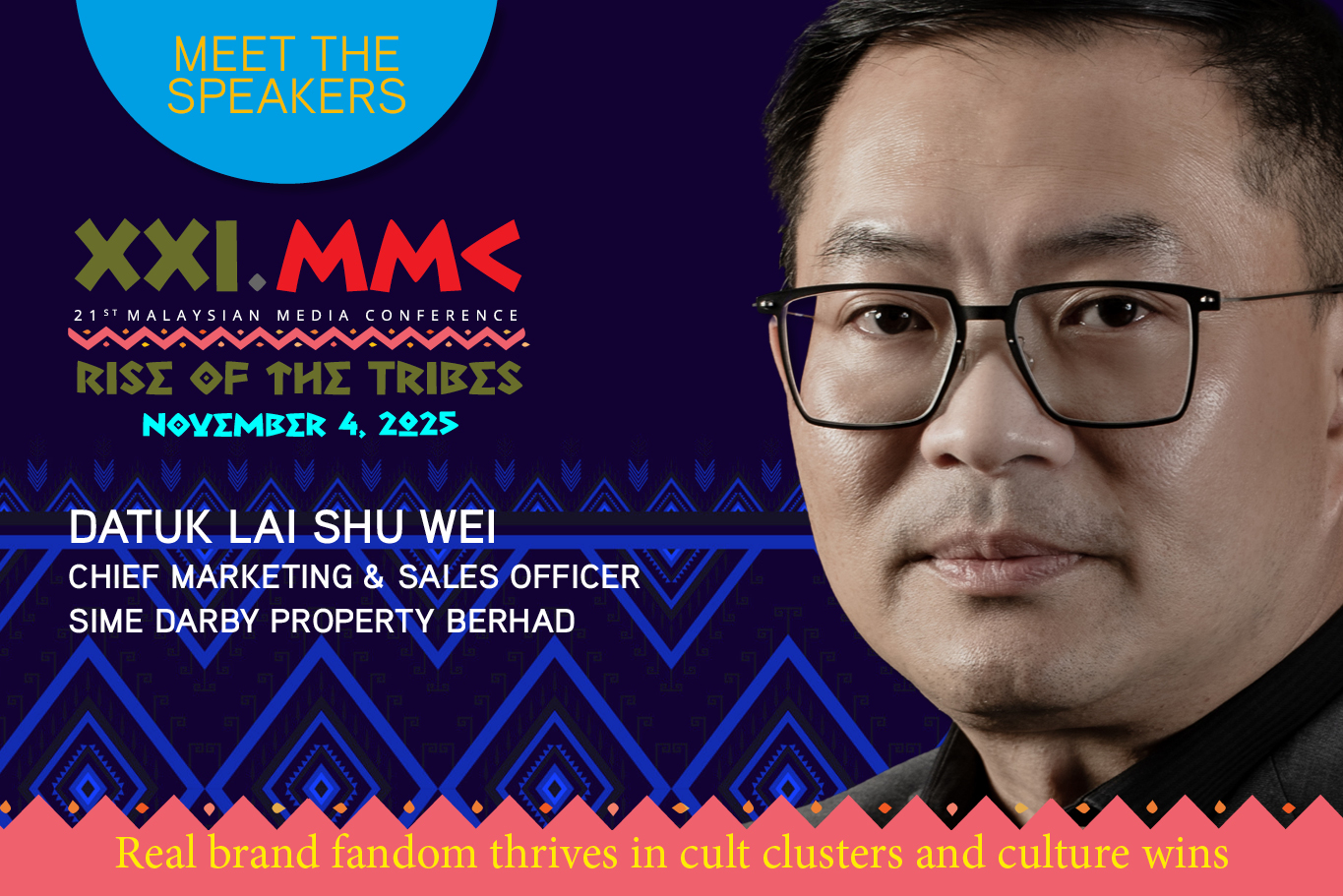
Datuk Lai Shu Wei has led Sime Darby Property Berhad through a critical revival: unifying teams, embedding customer accountability, and driving massive campaigns. With roots in FMCG, telecom and banking, his strategic clarity and discipline have positioned the brand as a purpose-driven developer.
At the 21st Malaysia Media Conference on November 4th, Datuk Lai Shu Wei’s focus turns to the Rise of the ECO, unpacking how brands must move from green rhetoric to genuine sustainability, and why transparency is the only true currency with ecoconscious audiences. We sit down with him for insights into his session.
Everyone talks about green, but what’s the most honest sustainability story you’ve told?
Our most honest story is our transparency about what it truly takes to make sustainability a reality. We are focused on shifting the industry’s perspective from viewing green infrastructure as an upfront cost to recognising it as a long-term value driver.
We openly acknowledge that embedding sustainability requires significant investment and a fundamental change in how development is approached. A good example of this was through the recent Urban Biodiversity Conference 2025 (UBC2025) organised by Sime Darby Property where we invited peers, policymakers, and communities to openly discuss the challenges and opportunities of embedding biodiversity in urban development.
This philosophy is also materialised in projects that go beyond “cosmetic greening”:
1. Our Bandar Bukit Raja Wetland Townpark utilises a complete wetland system as a nature-based solution to manage urban flooding and enhance biodiversity.
2. Our master plan for KL East reflects a firm commitment to conservation, where we have permanently safeguarded the 53-acre KL East Park as a green lung, with no future development planned within its boundaries.
3. Our flagship City of Elmina, we created Malaysia’s first Urban Biodiversity Corridor — a 5-kilometre ecological bridge connecting six major parks to the Bukit Cherakah Forest Reserve — which has led to measurable increases in species diversity and natural cooling for the community.
These are substantial, long-term investments in natural capital. We believe audiences respect this approach. When you are transparent about the commitment required and can demonstrate how these investments deliver sustained returns, be it for the community, the environment, or property values, you build a level of trust that no campaign alone can achieve. That is our most honest story.
Which is worse: silence on sustainability or empty greenwashing?
That’s a critical question. Without a doubt, empty greenwashing is far more damaging.
While silence is a missed opportunity to lead, greenwashing actively erodes the trust that is essential for collective action. It devalues the genuine efforts being made by others and creates cynicism among consumers, investors, and communities.
The true alternative to both is transparent, evidence-based action. Our approach is to move beyond rhetoric and treat sustainability not as “cosmetic greening” at the end, but as essential infrastructure embedded from the very start of any project.
This is why we focus on tangible frameworks and measurement. We conduct Biodiversity Impact Assessments (“BIA”) before development begins and are developing our own Biodiversity Index, because “what gets measured, gets managed”. This commitment to transparently measuring our net positive impact ensures our conservation effort are effective.
Ultimately, our strategy is to “lead by doing”. By demonstrating that profitability and sustainability go hand in hand, we aim to make authentic sustainability the industry benchmark, rendering both silence and greenwashing irrelevant.
How do you sell eco-values in a market that’s price-sensitive?
We don’t believe in selling eco-values as a separate feature. Our Purpose is to be a Value Multiplier for people, businesses, economies and the planet, and this is exactly how we approach it.
We reframe the conversation from short-term cost to long-term, sustainable value. We see urban biodiversity as a “strategic value multiplier”. A home in a township with thriving green spaces, better climate resilience, and improved community well-being is a more secure and valuable long-term asset. We make the case that a development that degrades its ecosystem today will lose value tomorrow. This value is tangible.
For instance, our wetland systems in Bandar Bukit Raja are nature-based solutions that help protect a homeowner’s investment. This value also extends to social well-being. In our City of Elmina, we partnered with UNICEF to build Malaysia’s first inclusive playground, investing directly in a healthy, integrated community for children of all abilities.
While building in this long-term value, we remain acutely aware of market sensitivities. We actively work to alleviate buyers’ concerns through targeted campaigns that facilitate hassle-free ownership. Our “Jom Raya” campaign,
for example, offered tangible incentives like low interest rates and waived legal fees to make purchasing a home more accessible.
It’s a dual strategy: we embed profound, lasting value through sustainable design, and we address immediate price sensitivity with practical financial solutions. We make it clear that choosing a sustainable home isn’t a compromise, it’s the smartest investment a buyer can make.
If the Eco tribe had to pick its loudest battlefield in Malaysia, will it be the homes we live in, the way we travel, or the food we put on our tables?
While all three are critical, I believe the most fundamental battlefield, and our greatest opportunity, is in the homes and communities we build. The reason is simple, its permanence and scale.
Unlike our daily choices in food or travel, the decisions we make in property development have immense and long-lasting consequences. The way we design and build our townships sets the stage for everything else. It creates the very ecosystem where a sustainable lifestyle is either possible or impossible for decades to come.
As a developer, we have the chance to embed sustainability as essential infrastructure from the start. We can engineer interconnected ecological corridors , design nature-based solutions for climate resilience like wetlands , and restore degraded lands into thriving habitats. This is systemic change at the foundational level.
Our ultimate goal is to redefine township development, moving towards integrated ecosystems where both people and nature can flourish for generations to come. When you get the homes and communities right, you create the bedrock for everything else to follow.
If Malaysia had to lead with one eco-message globally, what should it be?
From our perspective, perhaps the most meaningful message we can help to champion is a simple one: “Emerging economies can balance growth with green responsibility.”
Malaysia is in a unique position to explore this. As a rapidly developing and diverse nation, we grapple with that tension every day. We certainly don’t have all the answers.
For us, demonstrating that balance in our own projects is how we try to contribute. We are learning to embed biodiversity as a strategic layer, using frameworks like ARC, which is Avoid, Regenerate, Conserve. Our hope is that by sharing what we learn from projects like the City of Elmina, we can provide tangible proof that this balance is not just possible but creates long-term value for communities and investors.
What are the notable behaviour trends for this category we need to look out for when picking media channels?
It’s all about purpose-driven storytelling. Consumers are investing in a vision and a community with clear values. We see this in the strong performance of our festive brand films which communicate our township sustainability stories in relatable ways.
Both our Hari Raya film, which connected “Homecoming” to the need for safe refuge, and our Chinese New Year film, “Sowing the Seeds for Tomorrow’s Prosperity,” focused on our commitment to urban biodiversity. This indicates that deeper, emotional storytelling, are essential for communicating our brand purpose.
There is also a clear demand for authentic community engagement and meaningful experiences. Consumers want to participate. Our campaigns are centred on tangible, on-the-ground activities. This includes our “Jom Raya” community events and the interactive weekend workshops on nursery maintenance and seed propagation held at the Elmina Rainforest Knowledge Centre (ERKC) for Chinese New Year.
Third, we’re seeing the rise of deep digital dialogue and user-generated content. The modern homebuyer is a researcher who values transparency. We actively encourage a two-way conversation by inviting visitors to share their moments on social media, tagging our official account and using campaign hashtags to receive a gift.
Finally, a crucial trend is the value placed on long-term developer commitment. Today’s buyers are looking well beyond the sale date. This insight tells us that we must also include post-purchase communication and, most importantly, the well-maintained township itself, which acts as the strongest possible proof of our brand promise.
Datuk Lai Shu Wei is also a Malaysian CMO of the Year and will be speaking on November 4th at the 21st Malaysian Marketing Conference. Bringing together media strategists, brand leaders, storytellers, and cultural observers to share case studies and lived experiences from the frontlines of tribe-driven marketing. For more: https://marketingmagazine.com.my/mmc/2025/
Share Post:
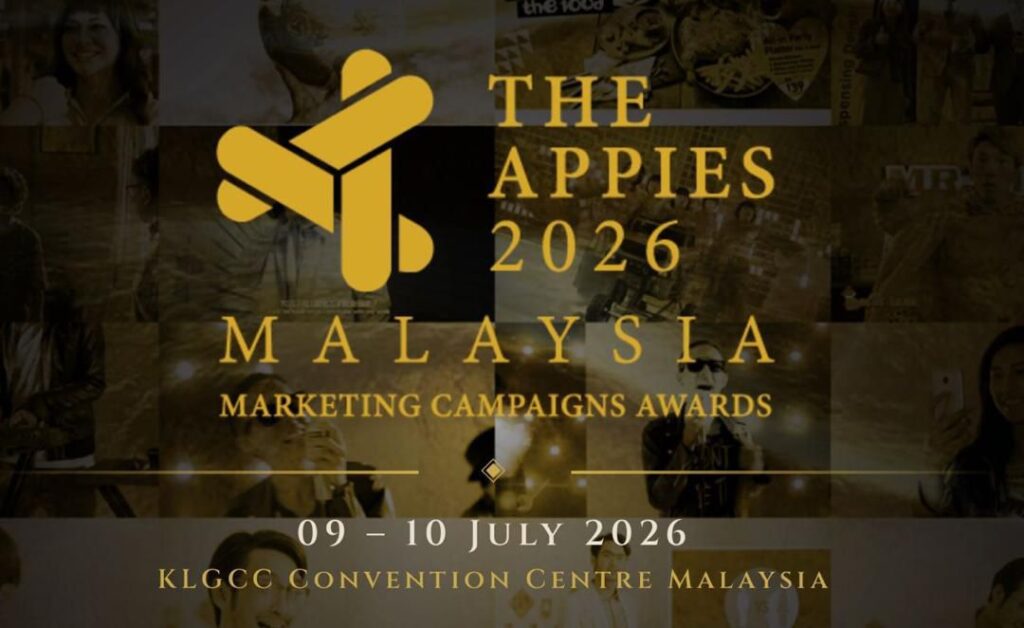
The APPIES is where Malaysia’s boldest campaigns, brightest ideas, and most impactful storytellers take the stage.
More than an awards show, it is the industry’s ultimate platform for creative, media, digital and marketing excellence, where live presentations meet live judging.
This is your chance to showcase work that moved audiences, shaped conversations, and delivered real results.
From breakthrough brand campaigns to innovative digital experiences, the APPIES celebrates the work that defines the future of marketing.
Step into the spotlight alongside the industry’s leading agencies, brands, creatives, strategists and changemakers.
Whether you are aiming for Gold, Silver, Bronze or the prestigious Best of the Best recognition, this is your moment to make history.
Your campaign deserves to be seen.
Your ideas deserve the stage.
Your work deserves the legacy.
KEY DATES
Haven’t subscribed to our Telegram channel yet? Don’t miss out on the hottest updates in marketing & advertising!