By The Malketeer
What if the cure to urban loneliness was hiding above our heads all along?
In Seoul, one of Asia’s most vibrant yet isolating megacities, Heineken has found an unexpected answer: the humble rooftop.
With its new campaign Rooftop Revival, created with LePub, the brewer isn’t just selling beer — it’s turning forgotten concrete slabs into stages for human connection.
The “Proximity Paradox” of City Life
Cities promise connection.
Millions of people live side by side, their apartments stacked sky-high, their commutes shared across jam-packed subways.
Yet studies show a harsher truth: 57% of urban dwellers across global capitals admit to feeling lonely, and nearly half of Gen Z and Millennials say isolation is part of their weekly reality.
Seoul, despite its buzzing nightlife and endless rows of cafés, is no exception.
More than half of residents believe the city is designed for productivity rather than connection.
Here lies the paradox: density without intimacy, community without closeness.
Rooftops as Social Oxygen
Heineken’s stroke of genius was to reframe what Seoulites had been ignoring: the city’s flat rooftops.
They’re everywhere, yet mostly inaccessible, left bare in favour of indoor efficiency.
Rooftop Revival flips this narrative.
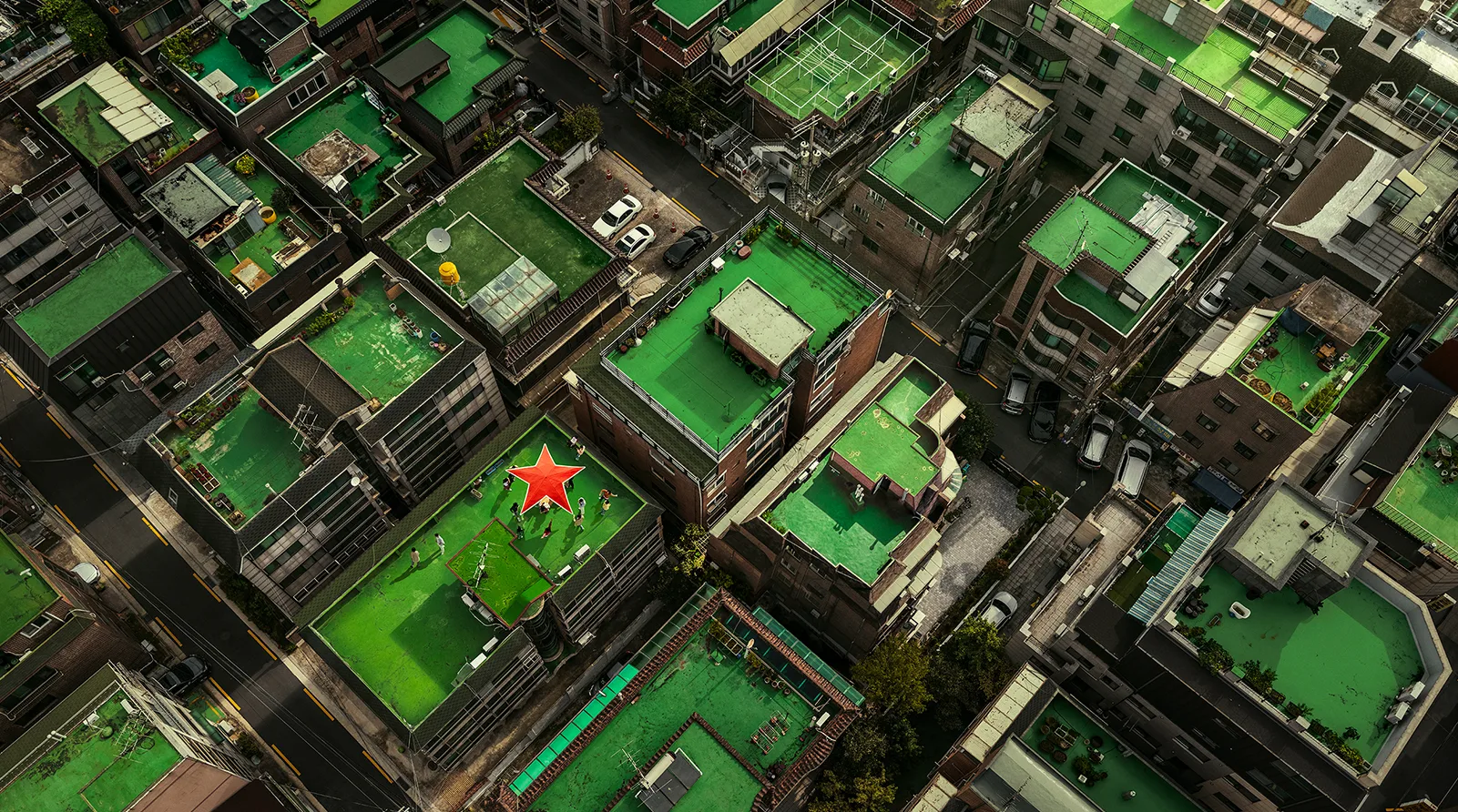
The brand curated one-off experiences on these underused spaces, with attendance unlocked via satellite images marked by Heineken’s iconic red star.
Over 8,000 people scrambled for a spot, underscoring just how starved the city was for new social rituals.
The activations weren’t just beer-and-DJ nights.
They layered Seoul’s cultural DNA into every gathering:
At the heart of each space sat the reimagined Peyong-Sang — a traditional Korean wooden platform — updated with a Heineken-red parasol, icebox slots, and Bluetooth speakers.
It was heritage meeting modern sociability.
More Than a Campaign — A Cultural Reframe
Photographer Tom Hegen captured these spaces from the air, offering a bird’s-eye view of rooftops reborn as pockets of joy.
His aerial images will soon splash across digital screens in Seoul, but the real artistry lies in the mindset shift.
As Munich-based Hegen put it: “Solutions to loneliness don’t always require new infrastructure, just a new perspective to refresh social life.”
This is urban placemaking disguised as brand activation.
Korean architect Byoung Soo Cho added the deeper layer: in cities designed for productivity, forgotten spaces can become tools of renewal.
Heineken’s Red Star as a Beacon
For Nabil Nasser, Global Head of Heineken, the campaign is about re-signifying the brand’s most recognisable asset.
“Our red star against a green backdrop isn’t just an icon — it’s an invitation to the world,” he explained.
From street level, it marks a party.
From space, it’s a signal of togetherness.
LePub’s Bruno Bertelli went further: “Meaningful change doesn’t require new builds, just a fresh perspective.”
This is the alchemy of Rooftop Revival — beer not as the product, but as the excuse, the rooftop not as property, but as possibility.
Takeaways from the Rooftop
A Rooftop View of Marketing’s Future
The brilliance of Rooftop Revival lies in its subtlety.
It’s not trying to solve urban planning.
It’s not claiming to cure loneliness.
Instead, it nudges people toward moments of connection by showing that joy doesn’t need new infrastructure — it just needs access and intention.
For marketers, the message is simple: when the world feels crowded yet isolating, the brands that win will be the ones that create genuine spaces — physical or digital — where people rediscover each other.
Sometimes, the most powerful campaigns don’t build new skyscrapers.
They just invite us upstairs.
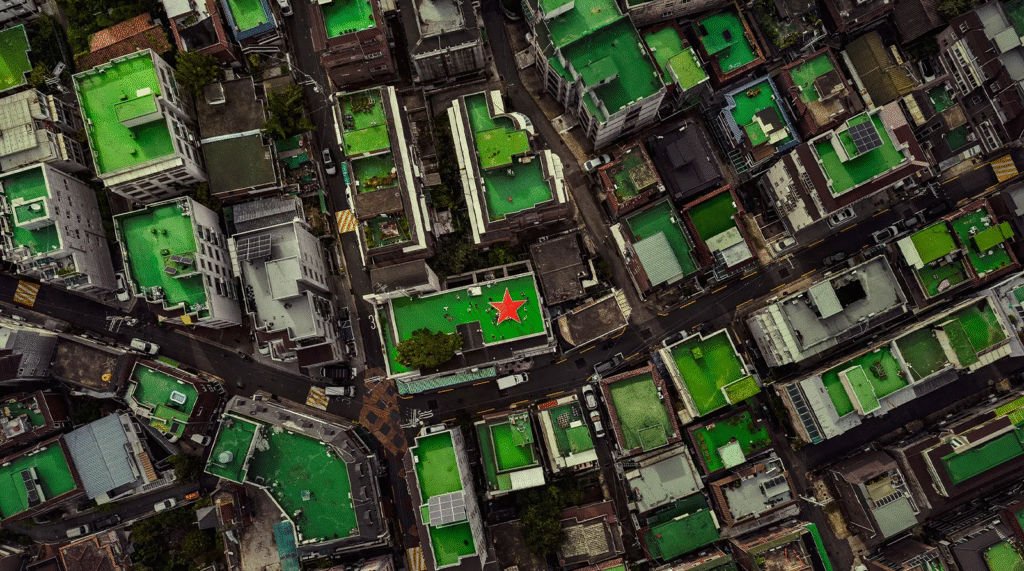
Satellite images ©2025 Maxar Technologies via Le Pub.