By The Malketeer
A browser without an address bar?
That’s how Sam Altman announced OpenAI’s latest move this week — ChatGPT Atlas, a browser built around its famous chatbot rather than on top of the old search bar.
Atlas isn’t just another Chrome look-alike.
It ditches the address bar entirely, replacing it with something more radical: a conversation.
You don’t type “www.” anymore. You simply ask.
And suddenly, the world’s most powerful chatbot becomes your new home page.
For marketers, this is not just a tech update.
It’s a signal flare — a shift in how people might soon explore, discover, and decide online.
The browser becomes the brand
Let’s pause here.
Since Netscape in the ’90s, browsers have been silent highways — we used them to get somewhere else.
They never had a voice, a memory, or a relationship with us.
ChatGPT Atlas changes that. It listens. It remembers. It acts.
For marketers, this marks a psychological pivot.
When your browser talks back, your brand no longer competes for a click — it competes for inclusion in a conversation.
Imagine asking your browser: “Plan a weekend trip to Penang with good food, mid-range hotels, and some street art.”
The Atlas agent doesn’t show you ten blue links. It books your room, finds the murals, and reserves dinner at Tek Sen — all while you sip your coffee.
Welcome to a future where intent meets instant fulfilment.
Search without search
Here’s the part that should make search marketers sit up.
Atlas could quietly dismantle the foundation of Google’s empire — search as navigation.
When there’s no address bar, there’s no “typing into Google.”
When ChatGPT gives you the answer, there’s no need to visit a website.
It’s like asking your friend instead of scrolling a list.
For now, the agent mode is limited to paying ChatGPT users.
But if history has taught us anything, what starts as a premium feature often becomes the new default.
Google once turned “search” into a verb.
OpenAI might turn “ask” into an action.
The new battleground: Attention flow
Every marketer knows attention is the real currency. But Atlas rewires the flow.
In the Chrome-Google ecosystem, users move from query → link → landing page → ad → conversion.
In Atlas, it’s query → response → action.
No ads. No friction. No detour.
That means brands will have to rethink visibility.
It’s no longer about ranking first on Google; it’s about being summoned in an AI’s reasoning chain.
Which raises a new marketing discipline altogether: Conversational Presence Optimisation.
Your content will need to be structured not just for SEO, but for LLM retrieval — clear, context-rich, answer-ready.
Otherwise, your brand vanishes in the fog of machine inference.
Chrome, Edge… and now Atlas
Let’s be clear: OpenAI isn’t chasing Chrome’s market share overnight.
It’s playing a long game.
Atlas launches first on macOS. Windows and mobile versions will follow.
The design is minimalist — blue hues, white cursor icon, no clutter.
But under that simplicity lies intent.
OpenAI is slowly colonising the interface layer of the internet — the same layer that controls what you see first.
It already powers search via ChatGPT’s “Browse with Bing” function.
Now it wants to own the experience itself.
It’s not hard to imagine the next step: a revenue model based on AI-driven recommendations, affiliate partnerships, and paid task integrations with players like Shopify, Expedia, or Grab.
When the agent books your hotel or buys your sneakers, that’s performance marketing on steroids.
Why should marketers care?
Because this changes everything we measure.
Clicks? Outdated.
Views? Invisible.
Attribution? Redefined.
In a conversational browser, the brand’s “moment of truth” happens inside the chat response.
Your logo might not appear — but your product could be the one selected by the AI to act upon.
That’s the new holy grail: algorithmic preference.
So, how do you earn it?
By feeding LLMs with consistent, structured, and trustworthy brand data.
By partnering with platforms early.
By ensuring your information is machine-readable and semantically rich.
This isn’t SEO 2.0. It’s Brand AI Alignment.
Lessons for Marketers
#1: Design for conversations, not clicks.
Your next customer journey might start with “Hey, book me something nice.” Make sure your brand can be part of that answer — not just an ad on the sidelines.
#2: Feed the machines.
LLMs learn from content. Keep your brand data updated across public sources, structured schemas, and product databases. If the AI can’t read you, it can’t recommend you.
#3: Experiment with agent integrations.
If Atlas allows plug-ins or direct brand APIs, join early. Think “booking flows,” “customer service,” or “AI-curated recommendations.” Be where the tasks happen.
#4: Rethink KPIs.
Measure conversational conversions — the moment your brand is chosen, mentioned, or executed by the agent. New dashboards will be needed to track invisible influence.
#5: Stay agile.
Atlas might still be a niche tool for now, but it signals the direction of digital behaviour. Just like social media in 2008 — the early adopters will write the playbook.
The Malaysian lens
In Malaysia, adoption will depend on mobile rollout.
Most Malaysians live online through phones, not Macs.
When Atlas hits iOS and Android, that’s when you’ll see the ripple.
But there’s another edge: trust and language.
If Atlas starts understanding Bahasa Malaysia, Tamil, and Manglish nuances, it could finally democratise AI access beyond English-first users.
For local brands, that’s a cue to start localising content with precision — not just translation, but contextual resonance.
Imagine Atlas recommending “nasi lemak delivery near me” — and your brand being the one it picks.
That’s not just marketing. That’s machine-mediated intimacy.
When OpenAI launched ChatGPT, it disrupted how we think.
With Atlas, it’s going after how we browse.
Google changed behaviour by giving us search.
OpenAI could change it again by making the browser itself intelligent.
We’re not just surfing the web anymore.
The web, for the first time, is surfing us.
Share Post:

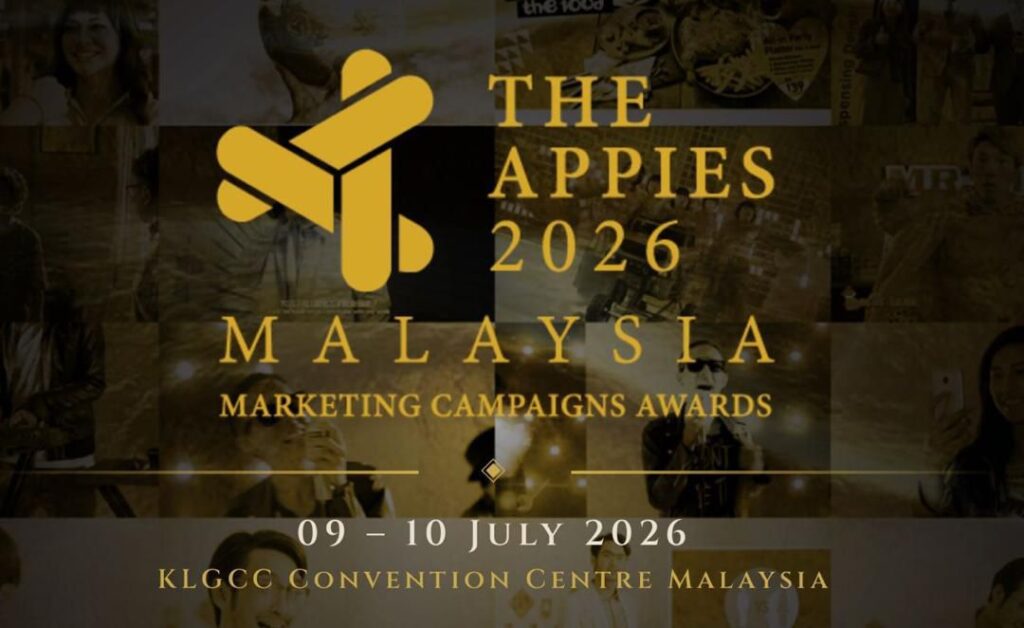
The APPIES is where Malaysia’s boldest campaigns, brightest ideas, and most impactful storytellers take the stage.
More than an awards show, it is the industry’s ultimate platform for creative, media, digital and marketing excellence, where live presentations meet live judging.
This is your chance to showcase work that moved audiences, shaped conversations, and delivered real results.
From breakthrough brand campaigns to innovative digital experiences, the APPIES celebrates the work that defines the future of marketing.
Step into the spotlight alongside the industry’s leading agencies, brands, creatives, strategists and changemakers.
Whether you are aiming for Gold, Silver, Bronze or the prestigious Best of the Best recognition, this is your moment to make history.
Your campaign deserves to be seen.
Your ideas deserve the stage.
Your work deserves the legacy.
KEY DATES
Haven’t subscribed to our Telegram channel yet? Don’t miss out on the hottest updates in marketing & advertising!