New dentsu study reveals how AI, economic caution and social media fatigue are reshaping travel behaviour across Malaysia and Southeast Asia.
For years, travel marketing sold the fantasy. The infinity pool. The hidden beach. The smiling couple framed against a sunset no normal tourist ever actually sees.
But dentsu’s latest Consumer Navigator: The APAC Consumer Travel Landscape (Q1 2026) suggests something has quietly shifted across Southeast Asia. Travellers are still scrolling, still dreaming and still heavily influenced by TikTok, Instagram and AI-powered recommendations.
Yet when it finally comes to booking, many are behaving less like impulsive explorers and more like cautious auditors.
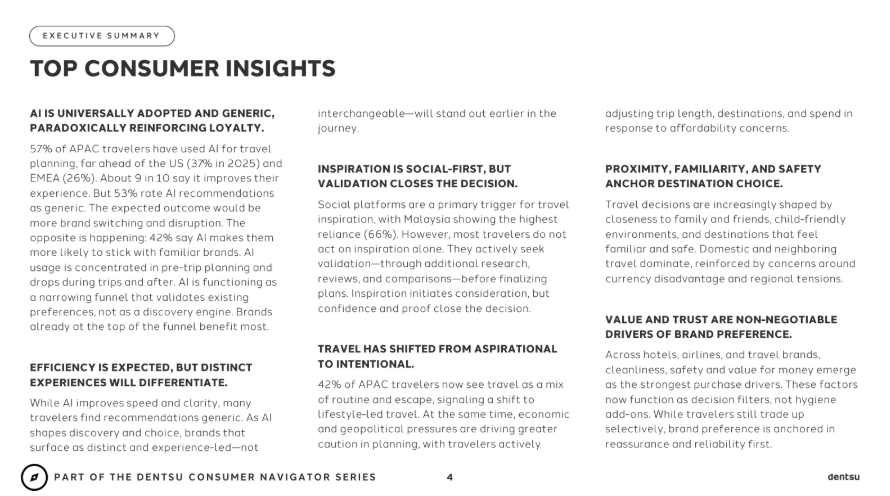
Travel Has Shifted From Aspirational To Intentional
The study, based on 3,000 respondents across five APAC markets including Malaysia and Vietnam, paints a picture of a region that has become far more intentional about travel.
In other words, wanderlust is alive. But so is anxiety.
The Age of “Double-Checking Everything”
One of the more fascinating findings is the growing contradiction between influence and trust.
Malaysia emerged as the market most inspired by social media travel content, with 67% saying they rely on it for inspiration.
Yet Malaysians were also among the most sceptical, with many admitting they conduct additional research before committing to a trip. It feels distinctly Malaysian.
People happily save reels about hidden cafés in Osaka or boutique hotels in Seoul, then spend three nights cross-checking Reddit threads, YouTube reviews, exchange rates, weather conditions and whether the breakfast buffet is genuinely halal-friendly or merely “halal-ish”.
Travel inspiration may now happen in seconds. Trust still takes work.
Audrey Chong, CEO of dentsu Malaysia, described it as consumers learning to “navigate abundance without fully trusting it.”
“That changes the role of branding entirely,” she noted. “Inspiration may open the door, but credibility is what gets a brand invited in.”
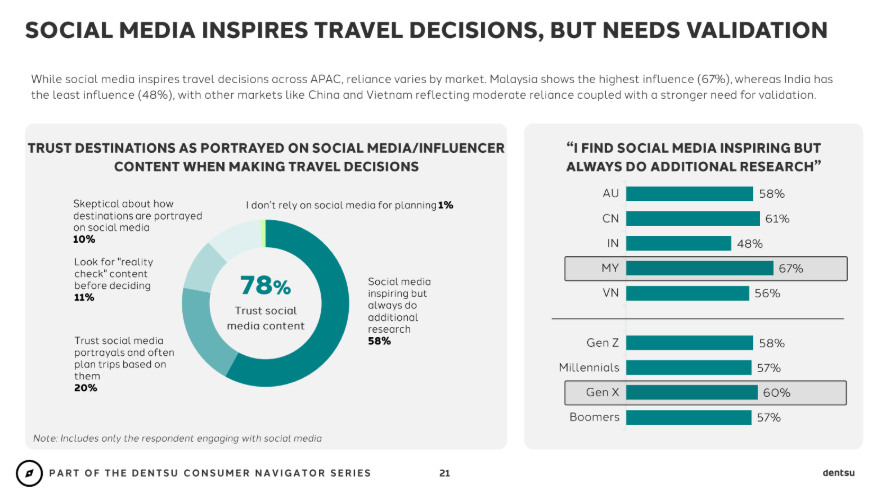
Malaysia Leads APAC In Social Media Influence — And Scepticism
That line probably explains modern travel behaviour better than most tourism campaigns do.
AI Isn’t Expanding Choice. It’s Narrowing It.
The industry assumption has long been that AI would unlock endless discovery. Instead, dentsu’s report suggests AI is reinforcing familiarity.
Across APAC, 57% of travellers have already used AI tools for travel planning. But more than half also described AI-generated recommendations as generic.
Even more interestingly, 42% said AI actually makes them more likely to stick with familiar brands. That is a major signal for marketers.
AI may feel futuristic, but consumers are using it conservatively. Rather than hunting for obscure discoveries, many are using ChatGPT-style tools to validate choices they were already leaning towards.
The safest hotel. The airline with the fewest headaches.
The destination that won’t produce unpleasant surprises. The report notes that AI usage remains heavily concentrated in pre-trip planning, especially destination research, accommodation and transport decisions.
In Malaysia specifically, AI usage for destination research hit 69%, among the highest in the region.
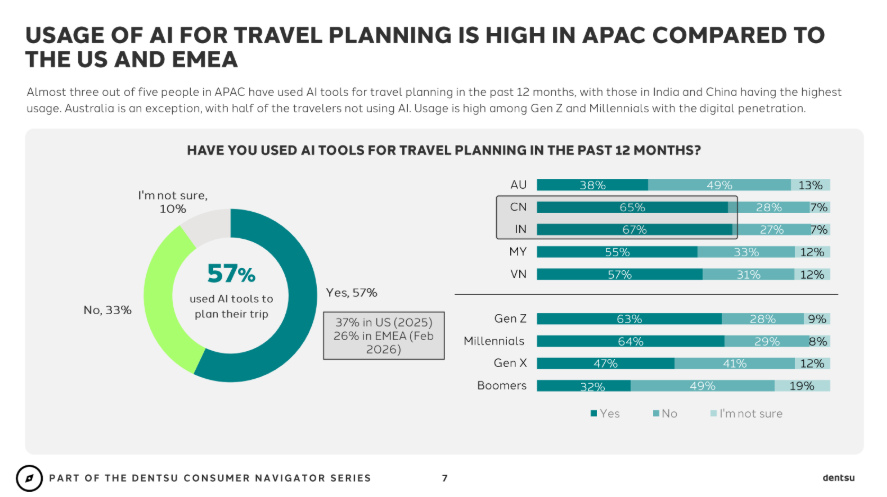
57% Of APAC Travellers Already Use AI For Travel Planning
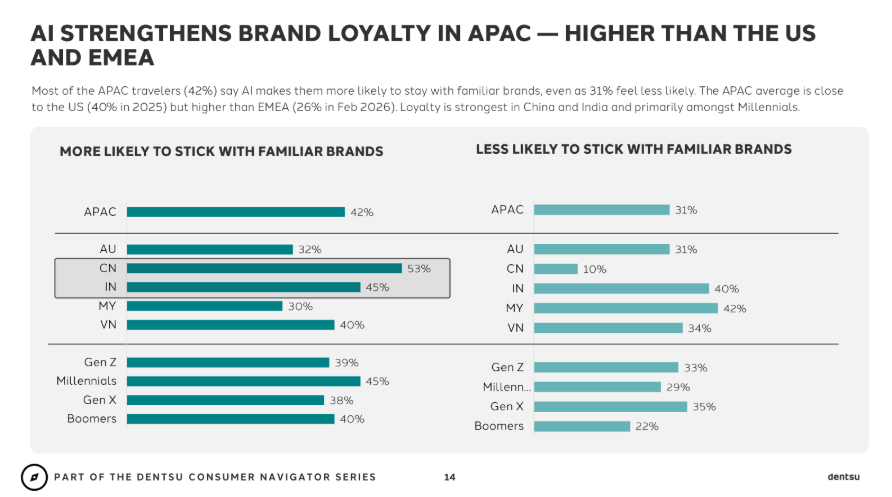
AI Is Reinforcing Loyalty, Not Disruption
Yet instead of producing adventurous travellers, AI may be quietly creating more efficient versions of cautious consumers.
Southeast Asia’s New Travel Mood: “Worth It Or Not?”
The emotional backdrop matters here.
Inflation, currency pressures and geopolitical tensions are clearly shaping behaviour across the region.
The report found that 67% of Malaysian travellers are now choosing more affordable destinations, while 63% say geopolitical concerns influence their decisions.
Vietnam showed a different but equally revealing tension.
Vietnamese travellers emerged as APAC’s most experience-driven consumers, prioritising wellness, self-expression and meaningful activities.
But they also recorded the region’s highest rate of trip postponement at 31%.
That tension between aspiration and restraint increasingly defines Southeast Asian travel today.
People still want transformative experiences. They just want reassurance that those experiences justify the emotional and financial investment.
Which explains why budget travel content, food discoveries and wellness experiences are outperforming glossy luxury imagery across social platforms.
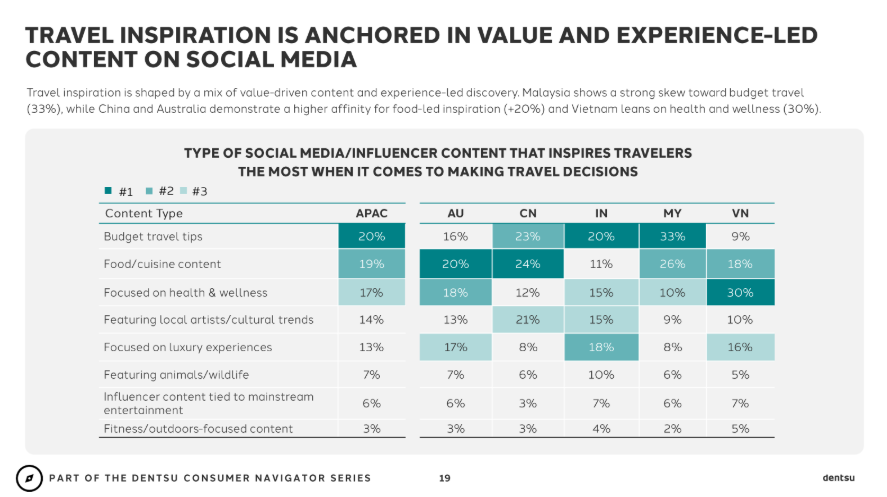
Budget Travel Content Is Dominating Southeast Asia
Consumers are no longer merely asking:
“Where should I go?”
They are asking:
“Will this trip actually feel worth it?”
Visibility Is No Longer Enough
For travel brands, the implications are uncomfortable but clear. Being seen is easy now. Staying believable is harder.
The old tourism formula — flood feeds with beautiful imagery and hope aspiration does the rest — appears increasingly insufficient in an era where consumers instinctively verify everything.
Dentsu’s findings suggest travel brands now operate inside what might best be described as a compressed decision funnel. AI accelerates discovery. Social media triggers consideration. But validation determines conversion.
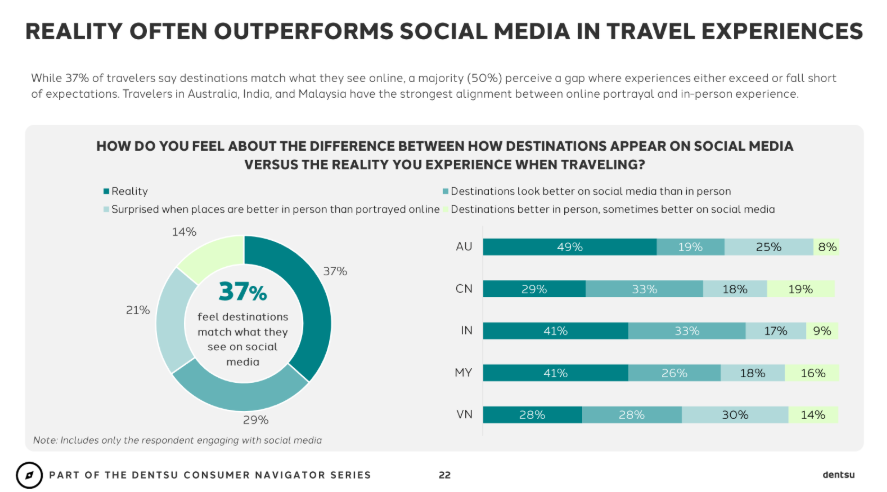
Reality Often Outperforms Social Media
That changes the marketing brief entirely. The winners may not necessarily be the loudest brands, but the ones that feel emotionally credible after the excitement fades.
Because today’s Southeast Asian traveller isn’t simply looking for inspiration anymore. They’re looking for confidence.