“Have a nice day” used to be a courtesy.
Now, at 500 pilot outlets across the United States, it’s data.
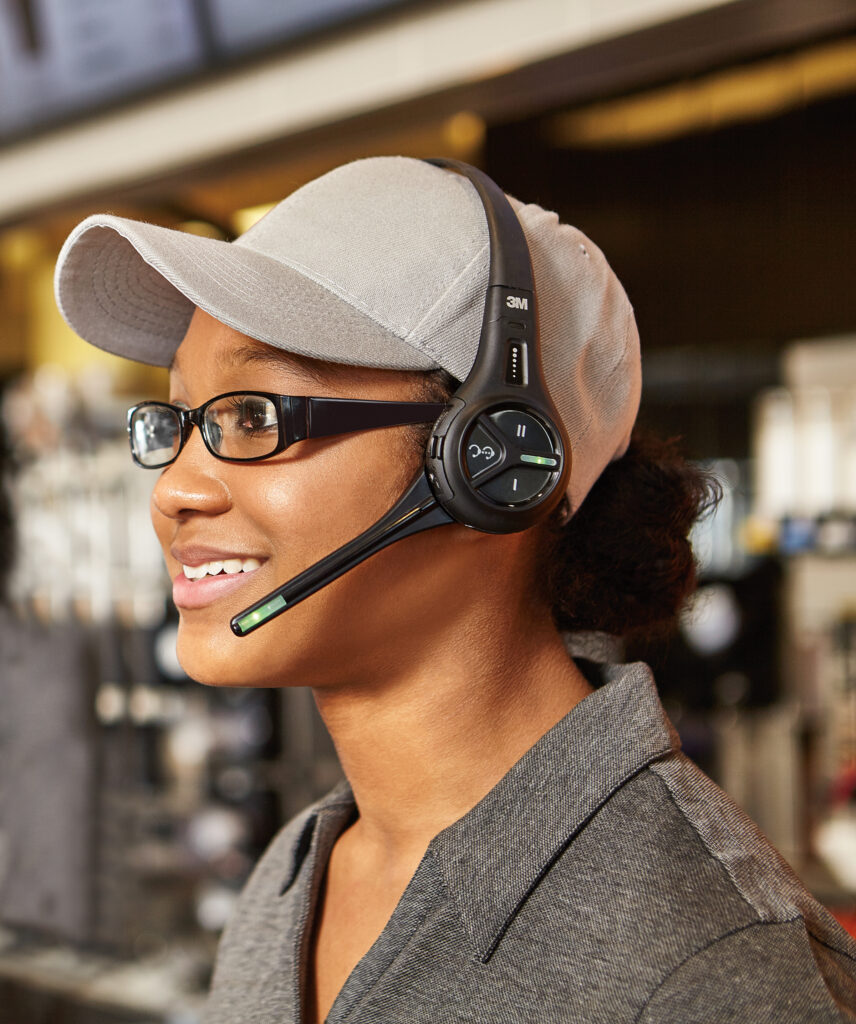
Burger King is testing AI-powered headsets—branded BK Assistant—that analyse drive-thru conversations and generate aggregated “friendliness scores” based on keywords such as “please” and “thank you.”
The system, powered by OpenAI, also embeds a chatbot named “Patty” that answers recipe questions, flags low stock (Diet Coke running out, for instance), and nudges staff operationally.
On paper, this is a productivity story.
In practice, it’s a brand story.
From speed metrics to sentiment metrics
Fast-food chains have long measured performance through throughput: cars per hour, average ticket value, service time.
What Burger King is experimenting with is the quantification of tone.
That’s a shift from operational KPIs to emotional KPIs.
The company insists the system is not designed to record conversations or evaluate individual employees, but to use aggregated hospitality keywords to assess overall service levels.
It positions the technology as support—freeing managers to focus on guest experience and leadership.
But in a world where frontline workers already feel the pressure of timers and scripts, layering “friendliness analytics” onto the headset changes the psychological contract.
Hospitality, once intangible, becomes trackable.
Surveillance or service enhancement?
Customer service calls have been recorded for decades.
Mystery shoppers are hardly new.
But AI that parses real-time language at the drive-thru window feels qualitatively different.
The backlash online—descriptions ranging from “creepy” to “dystopian”—is less about technology and more about trust.
AI tools are known to misinterpret tone, dialect, sarcasm and cultural nuance.
Can an algorithm accurately detect warmth? Does the presence of “please” automatically equal sincerity?
For marketers, the tension is clear: efficiency versus empathy.
If the technology genuinely helps staff—by reducing cognitive load, answering menu queries instantly, and flagging operational gaps—it strengthens service delivery.
If it becomes a silent auditor, it risks eroding morale.
And morale is brand equity in a uniform.
The wider QSR AI race
Burger King is not alone. Its parent, Restaurant Brands International, frames the move as part of a broader digital acceleration.
Meanwhile, Yum Brands—parent of Taco Bell and Pizza Hut—has partnered with Nvidia to develop AI-powered restaurant tools.
Across quick-service restaurants (QSR), AI is being deployed for order accuracy, predictive inventory, dynamic pricing, and voice automation.
The new frontier is workforce augmentation.
But augmentation can easily slide into algorithmic management—the practice of using AI systems to monitor and optimise human labour.
Ride-hailing and e-commerce platforms have done this for years. Fast food may simply be catching up.
A branding risk disguised as an operations win
For marketers, the more interesting question isn’t technological feasibility. It’s brand perception.
Burger King has long leaned into irreverence and boldness in its communications. An
AI system that scores staff friendliness introduces a different narrative—one closer to corporate optimisation than playful challenger brand.
In Southeast Asia, where service warmth is culturally embedded and often more relational than transactional, similar technology would face even sharper scrutiny.
Consumers increasingly value transparency in AI usage.
Employees, particularly younger ones, are vocal about workplace surveillance.
Brands that fail to articulate clear guardrails—what is measured, why, and how it benefits both staff and customers, risk reputational drag.
The real test
Burger King says hospitality is “fundamentally human.”
If that belief holds, AI must remain backstage.
The true measure of BK Assistant’s success won’t be higher friendliness scores.
It will be whether customers feel a difference without sensing a machine behind the smile.
Because once “thank you” becomes a tracked metric, the danger is not that service becomes robotic.
It’s that people do.