Luxury has always traded on a single, priceless commodity: human touch.
The wink of a seamstress, the intuition of a creative director, the imperfections that make craft feel alive.
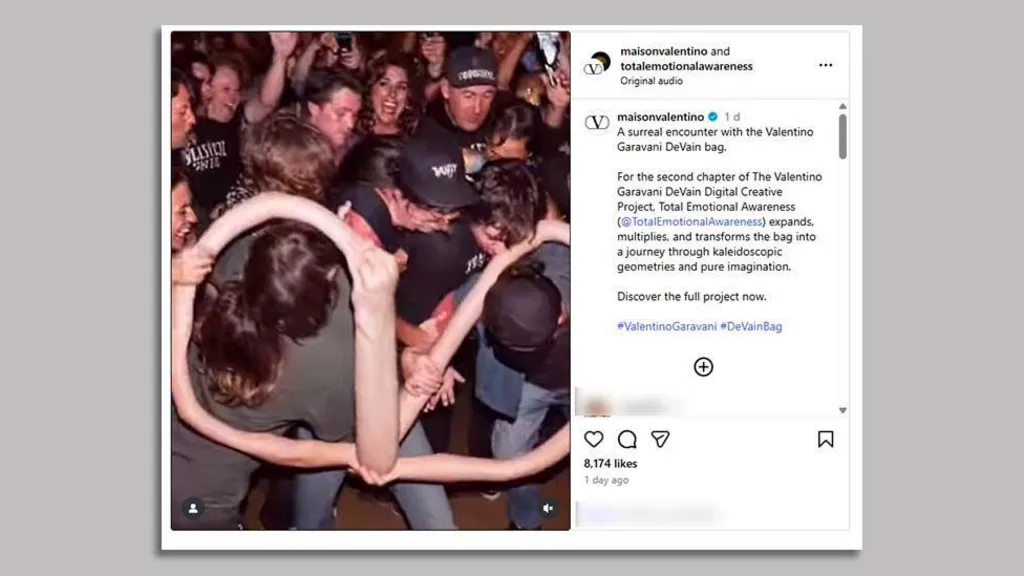
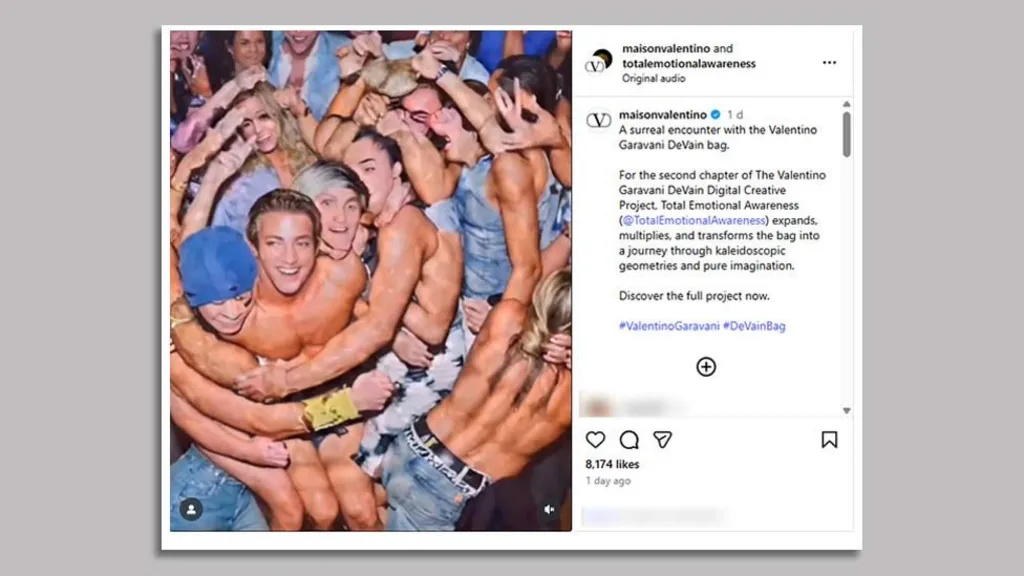
So when Valentino — a house synonymous with Roman couture and old-world romance — unveiled an AI-generated campaign for its new DeVain handbag, the internet reacted exactly the way a luxury brand should dread: with the cold disgust reserved for something soulless.
The comments were brutal.
“Weird.” “Embarrassing.” “Lazy.”
A few even accused it of “AI slop” — the internet’s new shorthand for work that looks like it was spat out, not crafted.
This isn’t just a social-media dragging.
It’s a cultural moment that crystallises the widening gap between brand intention and audience expectation in the AI era.
For marketers in Malaysia — from boutique agencies to multinational brand teams — Valentino’s stumble is a near-perfect cautionary tale.
The Issue Isn’t AI. It’s What Audiences Think AI Replaces.
AI imagery isn’t new. Fashion houses have been experimenting with synthetic models, virtual lookbooks, and digital couture for years.
No one complains when AI is used behind the scenes — for sizing algorithms, fabric simulations, campaign planning.
But slip AI into the front-of-house, directly into the brand’s visual identity, and suddenly the emotional calculus changes.
Consumers aren’t reacting to the technology.
They’re reacting to what they fear the technology displaces:
In luxury especially, the feeling is existential.
If AI can spit out a couture campaign in seconds, what does that say about the value of the atelier?
This is what cultural analysts call perceived creative displacement — and it’s the single biggest reputational risk brands face when using generative AI in anything visible.
Why Valentino’s AI Work Felt ‘Cheap’ in a Category That Sells ‘Exceptional’
Luxury is a category built on scarcity, ritual, and intentionality.
A world where the stitching on a bag is a story, not a production line.
But the Valentino campaign served visuals that felt:
The problem wasn’t the surrealism or the digital artistry.
It was the absence of an emotional idea — the one ingredient generative AI simply cannot fake.
Audiences sensed what brands often forget: AI imagery, without human anchoring, looks like efficiency masquerading as innovation.
In a post-pandemic world where people crave emotional warmth from the brands they buy, anything that smells automated feels like a step backwards.
Use AI Where It Adds Humanity, Not Where It Replaces It
There’s a lesson here for every marketing team experimenting with generative tools — from Malaysian telcos tinkering with AI radio spots to retailers automating their catalogue shoots.
AI is brilliant when it expands human creativity. It fails spectacularly when it’s used to shortcut it.
For fashion, F&B, banking, even GLCs, the implications are clear:
This is why Nike’s AI-powered R&D feels exciting… while Valentino’s AI handbag spot reads like a brand forgetting the very thing it sells.
Luxury Wants Efficiency, Consumers Want Empathy
Behind all this lies a familiar corporate truth: AI is attractive because AI is cheap.
It promises:
But luxury — and premium brands by extension — aren’t allowed to look cost-efficient.
They’re supposed to look uncompromising.
This is the paradox brands must navigate in 2026: Internal stakeholders want speed. External audiences want soul.
Balancing these competing expectations demands more than tools — it demands taste.
A Cautionary Note for Malaysian Brands Rushing Into AI Content
Malaysia is experiencing an AI gold rush.
Marketers are under pressure to “use AI” simply because everyone else is. Boards want efficiency. Agencies want to show capability. Content teams want scale.
But Valentino proves this: If audiences detect cost-cutting disguised as innovation, trust evaporates.
Brands here — whether in beauty, telco, insurance, or fashion — risk similar backlash if they:
AI can be a creative partner. But it cannot be the creative conscience.
What Does ‘Luxury’ Even Mean in an AI World?
If AI can generate a “couture” image in seconds, then brands need to redefine the value of the human hand.
The new luxury isn’t just craftsmanship. It’s humanity.
The future of premium branding is not anti-AI. It’s pro-emotion.
Brands that thrive will be those that use AI to deepen the human connection — not dilute it.
Valentino’s Backlash Is a Gift to Marketers
Not because the brand failed, but because it revealed a truth most CMOs instinctively know: Consumers aren’t rejecting technology.
They’re rejecting coldness.
The brands that win 2026 will use AI the way the best cinematographers use light: invisible, intentional, supportive — never overpowering the story.
Valentino forgot that.
The rest of the industry should take note.