
The living-room television is getting a new job description.
For years, Connected TV (CTV) was treated as a digital extension of traditional television: useful for incremental reach, demographic targeting and catching audiences drifting away from scheduled programming.
New research from dentsu and CTV Scale, supported by YouGov, suggests that definition may already be outdated.
The Indonesian study found consumers exposed to a premium baby diaper campaign on Smart TV were 2.4 times more likely to consider the brand, 2.1 times more likely to have used it in the previous three months and 1.7 times more likely to make it their most-used brand.
That moves CTV beyond the awareness column and closer to the commercial end of the marketing funnel.
The research surveyed 1,000 upper-middle socioeconomic mothers aged 21 to 35 with children under five. All watched internet-delivered content on a Smart TV or Connected TV at least weekly.
Conducted between 30 December 2025 and 8 January 2026, it compared 715 respondents exposed to the anonymised diaper campaign with a control group of 285 who had not seen it.
The most revealing lesson, however, was not simply that the advertisement was seen. It was whether viewers remembered who it was for.

Branding clarity becomes the multiplier
Among exposed viewers, only 293 correctly identified the advertiser, while 422 associated the commercial with the wrong brand.
Those who correctly recalled the brand were 3.5 times more likely to consider it, 3.7 times more likely to have used it recently and 3.2 times more likely to regard it as their main diaper brand than viewers who experienced “brand slippage”.
This is a warning for marketers seduced by cinematic storytelling but reluctant to introduce the brand until the closing frame.
An advertisement can be entertaining, emotionally resonant and beautifully produced—and still end up benefiting the category or even a competitor.
On CTV, brand attribution is not a final creative detail. It is fundamental to performance.
The creative tested appeared strong among respondents who correctly recalled it. Some 97% considered it distinctive, 91% found its message clear and 86% described it as appealing. Another 83% expressed interest in learning more about the brand, while 78% said the advertisement increased consideration.
The implication is straightforward: place distinctive brand cues early, repeat them naturally and ensure the product benefit cannot be separated from the advertiser.
The return of quality attention
The study also challenges the assumption that all video impressions are broadly interchangeable.
Smart TV viewing was a daily habit for 77% of respondents, while 82% watched during the 6pm-to-10pm prime-time window. More than 90% streamed over-the-top content through their Smart TVs.
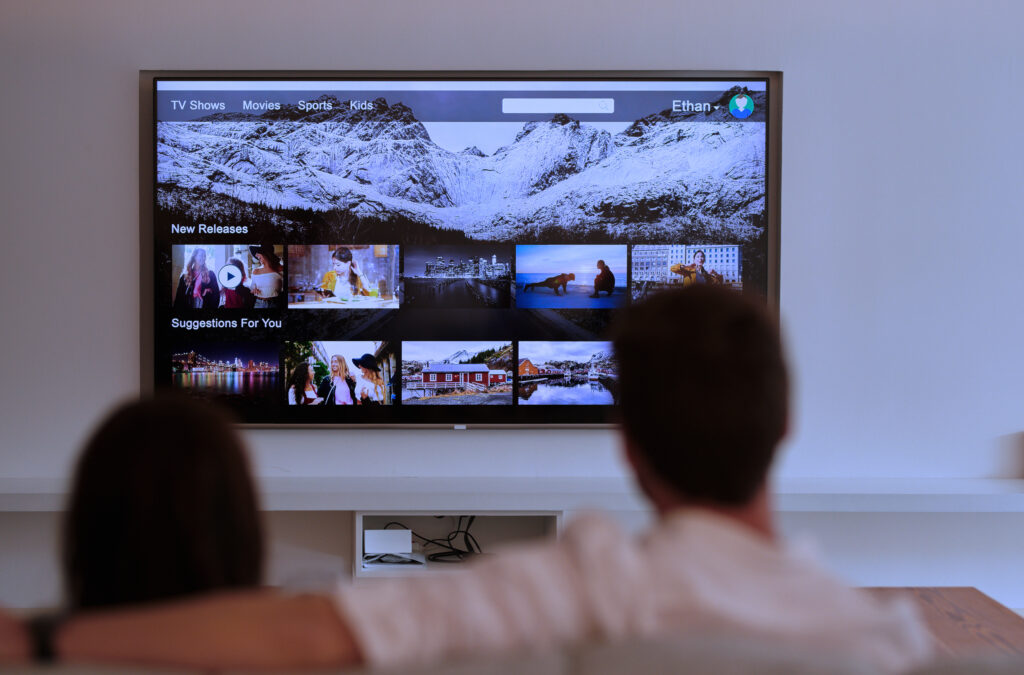
This is not the hurried, thumb-driven attention of a social feed. It is generally a larger-screen, lean-back environment built around movies, music, children’s programming, news and series.
CTV and e-commerce emerged as the two strongest sources of advertising awareness in the diaper category. Smart TV and CTV recorded recall levels of between 46% and 52%, compared with 46% to 49% for e-commerce. TikTok led the social platforms at between 32% and 36%.
Significantly, 67% of respondents considered Smart TV advertising effective and 68% described it as non-intrusive. Yet only 52% reported paying attention to the advertising, leaving marketers with both an opportunity and a warning.
The screen can create favourable conditions for attention. It cannot guarantee that the creative deserves it.
“CTV is not just another line in a media plan,” said Ahmad Ghozali, Research and Analytics Director at dentsu Indonesia.
“It is a signal of how Indonesian audiences actually want to be reached, with something worth their attention.”
A Malaysian lesson hiding in Indonesian data
The findings are specific to a defined Indonesian audience and one high-frequency product category. They should not be treated as universal proof that every CTV campaign will produce the same uplift.
The study also reports odds ratios, which compare the odds of an outcome between groups. They should not be misread as simple percentage increases or conclusive proof of causation.
Nevertheless, the strategic lesson travels well across Southeast Asia, including Malaysia.
As streaming migrates onto television screens, marketers should stop organising media around the increasingly artificial divide between “television” and “digital”. The more useful distinction is between fleeting exposure and quality attention.
CTV combines television’s scale, sound and emotional power with digital delivery and targeting. That makes it particularly valuable for categories requiring explanation, demonstration or reassurance—from financial services and automotive to healthcare, household products and premium food.
It also means CTV should not be populated automatically with advertisements cut down from television or stretched up from social media.
The large screen demands work designed for the large screen: strong opening brand cues, focused benefits, visual demonstration, emotional pacing and a clear next action.
The bigger story is not that CTV is killing television. It is that television is becoming addressable, measurable and increasingly accountable.
The smartest brands will stop asking how cheaply they can buy the screen. They will ask how effectively they can earn the attention it commands.