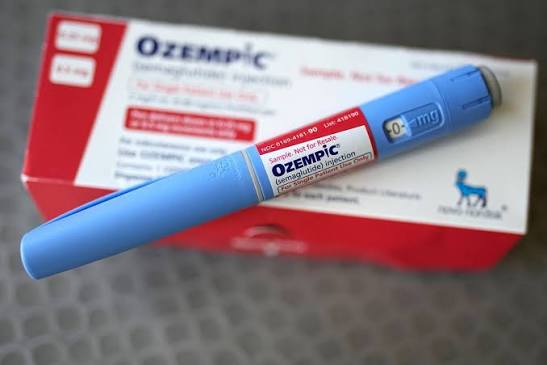
The world’s biggest weight-loss drug battle has moved from laboratories and pharmacies into a considerably more familiar marketing arena: advertising claims.
Novo Nordisk, the Danish pharmaceutical giant behind Ozempic and Wegovy, has launched legal action in the United States accusing rival Eli Lilly of false and misleading advertising in promoting Mounjaro and Zepbound.
At the heart of the dispute is an issue that should make every advertiser, agency strategist and brand lawyer pay attention.
When does comparative advertising stop being persuasive and start becoming misleading?
Novo alleges that Eli Lilly’s national advertising campaigns created the impression that its medicines outperform Novo’s products by comparing Lilly’s highest approved doses with lower doses of Novo’s medicines, while failing to adequately reflect newer or higher-dose treatment options.
Eli Lilly rejects the accusation.
The company says its advertising is truthful, transparent and supported by direct scientific evidence, arguing that Novo is attempting to prevent it from communicating the findings of a rigorously designed head-to-head clinical trial.
And therein lies the bigger advertising story.
The battle is over the takeaway, not just the data
Comparative advertising has always walked a fine line.
A brand may technically present accurate statistics, research findings or product comparisons and still face questions about whether the overall impression created for consumers is misleading.
Novo’s argument is essentially that the problem is not simply what Eli Lilly says, but how the comparison is framed.
According to Novo, Lilly’s campaigns selected comparisons involving its strongest doses against lower doses of competing medicines and did not give sufficient prominence to clinical developments that could change how consumers interpret the comparison.
Eli Lilly, meanwhile, maintains that the comparison reflects legitimate scientific evidence.
For marketers, this is an important distinction.
A claim can be factually defensible in isolation while the presentation surrounding it — headline, imagery, sequencing, supers, qualifiers and omitted context — may create a different consumer takeaway.
That is why the humble disclaimer is suddenly at the centre of a multibillion-dollar marketing fight.
Novo’s general counsel John F. Kuckelman argued that ineffective fine-print disclaimers cannot repair a misleading impression created by a major national campaign.
It is a statement that could have been directed far beyond pharmaceuticals.
Fine print cannot carry the entire burden
Advertising has long relied on supers, disclaimers and qualifying language to give nuance to bold headline claims.
But there is an uncomfortable question agencies increasingly need to confront:
If the qualification fundamentally changes the meaning of the headline, should the headline have been written that way in the first place?
Consumers do not experience advertising like lawyers reviewing evidence. They scan. They scroll. They remember headlines, visuals and simple proposition
“Better.”“Faster.” “More effective.” “Number one.”
The larger the claim and the smaller the qualification, the greater the potential tension between legal compliance and consumer understanding.
In categories such as pharmaceuticals, financial services, insurance and health products, that tension carries considerably greater consequences.
A US$100 billion category raises the stakes
The ferocity of this advertising dispute is unsurprising.
Novo Nordisk and Eli Lilly are battling for leadership in one of the fastest-growing areas of global healthcare, with analysts estimating that the weight-loss drug market could exceed US$100 billion by 2030.
Products including Ozempic, Wegovy, Mounjaro and Zepbound have moved rapidly beyond medical conversations and into mainstream culture.
They have become brands discussed by celebrities, influencers, financial markets and ordinary consumers. That creates an extraordinary marketing prize. It also creates extraordinary pressure to establish superiority.
In mature consumer categories, comparative advertising might mean arguing that one detergent removes stains better or that one mobile network provides broader coverage.
Here, marketers are communicating claims involving clinical outcomes, dosages, treatment populations and medical evidence.
The advertising battlefield becomes considerably more complicated.
Comparative advertising enters its evidence era
The Novo-Lilly confrontation also illustrates how competitive advertising is changing.
Brands can no longer assume a claim exists only for the lifespan of a campaign. Every chart can be screenshotted. Every clinical comparison can be interrogated.
Every footnote can be enlarged. Every omitted piece of context can become a social media conversation, regulatory complaint or legal exhibit.
This changes the role of evidence in advertising. Substantiation cannot simply be something produced when the lawyers ask for it.
It increasingly needs to be part of the creative process itself. Strategists need to understand what the evidence genuinely supports.
Creative teams need to know where simplification becomes distortion. Media teams need to consider whether formats provide sufficient space for qualification.
And legal teams increasingly need to evaluate not merely whether individual words are accurate, but what an ordinary consumer is likely to understand from the entire communication.
The most extraordinary demand: advertise the correction
Novo is not merely asking Eli Lilly to stop the disputed advertising.
It is seeking what could become one of the most consequential elements of the case: a corrective advertising campaign.
In other words, should Novo prevail, the remedy it seeks would potentially require its rival to use advertising to correct impressions allegedly created by previous advertising.
For an industry built around controlling brand narratives, few outcomes could be more uncomfortable.
The courtroom will ultimately determine whether Novo’s allegations have merit. But the advertising lesson has already arrived.
In the age of aggressive comparative claims, sophisticated consumers and instant scrutiny, brands cannot merely ask:
“Can we prove this claim?”
They must also ask:
“What will people reasonably believe after seeing it?”
Because sometimes the most expensive line in an advertising campaign is not the headline. It is the one hidden in the fine print.
Share Post:

The APPIES is where Malaysia’s boldest campaigns, brightest ideas, and most impactful storytellers take the stage.
More than an awards show, it is the industry’s ultimate platform for creative, media, digital and marketing excellence, where live presentations meet live judging.
This is your chance to showcase work that moved audiences, shaped conversations, and delivered real results.
From breakthrough brand campaigns to innovative digital experiences, the APPIES celebrates the work that defines the future of marketing.
Step into the spotlight alongside the industry’s leading agencies, brands, creatives, strategists and changemakers.
Whether you are aiming for Gold, Silver, Bronze or the prestigious Best of the Best recognition, this is your moment to make history.
Your campaign deserves to be seen.
Your ideas deserve the stage.
Your work deserves the legacy.
KEY DATES
Haven’t subscribed to our Telegram channel yet? Don’t miss out on the hottest updates in marketing & advertising!