With ticket demand running into the hundreds of millions, stadiums virtually full and premium hospitality booming, the 2026 World Cup has become more than sport. It is a masterclass in monetising scarcity, attention and human passion.
As the final whistle prepares to blow on the biggest World Cup in history, another extraordinary scoreline is emerging away from the pitch.
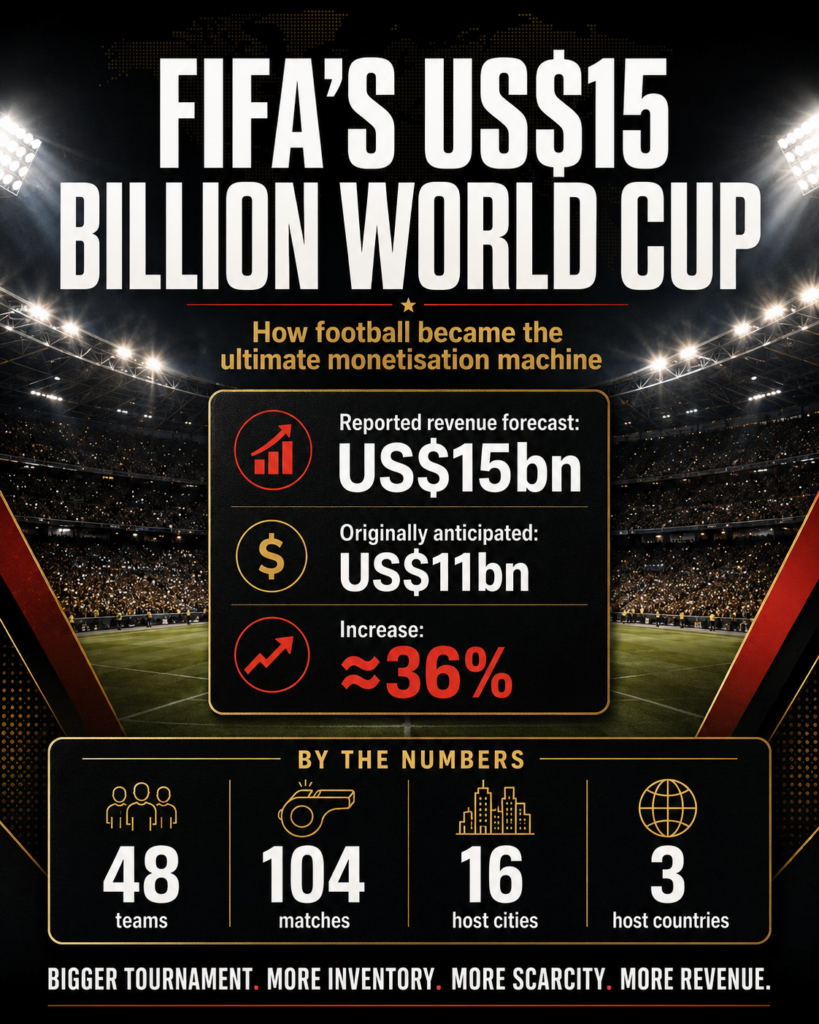
US$15 billion which is equivalent to RM61.4 billion.
That is the record revenue FIFA is reportedly expecting from the 2026 World Cup across the United States, Mexico and Canada.
According to The Guardian, FIFA president Gianni Infantino has informed member associations of the financial windfall, with ticketing and hospitality emerging as major drivers of the tournament’s extraordinary commercial performance.
For marketers, rights holders and anyone in the business of attention, however, the bigger story is not simply how FIFA made so much money.
It is how football’s governing body has turned the world’s most popular sporting tournament into an increasingly sophisticated monetisation ecosystem.
Because the 2026 World Cup may ultimately be remembered as the moment football’s greatest competition became something even bigger.
One of the most powerful marketplaces for human attention on earth.
More Games. More Inventory. More Money.
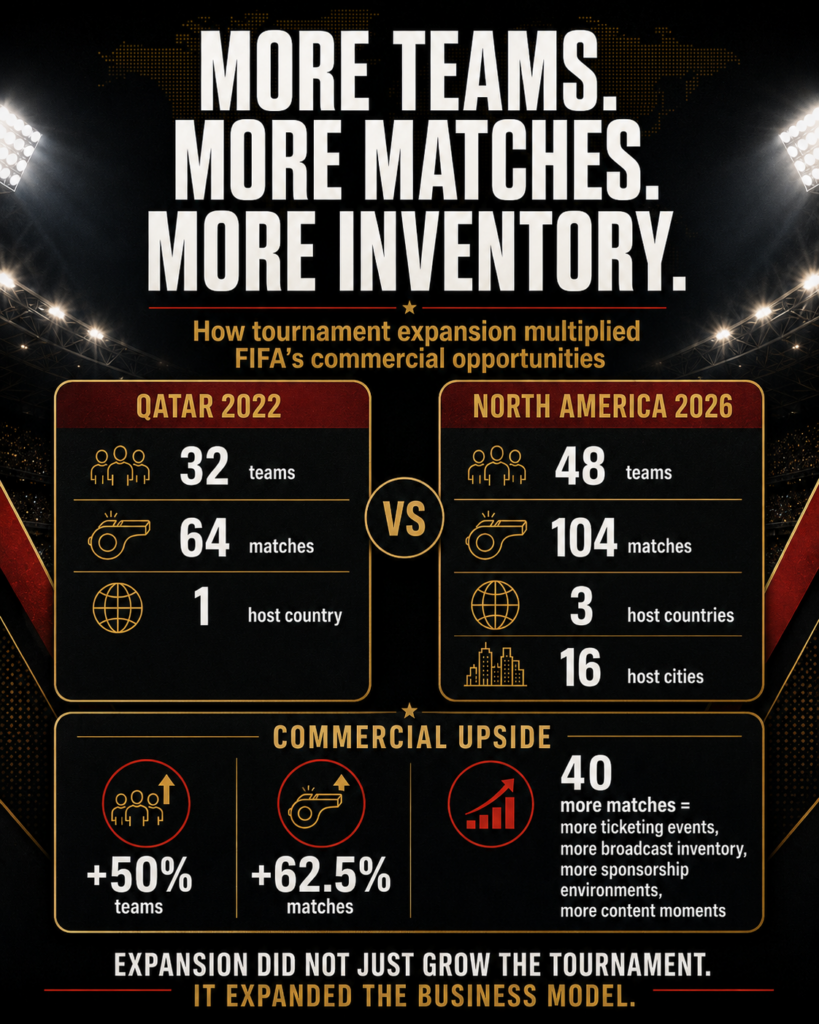
The mathematics certainly helped. The 2026 tournament expanded from 32 teams to 48 and from 64 matches to 104. That meant 40 additional games.
Forty more ticketing events. Forty more broadcast properties. Forty more environments for sponsors. Forty more opportunities for hospitality, merchandise and content.
Expansion, viewed through a marketing lens, is effectively product-line extension on a global scale.
But adding inventory does not automatically create value. The real breakthrough is that FIFA appears to have increased supply while demand remained almost insatiable.
Consider one extraordinary statistic.
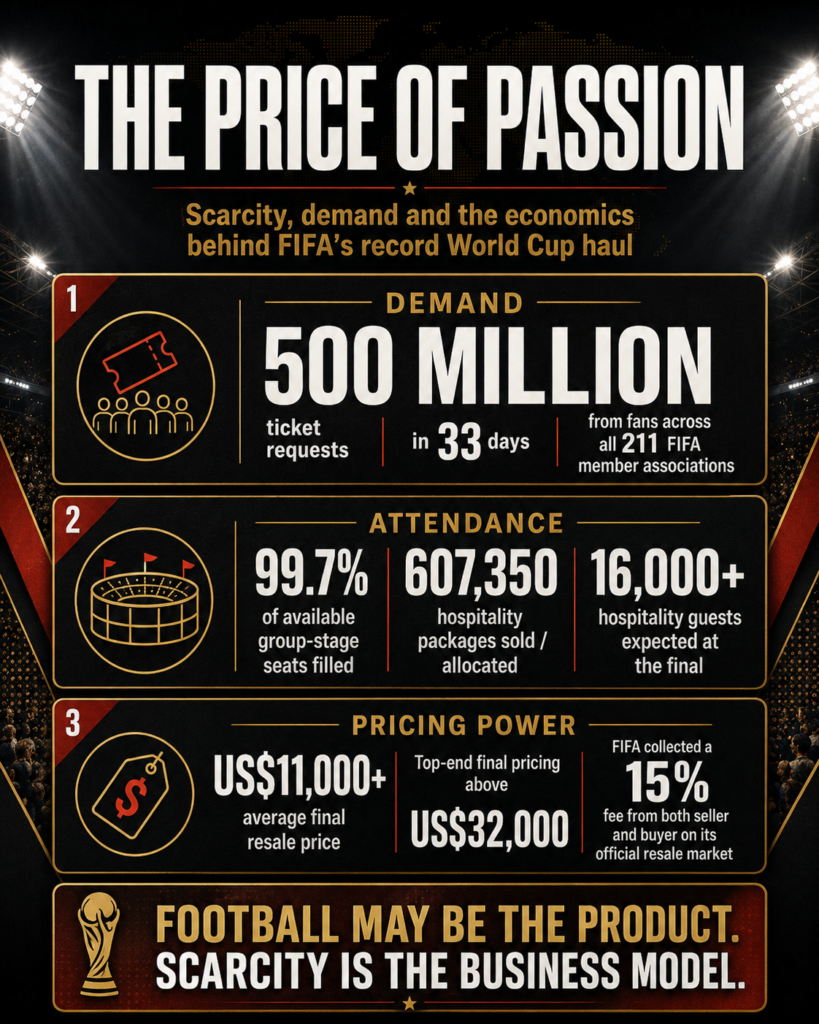
During a 33-day ticket application window between December 2025 and January 2026, FIFA received more than 500 million ticket requests from fans across countries and territories represented by all 211 FIFA member associations.
That works out at an average of around 15 million ticket requests a day.
This is where the World Cup becomes particularly fascinating as a marketing case study. FIFA is effectively selling the same underlying event at multiple levels of perceived value.
For one fan, the product is the match. For another, it is the seat. For a corporate buyer, it is hospitality. For a sponsor, it is global visibility. For broadcasters, it is audience. For host cities, it is tourism. For social platforms, it is content.
And for millions around the world, it is belonging. Few brands possess an asset capable of being monetised simultaneously across so many layers.
The Price of Passion
The 2026 tournament also appears to have tested just how elastic fandom can be.
Reuters reported that FIFA introduced dynamic pricing for the tournament, with some group-stage tickets beginning at US$575 and top-end final tickets reaching around US$32,000.
On the resale market, SeatGeek was reporting average final prices above US$11,000 shortly before the match. Yet the crowds continued coming.
Reuters reported that 99.7% of available seats across the preliminary stage were filled. The message for marketers is difficult to ignore.
Scarcity, when combined with intense emotional attachment, creates extraordinary pricing power. Airlines understand yield management. Hotels understand it. Concert promoters increasingly understand it.
Now global sport is demonstrating what happens when demand-based pricing meets a product that fans perceive as unrepeatable.
A World Cup final is not interchangeable with another Sunday afternoon. There is only one. And that changes what people are prepared to pay.
FIFA’s official resale model adds another dimension. The Guardian reported that FIFA collected a 15% fee from both seller and buyer on its secondary ticket marketplace.
Commercially, it is a remarkable proposition. The original ticket generates revenue. Scarcity then creates a second transaction.
And the platform participates economically on both sides of that exchange. This is no longer traditional ticketing. It is marketplace economics.
Premiumisation Goes Mainstream
Hospitality has become another major engine.
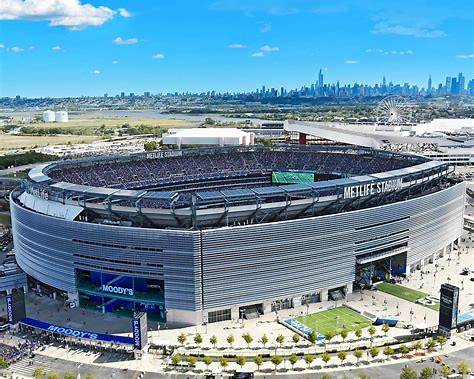
FIFA said that 607,350 hospitality packages had been sold and allocated during the tournament, with more than 16,000 hospitality guests expected for the final alone.
Perhaps even more revealingly, FIFA said 60% of hospitality guests were regular fans seeking a premium experience, while 40% were business-to-business customers.
Premiumisation, in other words, is no longer exclusively corporate. Consumers themselves are trading up. That matters far beyond football.
Luxury brands, airlines, entertainment companies and experience businesses have long understood that consumers will pay disproportionate premiums for access, exclusivity and status.
The World Cup adds another ingredient. Memory. People do not merely pay to watch something. They pay to say they were there.
When Attention Becomes an Economy
The commercial architecture is becoming clear. Every additional match creates more inventory. Every additional team brings another potential national audience.
Every supporter travelling becomes part of a tourism economy. Every packed stadium strengthens the television spectacle. Every viral goal, controversy or celebration fuels social media.
The physical event feeds the digital event. The digital event feeds the media event. The media event feeds the commercial event.
And the commercial event funds an even larger sporting spectacle. That is the flywheel. The World Cup is therefore no longer simply a football tournament surrounded by sponsors.
It is a global attention marketplace in which tickets, hospitality, broadcasting, sponsorship, licensing, tourism, data and content orbit the same emotional core.
Passion. There is, of course, a tension at the heart of this success.
The harder an organisation pushes premium pricing, the greater the risk that the people who created the cultural value of the product begin to feel excluded from it.
The commercial triumph of the 2026 World Cup therefore carries a longer-term brand question for FIFA.
How far can you monetise passion before accessibility becomes part of the price? That may become one of global sport’s defining debates.
But for marketers, the lesson from FIFA’s reported US$15 billion World Cup is already clear.
People rarely pay extraordinary premiums merely for products. They pay for access. They pay for status. They pay for belonging. They pay for memories.
Most importantly, they pay to feel they were present when something happened that may never happen in quite the same way again.
Football may be the product. Scarcity is the business model.