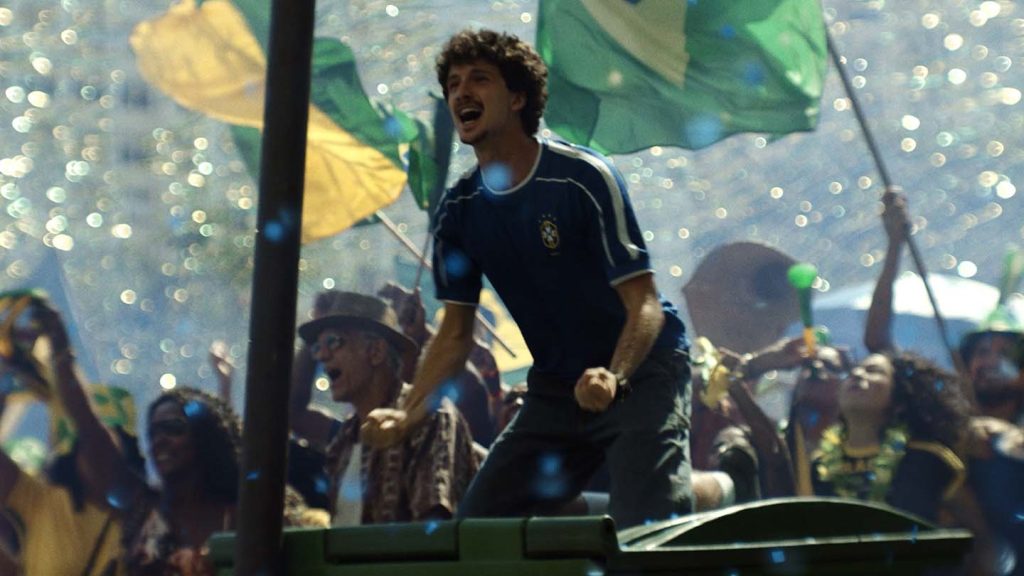
Some countries support football. Brazil breathes it. Not as a pastime, mind you, but as folklore stitched into daily life like family recipes, heartbreak and weather.
Football in Brazil arrives at the dinner table, slips into taxi conversations, spills from open windows and hangs in the air like humidity before rain.
Five World Cup stars already shimmer above the national crest, but for more than two decades, the sixth has remained elusive, hovering somewhere between prophecy and ache.
Now, in a stirring new campaign from Volkswagen and Brazilian agency AlmapBBDO, that sixth star has been given shape, sound and something close to cinematic tenderness.
Titled The Dream, the film does not ask if Brazil will win the 2026 World Cup. It begins with a far more delicious premise: What happens the morning after? And suddenly, an entire nation wakes up smiling.
The streets swell with celebration. Flags bloom from apartment balconies like tropical flowers. Strangers become cousins for a day.
Grandparents hold grandchildren with the knowing look of people who have waited too long for something beautiful to return.
The soundtrack, the beloved samba classic O Amanhã (“Tomorrow”), hums beneath the film like a promise whispered into the future.
It is not an advertisement in the traditional sense. It behaves more like a memory from tomorrow. That may be its greatest trick.
Too often, World Cup sponsorship campaigns resemble overenthusiastic corporate handshakes, all logos and chest-thumping declarations.
The Dream sidesteps that trap elegantly. Instead of announcing sponsorship, Volkswagen quietly places itself where it has long lived in Brazil: in the background of ordinary lives.
Cars appear throughout the decades, familiar companions rather than protagonists. They ferry families, witness celebrations and sit faithfully at curbsides while history unfolds around them.
In doing so, Volkswagen positions itself not merely as a brand attached to football, but as an enduring observer of Brazilian life. There is something deeply human in that restraint.
The campaign also arrives at an emotionally charged moment. Under newly appointed national football manager Carlo Ancelotti, Brazil’s hopes for a sixth World Cup title have been reignited with fresh optimism.
Ancelotti, a figure who carries the quiet authority of a man who has won almost everything football offers, appears in the film not as celebrity garnish but as emotional shorthand for trust.
Trust, after all, is the campaign’s heartbeat. “We dream because we trust,” reads the tagline.
It is simple, almost suspiciously so, until one realises how perfectly it mirrors the emotional bargain football fans make with themselves every four years.
Logic may warn against hope. History may disappoint. Yet supporters dream anyway. Because trust is irrational. Or perhaps necessary.
Livia Kinoshita, marketing director at Volkswagen Brazil and Latin America, framed the campaign as an extension of the trust the company has built with Brazilians over 73 years, now intertwined with football through its sponsorship of Brazil’s men’s and women’s national teams.
But beneath the corporate rationale sits a more poetic truth: people rarely remember brands for products alone.
They remember where those brands stood during moments that mattered. World Cups matter.
They reorder national moods. Offices fall strangely silent. Productivity mysteriously evaporates. Entire cities synchronise their emotional pulse to ninety minutes of football.
In Malaysia, we understand versions of this too. Think of badminton finals that suspend rational behaviour or football nights where strangers in mamak restaurants suddenly become tactical experts.
Sport, at its best, collapses social distance. And clever marketers know that emotion beats interruption every time.
That is what makes The Dream particularly compelling. It sells belief without shouting. Instead of promising greatness, it borrows from something Brazilians already possess in abundance: longing.
Marco “Pernil” Giannelli, chief creative officer of AlmapBBDO, noted that the trust Ancelotti inspires mirrors Volkswagen’s longstanding relationship with Brazilians.
It is a neat strategic bridge, one built less on product features and more on emotional credibility. Still, there is risk here.
By tethering so much emotional energy to an imagined sixth title, the campaign leaves itself exposed to football’s greatest cruelty: unpredictability.
Should Brazil stumble early in the tournament, the dream may feel bruised.
Then again, perhaps that misses the point. Because football has never been solely about trophies. It is about permission to believe.
And in a world increasingly addicted to cynicism, perhaps belief itself has become the more radical act.
Volkswagen’s The Dream understands this instinctively. It knows that somewhere in Brazil tonight, someone is already imagining the confetti, the tears, the impossible joy of a sixth star stitched onto yellow shirts.
The cup has not yet been won. But for three cinematic minutes, Brazil remembers exactly how it might feel. And somehow, that feels enough.
Share Post:
The APPIES is where Malaysia’s boldest campaigns, brightest ideas, and most impactful storytellers take the stage.
More than an awards show, it is the industry’s ultimate platform for creative, media, digital and marketing excellence, where live presentations meet live judging.
This is your chance to showcase work that moved audiences, shaped conversations, and delivered real results.
From breakthrough brand campaigns to innovative digital experiences, the APPIES celebrates the work that defines the future of marketing.
Step into the spotlight alongside the industry’s leading agencies, brands, creatives, strategists and changemakers.
Whether you are aiming for Gold, Silver, Bronze or the prestigious Best of the Best recognition, this is your moment to make history.
Your campaign deserves to be seen.
Your ideas deserve the stage.
Your work deserves the legacy.
KEY DATES
Haven’t subscribed to our Telegram channel yet? Don’t miss out on the hottest updates in marketing & advertising!