In an exclusive with the Marketing Magazine, MR D.I.Y.’s Head of Marketing, Alex Goh, reveals how a simple billboard became a nationwide movement Malaysians made their own.
It began with a yellow shopping bag. Not a celebrity endorsement. Not a flashy gimmick. Not a campaign built for internet chaos.
Just a familiar reusable bag many Malaysians have hanging somewhere in the kitchen, stuffed into a drawer, or quietly folded inside a car boot.
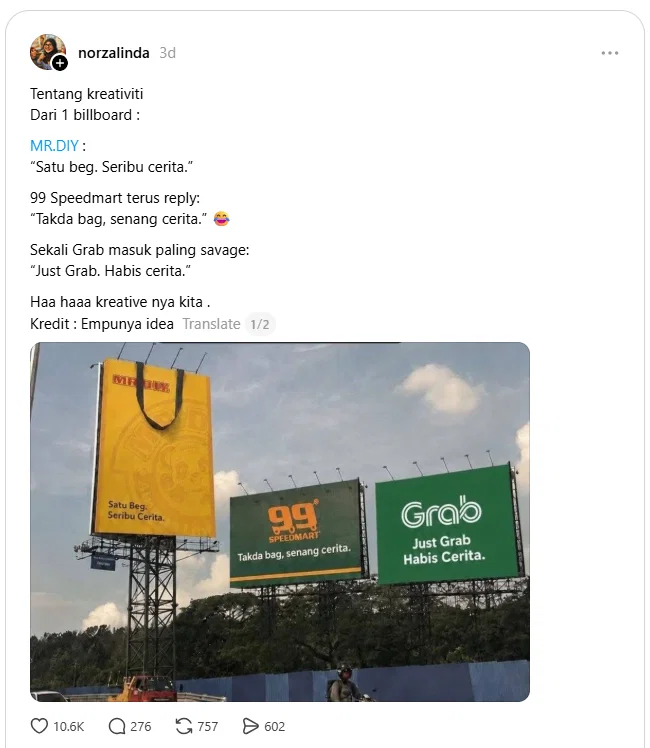
When MR D.I.Y. Group rolled out its “Satu Beg, Seribu Cerita” campaign, the idea felt unmistakably Malaysian. Giant billboards featuring the retailer’s iconic yellow bag towered over highways, carrying a simple line that hinted at something bigger: every bag, every household, every family had a story.
What happened next caught even the brand by surprise. Within days, Threads exploded.
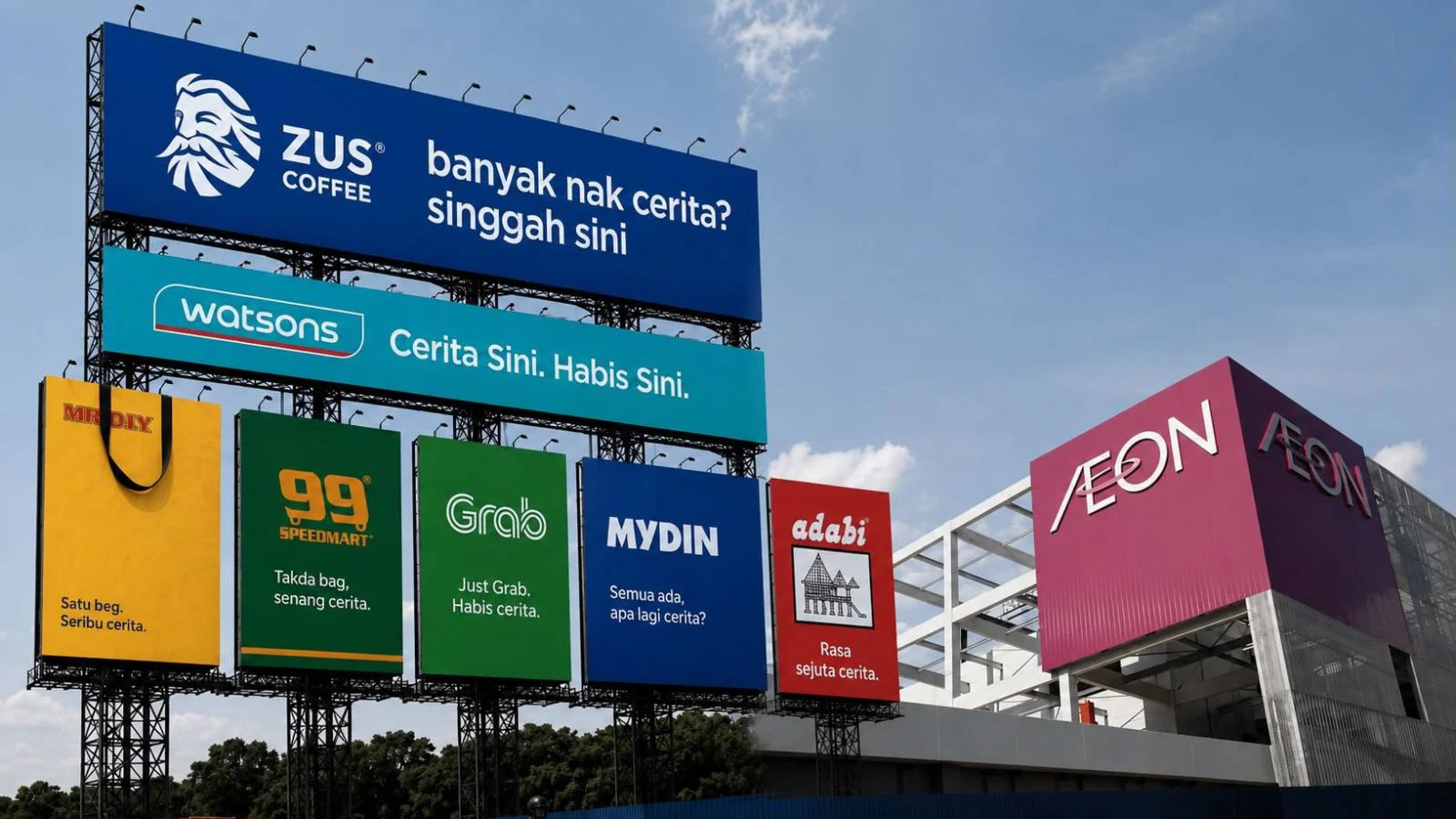
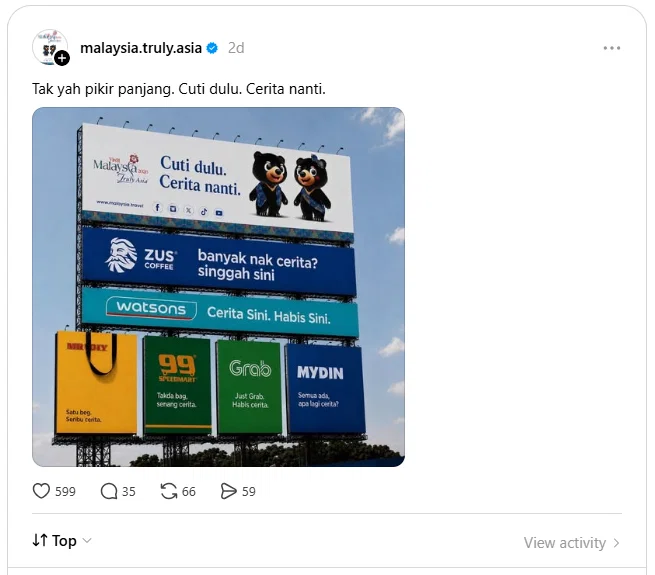
Not with product reviews or polished influencer content, but with AI-generated billboard mashups imagining Malaysian brands responding cheekily to MR D.I.Y.’s tagline as though the entire country had rented billboard space beside them.
Suddenly, roadside advertising became roadside banter.
99 Speedmart cheekily responded with “Takda bag, senang cerita.”
Grab chimed in with “Just Grab. Habis cerita.”
Setel deadpanned: “Tak payah cerita.”
Then came Mydin, Watsons, ZUS Coffee, Tourism Malaysia, Aeon and dozens more, each adding their own spin to the unfolding joke.
The campaign had stopped behaving like a campaign. It had become a conversation.
“It Was No Longer Our Campaign”
Speaking exclusively to Marketing Magazine, Alex Goh admits the speed of the movement took the brand by surprise.
“Before launch, our expectation was simple, that the idea would resonate because it reflects everyday Malaysian life,” he says.
“What we didn’t anticipate was the speed at which it went viral, particularly on Threads. It quickly became clear this was no longer our campaign, but something Malaysians made their own, turning one idea into thousands of personal cerita.”
That line may explain why this campaign struck such a nerve.
The yellow bag was never really the hero. The audience was.
When Billboards Become Playgrounds
Marketing teams spend millions trying to manufacture engagement. Yet what unfolded here felt refreshingly unforced.
A random netizen sparked the movement. Brands joined voluntarily. Consumers expanded the joke.
Even SMEs, from travel agencies to tudung boutiques and local cafés, began inserting themselves into the growing visual collage.
Some Malaysians even started creating “missing” billboard responses for brands that had yet to participate.
It was funny. Collaborative. Entirely unscripted. And deeply Malaysian.
The humour worked because it sounded like real people talking. Not committee-approved advertising copy. In a digital world increasingly crowded by polished sameness, this felt human.
The Threads Turning Point
According to Alex, there was one clear moment when the team realised the campaign had shifted into another gear.
“The turning point was the surge of content on Threads, not just from individuals, but from brands joining in as well,” he continues.
“That’s when we knew it had moved beyond OOH into something people wanted to participate in.”
His next observation feels especially relevant in an industry obsessed with engineered virality.
“As we often say internally, virality isn’t something you can chase,” he says.
“Instead, we focus on creating something people see themselves in, and make it easy for them to carry it forward.” It is a deceptively simple philosophy.
Brands spend years asking how to go viral. MR D.I.Y.’s answer sounds closer to hospitality: create something people feel welcome inside.
The Moment Brands Let Go
Perhaps the smartest thing MR D.I.Y. did was resist the temptation to over-manage the story.
Many brands claim to believe in community participation until consumers start improvising. Then comes the brand guideline deck.
Or legal.
Or panic.
MR D.I.Y. largely stepped aside. That restraint may have been the campaign’s secret ingredient.
“Satu Beg, Seribu Cerita was intentionally built to be open,” says Alex.
“The power is in the idea that everyone has a story to tell. So we didn’t try to control it, because the moment you control the cerita, you limit it.”
“Instead, we let Malaysians and brands shape it in their own way, and that’s where the authenticity came through.”
That is a quietly radical statement in modern marketing. The campaign succeeded not because the brand controlled the narrative. But because it trusted Malaysians to finish it.
A New Rule for Virality
The bigger lesson may extend far beyond one campaign. Alex believes marketers need to rethink what virality means altogether.
“One key learning is that virality today is co-created,” he says.
“It starts with something people genuinely want to see and relate to.”
He points to how every participating brand found a version of the cerita that felt personal to its own audience, creating momentum that spread naturally across platforms.
“At the same time, AI has made it easier than ever for brands to quickly join in with their own take,” he adds.
“The role of a brand is not to chase virality, but to create something simple and relevant that people want to participate in because when people see themselves in the cerita, they will spread it for you.”
And perhaps that is the real story here. Not that MR D.I.Y. launched a successful billboard. But that Malaysians looked at a yellow bag and somehow saw themselves in it. Then decided to tell their own story.