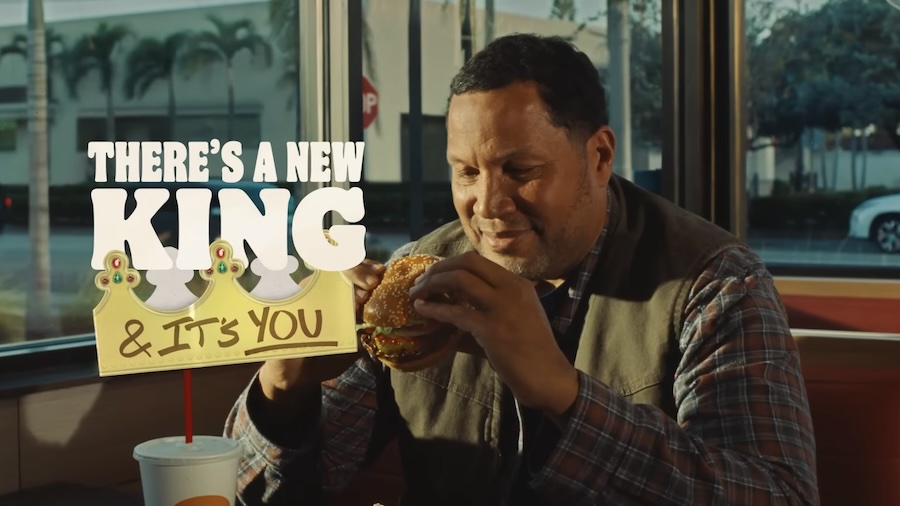
For decades, the crown belonged to a plastic mascot. At the 2026 Oscars, Burger King quietly staged a coup. The King has been fired. The crown now belongs to the customer.
In a 90-second commercial that aired during Hollywood’s biggest night, the fast-food chain unveiled a new brand platform built on an unusual premise for a global franchise: customers are now officially in charge. The campaign, titled “There’s a New King, and It’s You,” marks a strategic pivot that Burger King hopes will redefine how the brand engages diners in the United States.
The initiative follows a bold move by its U.S. and Canada president, Tom Curtis, who earlier this year publicly shared his personal phone number online and invited customers to send suggestions directly. According to reporting by Adweek, Curtis has already received morethan 30,000 messages, personally responding to around 2,000 of them.
The exercise in radical openness has already produced tangible changes including an improved bun for the flame-grilled Whopper and a redesigned box meant to prevent the sandwich from getting squashed during delivery.
For a fast-food giant that once relied heavily on the slightly eerie “King” mascot, the new direction signals something larger: a reset of the Burger King brand narrative.
A Brand That Admits It Lost Its Way
The Oscars film is unusually candid for a global QSR brand.
Narrated by Curtis himself, the commercial acknowledges that Burger King had drifted from its former glory. “There was a time Burger King used to be King,” the voiceover says. “Every meal felt special. Because you felt special.”
Then comes the confession rarely heard in fast-food advertising: the system slipped. “Somewhere, fast food just fell off. Including us.”
The film weaves together archival Burger King commercials from thepast seven decades with present-day footage of customers enjoying its food. Interspersed are snippets of social media criticism — complaints about slow service, ageing restaurants and operational mistakes.
The message is clear: Burger King is not pretending the criticism doesn’t exist. Instead, it is reframing it as a starting point. In marketing terms, this is a classic reputation reset strategy — publicly acknowledging shortcomings before repositioning the brand as responsive and customer-led.
The Fortuitous McDonald’s Moment
Interestingly, the campaign also arrived amid an unexpected viral moment involving its biggest rival. Earlier this month, a video of Chris Kempczinski struggling to eat a McDonald’s burger circulated online.
Burger King quickly posted a TikTok video showing Curtis enthusiastically biting into a Whopper. Competitors like Wendy’s and KFC jumped into the conversation as well, turning the episode into a playful fast-food social media moment.
Burger King CMO Joel Yashinsky later noted that the timing helped amplify attention around the brand’s shift toward a “guest-led” platform — even though the content had already been produced before the McDonald’s clip went viral.
Sometimes the best marketing moments arrive by accident.
Four Years of Brand Repair
Behind the campaign sits a broader operational overhaul that has been underway for several years.
Burger King has been investing heavily in restaurant upgrades, technology and menu refinements. More than 300 restaurants have already been renovated, while technology improvements have rolled out across over 1,000 locations.
Even nostalgic menu items are returning. Among them: the chain’s cinnamon apple pies, a small but symbolic nod to the brand’s heritage. The Oscars campaign is meant to serve as the public kickoff of this transformation. According to Yashinsky, the platform is expected to guide Burger King’s marketing through 2026, 2027 and possibly beyond.
The Reality Check: McDonald’s Still Dominates
Despite the renewed marketing ambition, Burger King remains a distant challenger in the global fast-food hierarchy. According to data cited by Adweek from Brand Finance, the brand value of McDonald’s stands at roughly US$42.6 billion, compared with US$4.8 billion for Burger King. Operational performance tells a similar story.
In the most recent quarter, McDonald’s U.S. same-store sales grew 6.8%, while Burger King’s increased 2.6%. Closing that gap will take more than clever advertising. It will require sustained operational discipline — faster service, cleaner restaurants and consistently good food. Which, ironically, is exactly what Burger King’s new platform promises to address.
Marketing Lesson: Listening Is the New Luxury
For marketers, the campaign offers an intriguing lesson. Many brands claim they listen to customers. Few literally hand out the CEO’s phone number.
By turning customer feedback into both product development and brand storytelling, Burger King has created something rare in modern advertising: a campaign where the marketing narrative and operational strategy are genuinely aligned.
Whether it translates into sales growth remains to be seen. But one thing is certain.
After decades of plastic crowns and mascot theatrics, Burger King has decided that the most powerful king in the room might simply be the person holding the burger.
Share Post:
The APPIES is where Malaysia’s boldest campaigns, brightest ideas, and most impactful storytellers take the stage.
More than an awards show, it is the industry’s ultimate platform for creative, media, digital and marketing excellence, where live presentations meet live judging.
This is your chance to showcase work that moved audiences, shaped conversations, and delivered real results.
From breakthrough brand campaigns to innovative digital experiences, the APPIES celebrates the work that defines the future of marketing.
Step into the spotlight alongside the industry’s leading agencies, brands, creatives, strategists and changemakers.
Whether you are aiming for Gold, Silver, Bronze or the prestigious Best of the Best recognition, this is your moment to make history.
Your campaign deserves to be seen.
Your ideas deserve the stage.
Your work deserves the legacy.
KEY DATES
Haven’t subscribed to our Telegram channel yet? Don’t miss out on the hottest updates in marketing & advertising!