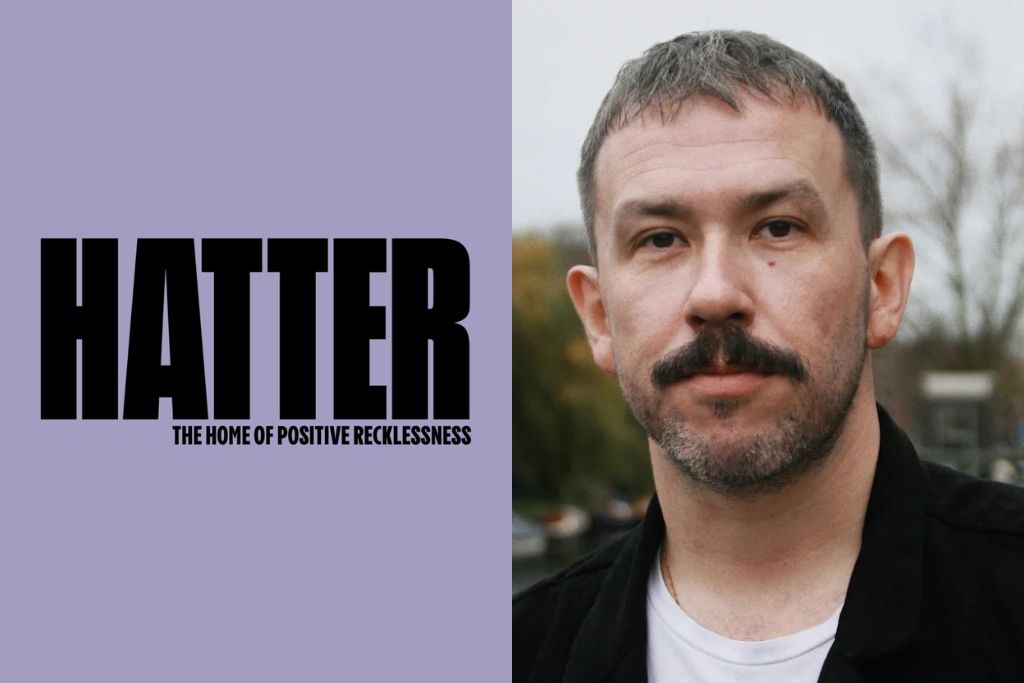
The founder of Amsterdam-based brand experience agency HATTER talks about the power of meaningful events and the importance of community.
It’s kind of a journalistic cliché to write about trends and backlashes, but I have a feeling it’s not a coincidence that HATTER is the second brand experience agency I’ve written about in less than a month. Is it possible that, in today’s labyrinth of screens, scrolling and AI, people are yearning for live events?
Agency founder Simon Hatter – who named the agency after his father, by the way – says the momentum began right after Covid. “Suddenly, everybody wanted an event. ‘We have to do something big.’ But at the time it wasn’t very structured. The difference now is that there’s more strategy behind the experiences.”
He agrees that social media and digital fatigue have created a yearning to get together in real life. Interestingly, there’s been a blurring of demographic borders. “You no longer have to be Gen Z or Gen Alpha or whatever: you can all come together and enjoy an experience. We’ve definitely seen a human craving to spend time on experiences you can look back on.”
Another evolution, he says, is that brand experiences can now be the core of a campaign. “In the past, social or out of home came first, then the brand experience got lumped on at the end. It’s been rewarding to see that changing, so the experience can be the lift-off for the campaign and everything else follows that.”
From page to stage
There’s an element of theatre to great experiences, which Simon fully embraces, as it goes back to his roots. The urge to escape through stories came early. After his father passed away when he was young, he was brought up by his mother on a council estate (the UK version of a public housing project). Add to that the fact that he was queer in a judgmental environment, and you had the perfect formula for somebody who was determined to succeed.
A trained set designer, he spent the early part of his career in the fabulous environment of magazine fashion shoots. “Thanks to the fashion work I landed an event, which blew my mind a bit. I thought it was amazing that you could build these incredible spaces, these worlds, and that people could come and actually be part of them rather than just flicking through a magazine.”
Several experiences later, he founded HATTER in 2017. The agency has a core staff of 12 with a network of external talents it can call on. Over the years it has developed a strong sense of what it stands for.
“When I started the agency I wanted to challenge the understanding of what a brand experience was – that it’s not just a simple event. Also, being a set designer, I have a strong background in production. And I think historically there was a tendency to put creative on one side, and production on the other. I wanted those worlds to merge, to create the beautiful synergy we need in brand experience.”
Above all, he says, the agency has become more self-confident. Necessarily so, at a time when full-service agencies are shifting more resources to experiential. “That’s how the big agencies survive, right? If brands take money away from one discipline, they move to another. So I think it’s important for us to be way more bolshy and straightforward about who we are and what we do. We’re the experts who’ve been doing this since day dot.”

A moving experience
There’s a wide mix of talents within the agency – even within design, there are set designers, architects, exhibition designers, graphic designers – but Simon feels that one thing unites them.
“It’s really important to us that people want to tell a story through their art. It’s not just about building something pretty or getting PR coverage at the end. When we interview people, we’ll often ask, ‘How do you feel about telling stories?’ I know a lot of agencies have used the ‘storytelling’ word: but for us it shows in our work and you can’t negate that.”
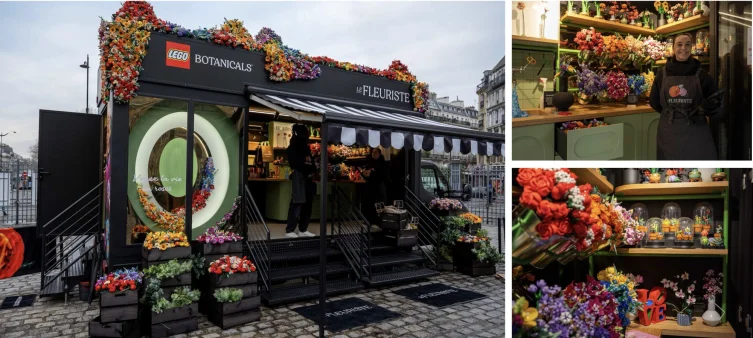
One interesting project they worked on was for LEGO Botanicals. Which is exactly what it sounds like: incredibly detailed flowers and floral arrangements built from LEGO. (I tried making an orchid with my mum – it was hard work.)
“Their tagline is ‘Keep it fresh’,” explains Simon. “So they always like do something fresh around the idea of botany or flowers. And this time they wanted to go on a tour of Europe.”
Rising to the challenge, HATTER created a florists’ truck which it took on the road – to eight locations in six months. “The truck itself served as a billboard on wheels. So whether it was parked or in motion, it had to look beautiful. At every location we went to, it transformed into a workshop space.”
The inside of the truck was educational, so visitors could learn about the flowers, meet the “florists” and buy the product. Out front, guests could get busy building flowers they could take home with them. A social media push at each location ensured that plenty of curious visitors showed up.
It was a perfect example of HATTER’s expertise because it embraced strategy, design, logistics – and even staff scripting. “How were the staff going to sound to the consumers? We trained them to make sure they were giving the best possible LEGO brand experience.”
It was a very inclusive event, he adds. “It bridged all ages and genders. It didn’t really matter who you were; people just came and had a lovely time.”
Smaller events, bigger impact
HATTER ensures that each stage of an experience is memorable. “We have a concept called ‘pillars’, which is about legacy building. We think about what happens pre- and post-experience. What happens before people arrive? What happens when they’re in the queue? What happens after? Is there a physical piece they can take away with them? Are we creating moments that encourage sharing?”
At the LEGO event, for example, people could send a postcard with a gift voucher to friends or family. For LEGO – and other clients – HATTER works closely with the PR agency to create content and liaise with influencers. “We’re always thinking about how we can create a ripple effect.”
Paradoxically, while social is an important element of experiential, events can also help people detox from their phones. “We’re definitely hearing about an evolution, particularly among younger people, where you’ll go out to enjoy an experience and leave your phone at home. Or just have an old burner phone. I also think we’re entering a period where people want to see and handle products in store again, rather than ordering online.”
Some other trends for the months ahead? “I think it’s all about grounded human experiences, not just spectacle. Historically there have been a lot of big stunts, because that’s how you get noticed. But it’s important to allow consumers to become true participants in what you do, rather than just observing a stunt. Smaller events can have a bigger impact.”
Consistency is also important: he praises Glossier and Lululemon as two brands that hold events for their communities throughout the year. Talking of communities, he says niche interest groups are also becoming important audiences for events. Trainspotters? Birdwatchers?
“Why not? On social you see a lot of niche subjects and niche experts. And I think that’s going to start trickling down into smaller experiences that are all about community building. That’s what I see for the coming year.”