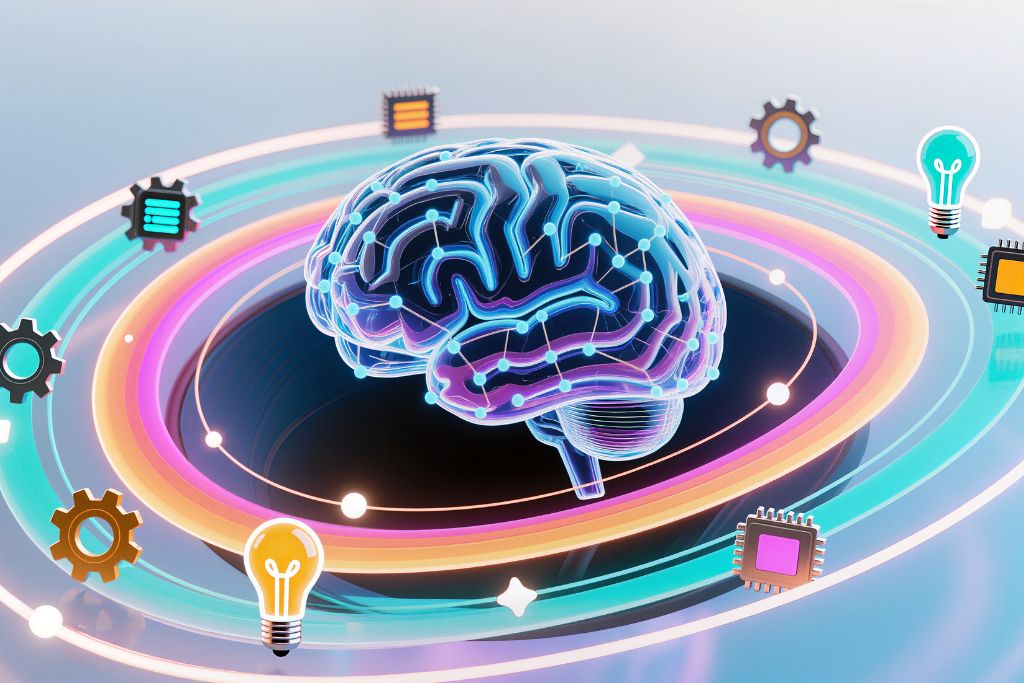
For the last three years, artificial intelligence has felt like a warehouse rave funded by venture capital and powered by H100 chips. Loud. Relentless. Blinding.
Every agency pitch, every CMO townhall, every conference panel had the same soundtrack: AI will save us, scale us, replace us, or turn us into superhumans.
Most people nodded. Some panicked. A few pretended they fully understood what was happening.
Now, as we edge towards 2026, the music is still playing.
But the house lights are coming on.
When that happens, the industry won’t collapse. It will finally stop lying to itself.
The Bubble Question No One Can Avoid
Let’s talk about the money.
Over US$2 trillion in global AI spending by 2026 doesn’t signal a trend anymore — it signals an ecosystem. Entire supply chains, workforces and boardroom strategies are now built around it.
But when SoftBank trims its Nvidia position and Peter Thiel takes chips off the table, it’s not hysteria. It’s a temperature check.
The real fear isn’t that AI will fail. It won’t. The fear is that a lot of what is riding on it will.
Because when markets cool, they don’t kill revolutions. They kill weak ideas.
Just like the dotcom crash didn’t kill the internet, a correction won’t kill AI. But it will wipe out platforms with no differentiation, agencies selling hype instead of thinking, and startups whose entire pitch deck is one word repeated across ten slides: AI.
For marketers, this is good news.
Because once the noise settles, clients will stop asking, “How do we add AI to our campaign?” and start asking, “Where does this make us sharper, faster or more relevant?”
And that’s where real strategy finally earns its keep again.
Job Panic vs Job Reality
Every tech wave comes with its favourite nightmare. This one is job extinction.
Let’s not sugar-coat it. Yes, certain roles will disappear. Already have. But AI isn’t just eliminating work — it’s reassigning value.
Routine tasks. Resizing assets. Cranking out basic copy. Automated reporting.
Mechanical media planning. That layer will thin out.
But what grows in value are roles demanding:
In Malaysia, what we’re seeing isn’t a jobs apocalypse. It’s a skills rerouting.
You won’t lose your job because of AI. You’ll lose it because someone who knows how to think with AI moves faster, sees clearer, and understands people better.
That’s not injustice. That’s evolution.
AGI: Breakthrough or Theatre?
2026 has been framed as the year of “something big”.
Anthropic predicts systems smarter than Nobel Prize winners. OpenAI talks about AI that can perform original research. Zuckerberg is spending like a man buying real estate on the moon. Yann LeCun calls much of it nonsense.
Here’s the truth most CMOs won’t say out loud: Brands don’t need AGI.
They need clarity.
Most leaders today are paralysed somewhere between two emotions:
The AGI narrative has turned AI into a near-mystical force. But for marketers, it’s still what it always was: a tool.
A powerful one, yes. But a tool that still needs purpose, direction, and taste.
What will matter more than who reaches AGI first is this: Who builds intelligence that understands people, language, culture, and emotion.
Especially in Southeast Asia, where context is currency, and nuance beats raw processing power.
Media vs AI: Not Extinction, But a Reckoning
No industry feels more exposed in this moment than media.
AI overviews, chatbot summaries and instant answers are stripping away traffic without credit, loyalty, or revenue.
This isn’t a technology problem. It’s an attention economics problem.
The old deal: Media creates → Platforms distribute → Brands pay.
The new reality: Media creates → AI absorbs → Platform answers → Brands hesitate.
Media will split cleanly into two species:
1. Volume machines
Chasing clicks, SEO, automation, and speed.
2. Trust institutions
Charging for authority, insight, and point-of-view.
For brands, this changes everything. You’re no longer just buying reach. You’re buying association with credibility.
In a world flooded with synthetic content, publications that carry human judgement — like The Economist, or respected regional titles — become more valuable, not less.
Because when everyone can generate words, what people pay for is thinking.
The Real Problem Isn’t AGI. It’s Slop.
The most visible impact of AI today isn’t superintelligence. It’s slop. Low-grade, mass-produced, algorithm-gaming content.
Fake bands on Spotify. Fake war videos on TikTok. Fake gurus selling fake confidence.
And yes — brand channels have started contributing to it too. Auto-generated posts. Generic carousels. Captions that could belong to any brand, anywhere.
The danger of slop isn’t its existence. It’s how it drowns out meaning.
When everything looks intelligent, nothing feels authentic.
The real opportunity for brands in 2026 is not more AI. It’s better judgement.
The winning brands won’t shout, “Look what AI can do.”
They’ll quietly demonstrate, “Look what we chose not to automate.”
Because restraint is becoming rare. And rare things gain value.
When the Lights Come On
The AI party will continue into 2026 and beyond.
But when the lights come on, a few truths will be hard to ignore:
Hype won’t be rewarded. Application will. Volume won’t win. Taste will.
Tools won’t matter as much as thinking. And creativity isn’t ending. It’s finally being forced to grow up.
This next phase isn’t about resisting AI. It’s about refusing to be blinded by it.
And for those with calm heads, cultural fluency, and strategic backbone…this isn’t the hangover.
It’s the moment they take the DJ booth.
Share Post:
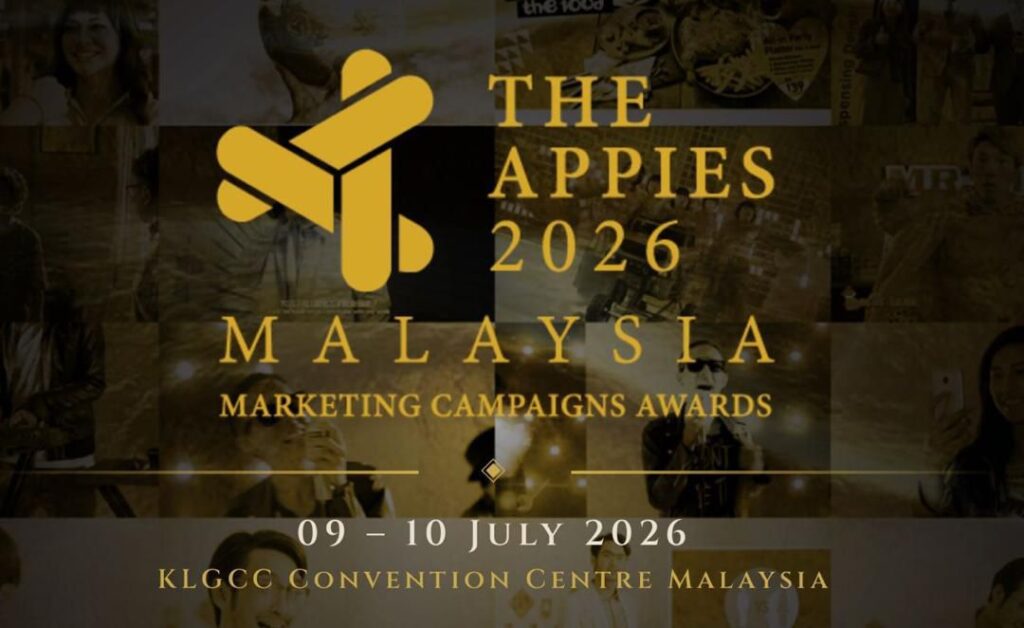
The APPIES is where Malaysia’s boldest campaigns, brightest ideas, and most impactful storytellers take the stage.
More than an awards show, it is the industry’s ultimate platform for creative, media, digital and marketing excellence, where live presentations meet live judging.
This is your chance to showcase work that moved audiences, shaped conversations, and delivered real results.
From breakthrough brand campaigns to innovative digital experiences, the APPIES celebrates the work that defines the future of marketing.
Step into the spotlight alongside the industry’s leading agencies, brands, creatives, strategists and changemakers.
Whether you are aiming for Gold, Silver, Bronze or the prestigious Best of the Best recognition, this is your moment to make history.
Your campaign deserves to be seen.
Your ideas deserve the stage.
Your work deserves the legacy.
KEY DATES
Haven’t subscribed to our Telegram channel yet? Don’t miss out on the hottest updates in marketing & advertising!