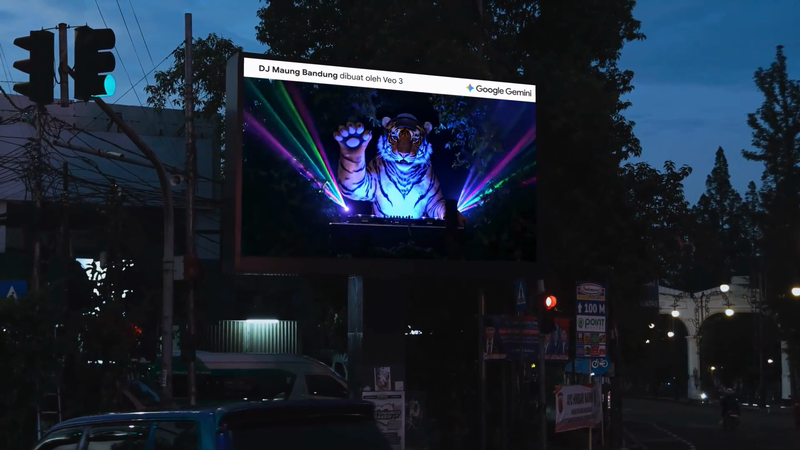
On a humid Jakarta afternoon, a crowd gathers in front of City Plaza.
Nothing unusual—until a 30-metre billboard suddenly dissolves into the skyline behind it. A bubble tea tsunami pours down the façade. A dinosaur peeks between buildings. A space-time portal opens where a static poster used to be.
Nobody blinks twice anymore. And that’s the point.
Indonesia’s first “see-through” AI-powered billboard—part of Google Indonesia’s #BikinGebrakanLo campaign with DDB Singapore, Superson and Hagia Labs—isn’t just a headline-grabber.
It’s a glimpse into how Southeast Asia’s marketing ecosystem is quietly reinventing outdoor advertising for a generation raised on TikTok velocity and endless remix culture.
This is not an OOH ad. It’s a living canvas.
OOH Has Always Been Big. AI Is Finally Making It Alive.
The principle is deceptively simple—capture the actual architecture behind a billboard, then use AI to generate content that blends seamlessly into that physical space.
The implications are phenomenal.
For decades, outdoor advertising sat on the slow end of the content spectrum—months to produce, weeks to buy media, limited flexibility. It was the one medium that didn’t move at the speed of culture.
This campaign blows that model up.
OOH stops being a surface. It becomes a stage.
In a region where consumers spend so much time in traffic and out on the streets, that matters more than ever.
The Real Breakthrough Isn’t the Billboard. It’s the Team Behind It.
Everyone is talking about the “illusion.” But the real innovation is the workflow.
What used to take months—3D modelling, animation, rendering, approvals—was done in a matter of weeks thanks to a hybrid team model that should make every agency leader sit up:
It’s the marketing version of an open-source orchestra—Specialists plugged in, sprinted, executed, and handed off.
This is not the traditional retainer model. This is not one agency delivering everything end-to-end. This is not a production house waiting for briefs.
It’s a modular, specialist-driven, sprint-based system—and brands are starting to prefer it.
Hybrid teams aren’t the future. They’re the now.
The Indonesia Effect: Why This Innovation Could Only Happen Here
Marketers sometimes underestimate Indonesia’s influence on regional creative output. But the country has three things that make it a perfect testbed:
This isn’t just “localisation.” It’s local co-creation at national scale.
OOH Enters Its ‘Always-On’ Era
The most underestimated shift is this—OOH is finally catching up with digital culture.
For the first time, marketers have a large-format medium that can:
It is no longer a fixed message. It is now constantly negotiable creative.
And that transforms how brands think about the streets.
Imagine billboards that change with football results.
Monuments that house AI-generated cultural commentaries.
Highways that become collaborative canvases during festivals.
Malls that host evolving storylines based on trending challenges.
OOH is finally dynamic, finally fluid, finally alive.
Why This Matters for Marketers in Southeast Asia
The campaign is world-first, but the blueprint is replicable.
The lesson isn’t “use AI.” It’s build the right team to use AI well.
Brands don’t need to own everything. Agencies don’t need to deliver everything.
Production partners don’t need to wait for instructions.
What marketers need now is:
The winners in 2026 will be the brands that orchestrate—not consolidate—talent.
This billboard is proof.
A Street-Level Glimpse of the Future
Back at City Plaza, a child tugs his father’s sleeve as a dinosaur lumbers between buildings. A bubble tea wave rolls over the skyline. A portal opens, revealing a world that isn’t quite there—but feels like it could be.
It’s playful, but it’s also profound.
We are witnessing the moment outdoor advertising finally stops shouting at people…and starts playing with them.
Indonesia’s “see-through” billboard is not a gimmick. It’s a pivot point.
A reminder that in Southeast Asia, creativity doesn’t live in boardrooms. It lives on the streets.
And now, thanks to AI, the streets can talk back.
Share Post:
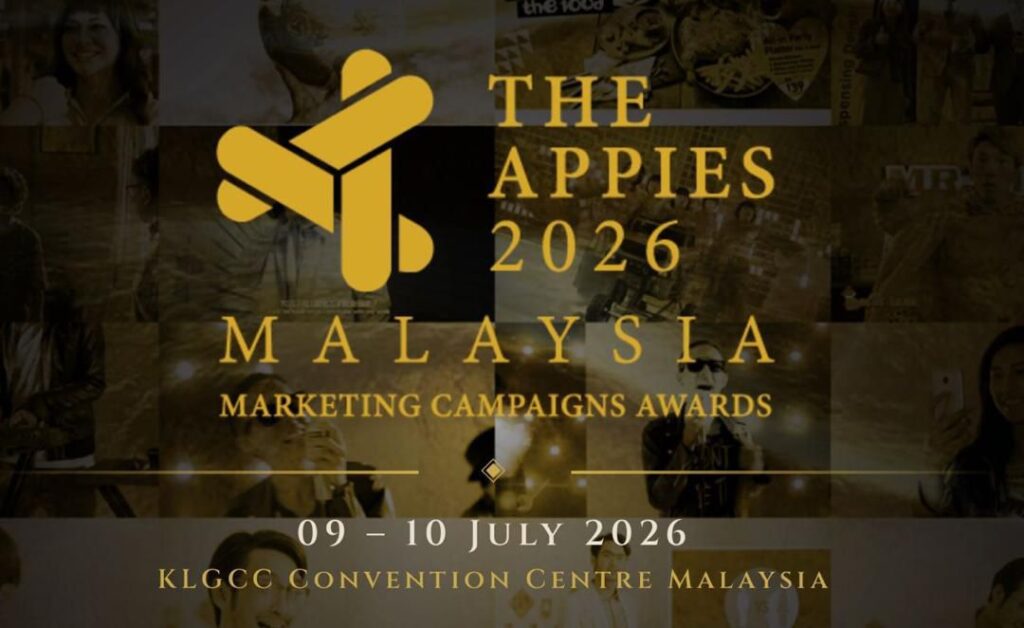
The APPIES is where Malaysia’s boldest campaigns, brightest ideas, and most impactful storytellers take the stage.
More than an awards show, it is the industry’s ultimate platform for creative, media, digital and marketing excellence, where live presentations meet live judging.
This is your chance to showcase work that moved audiences, shaped conversations, and delivered real results.
From breakthrough brand campaigns to innovative digital experiences, the APPIES celebrates the work that defines the future of marketing.
Step into the spotlight alongside the industry’s leading agencies, brands, creatives, strategists and changemakers.
Whether you are aiming for Gold, Silver, Bronze or the prestigious Best of the Best recognition, this is your moment to make history.
Your campaign deserves to be seen.
Your ideas deserve the stage.
Your work deserves the legacy.
KEY DATES
Haven’t subscribed to our Telegram channel yet? Don’t miss out on the hottest updates in marketing & advertising!