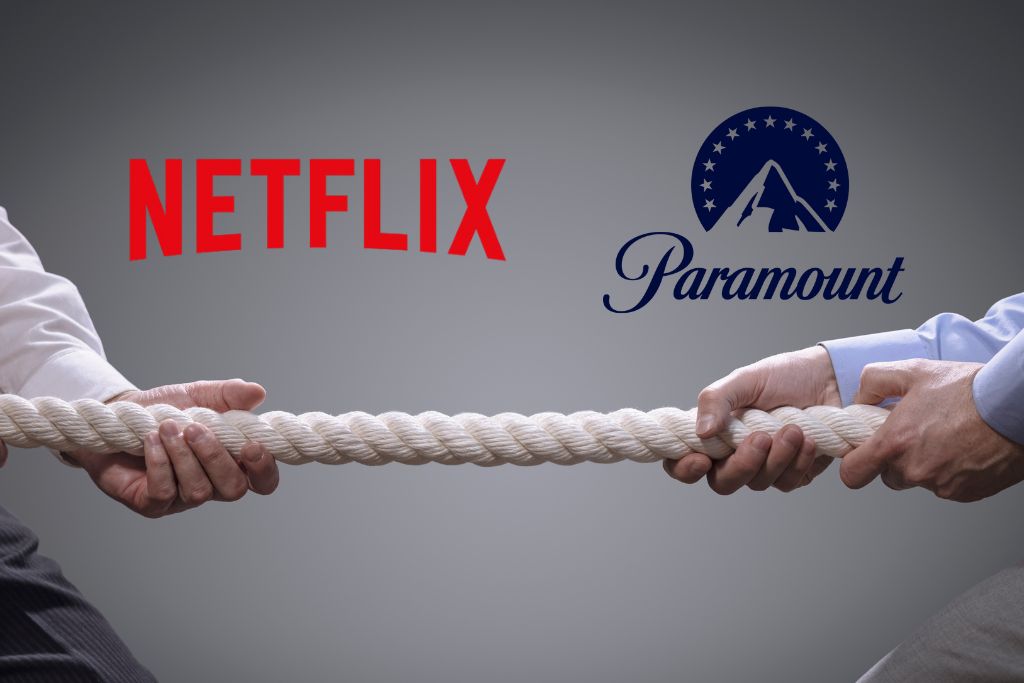
There’s a moment unfolding on Wall Street that feels less like a merger negotiation and more like the final act of a streaming-era blockbuster.
Think Succession, but with real money, real geopolitical tension, and real uncertainty for the future of entertainment.
Warner Bros Discovery — home to HBO, Looney Tunes, Sex and the City, Harry Potter and decades of cultural canon — is the prized empire everyone suddenly wants.
Netflix fired first, announcing a jaw-dropping US$83 billion agreement last week.
Paramount, bruised but not beaten, stormed back on Monday with a bigger, louder, more politically calibrated US$108.4 billion hostile offer.
Cue dramatic music. Cut to the markets. The industry now has one question: Is this a battle for content — or a battle for control?
The Power Plays Behind the Bids
Netflix’s approach looked like a coronation. With more than 300 million global subscribers and momentum from Asian and European expansion, Netflix’s pitch was simple: add Warner Bros’ storytelling universe to an already unstoppable platform, and create the world’s first entertainment superpower.
If storytelling is currency, Netflix wants to mint gold.
But Paramount — backed by the deep-pocketed Ellison family, political capital, legacy broadcast muscle, and an increasingly vocal David Ellison — isn’t playing the game quietly.
Its new offer bypasses Warner Bros leaders and goes straight to shareholders: US$30 per share and a clear promise: more cash upfront, fewer regulatory nightmares.
And if that sounds tactical, it should.
Trump has already weighed in — loudly, vaguely, and inconsistently — describing Netflix’s takeover as potentially problematic while taking a jab at Paramount for airing uncomfortable journalism.
Add Jared Kushner’s involvement as an investor, and suddenly this isn’t just corporate theatre — it’s political chess.
This Isn’t Just M&A. It’s a Collision of Business Models.
Both proposals expose a deeper truth: the entertainment industry is no longer driven by studios, stars, or storytelling craft.
It is driven by platform power — algorithms, subscriber lock-in, and who controls access to culture.
If Netflix represents the future of entertainment, Paramount represents the infrastructure of attention.
And scale matters. Because in a world where TikTok scripts music charts, where AI trains on licensed content, and where streaming fatigue is very real, whoever owns Warner Bros isn’t just buying content — they’re buying leverage.
The Industry Impact: Winners, Losers, and Wildcards
Regulators in the US and Europe are watching closely — and not merely because of size. The stakes are cultural.
Wall Street analysts — notoriously cynical yet occasionally prophetic — see Paramount’s move as more logical. Why? Because it gives Paramount the scale it desperately needs. Netflix, meanwhile, doesn’t need Warner Bros. It just wants it.
As one analyst put it:
“For Netflix, the Warner Bros catalogue is nice to have. For Paramount, it’s survival.”
The Advertising Angle: The Real Reason Marketers Care
Marketers don’t just see headlines — they see implications.
This takeover fight will reshape:
Netflix’s growing advertising tier — still in early formation — would gain massive leverage with HBO’s sophisticated storytelling formats and Warner Bros legacy IP.
Paramount, meanwhile, would weaponise its existing ad-supported channels, live TV networks, and streaming platform into a single advertising marketplace spanning mass broadcast to precision digital.
If either succeeds, the global ad market will face a new mega-gatekeeper — a platform capable of dictating pricing, access, and format innovation the way Google and Meta once did to digital advertising.
This isn’t entertainment consolidation. This is a restructuring of how advertising will reach audiences for the next decade.
Shareholders are circling. Regulators are sharpening pencils. Corporate lobbyists are likely booking meetings in Washington faster than Beyoncé sells out stadium seating.
No matter who wins, the industry will not go back to the way things were.
The age of endless streaming services is closing.
The age of platform empires has begun.
Somewhere in a studio lot office in Burbank, someone is already writing the documentary. Working title? “The Day Hollywood Was Auctioned.”
If this story teaches us anything, it’s this: in the streaming wars, content isn’t king.
Control is.
Share Post:

The APPIES is where Malaysia’s boldest campaigns, brightest ideas, and most impactful storytellers take the stage.
More than an awards show, it is the industry’s ultimate platform for creative, media, digital and marketing excellence, where live presentations meet live judging.
This is your chance to showcase work that moved audiences, shaped conversations, and delivered real results.
From breakthrough brand campaigns to innovative digital experiences, the APPIES celebrates the work that defines the future of marketing.
Step into the spotlight alongside the industry’s leading agencies, brands, creatives, strategists and changemakers.
Whether you are aiming for Gold, Silver, Bronze or the prestigious Best of the Best recognition, this is your moment to make history.
Your campaign deserves to be seen.
Your ideas deserve the stage.
Your work deserves the legacy.
KEY DATES
Haven’t subscribed to our Telegram channel yet? Don’t miss out on the hottest updates in marketing & advertising!