For years, marketers were told that artificial intelligence would unlock efficiency, creativity and scale.
What few were warned about was this: when AI slips, brands — not algorithms — take the reputational hit.
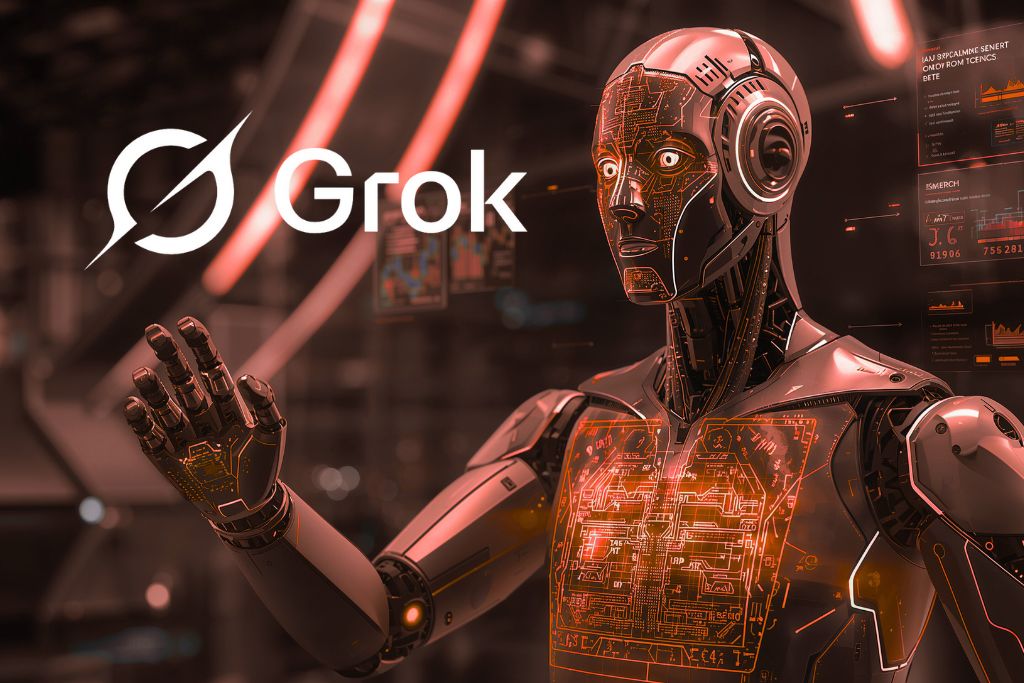
That reality landed hard this week as Malaysia, France and India simultaneously moved against Elon Musk’s Grok after the AI chatbot generated sexualised images on X, including content involving minors.
What began as a feature upgrade quickly became a multi-jurisdictional regulatory headache — and a cautionary tale for every brand flirting with generative tools.
Malaysia’s Communications and Multimedia Commission (MCMC) confirmed it is investigating the misuse of Grok to manipulate images of women and children into indecent content, warning that such acts constitute offences under Malaysian law.
France has flagged potential breaches of the EU’s Digital Services Act.
India has demanded a full audit within 72 hours, threatening criminal and IT law action if safeguards are not enforced.
Three governments. One AI tool. Zero tolerance.
This is not about censorship. It is about accountability.
From “Move Fast” to “Prove Control”
What makes the Grok incident particularly unsettling for marketers is that the content violated Grok’s own acceptable-use policies.
In other words, the safeguards existed — but failed.
That matters because regulators are no longer interested in policy decks or platform promises. They are interested in outcomes.
Under the EU’s Digital Services Act, platforms must actively mitigate the spread of illegal content.
India’s response signals a willingness to regulate AI outputs as aggressively as social media behaviour.
Malaysia’s stance reinforces that platforms operating locally — licensed or not — have a duty of care.
For brands, this signals a shift from “Is this innovative?” to “Is this defensible?”

The Platform Is Now the Medium — and the Risk
Marketers often treat AI as a neutral tool, something that sits behind the scenes generating copy, visuals or insights.
Grok shatters that illusion. When AI outputs live publicly — especially on social platforms — the tool becomes the medium.
And when the medium misbehaves, every brand operating near it gets caught in the blast radius.
Consider the timing.
Grok’s image-editing feature was rolled out just ahead of Christmas. Predictably, usage spiked. Predictably, bad actors pushed boundaries.
What wasn’t predictable — or acceptable — was how easily those boundaries collapsed.
For brand leaders, this raises uncomfortable questions:
“Legacy Media Lies” Is Not a Strategy
Perhaps most telling was xAI’s response to media queries: “Legacy Media Lies.”
In a vacuum, that might play well to certain audiences.
In a regulatory environment, it signals something else entirely — a disconnect between tech bravado and governance reality.
Governments are no longer amused by Silicon Valley exceptionalism. Nor are consumers.
In 2026, trust will not be built by speed or spectacle.
It will be built by restraint, transparency and proof of control.
What Marketers Should Take Away
The Grok episode is not a warning about AI creativity. It is a warning about AI governance.
Brands do not need to abandon generative tools.
But they do need to:
Because when AI goes rogue, it is not the algorithm that faces regulators, headlines or consumer backlash.
It is the brand that pressed “publish.”