By Kunal Sinha, Chief Knowledge Officer of Ampersand Advisory
If 2025 taught marketers anything, it was that attention is both cheaper and trickier than ever.
In Malaysia, Indonesia and Singapore, brands raced to be clever, earnest, extreme and occasionally tone-deaf, sometimes in the same week. Platforms kept mutating (hello, livestream commerce with an attitude), regulators sharpened their teeth, and creators kept proving that a single, perfectly timed short video can undo months of expensive strategy or create an instant cultural moment.
This is a roundup of the campaigns that shimmered, the missteps that went viral in the wrong direction, the influencers who made brands look smarter, and the marketing curiosities that had people sharing screenshots and arguing in comments sections until 3 a.m.
Malaysia: where legacy brands got theatrical, fintechs got practical, and the odd deodorant ad blew up
1) Heritage with a fresh script: Petronas and the art of domestic storytelling
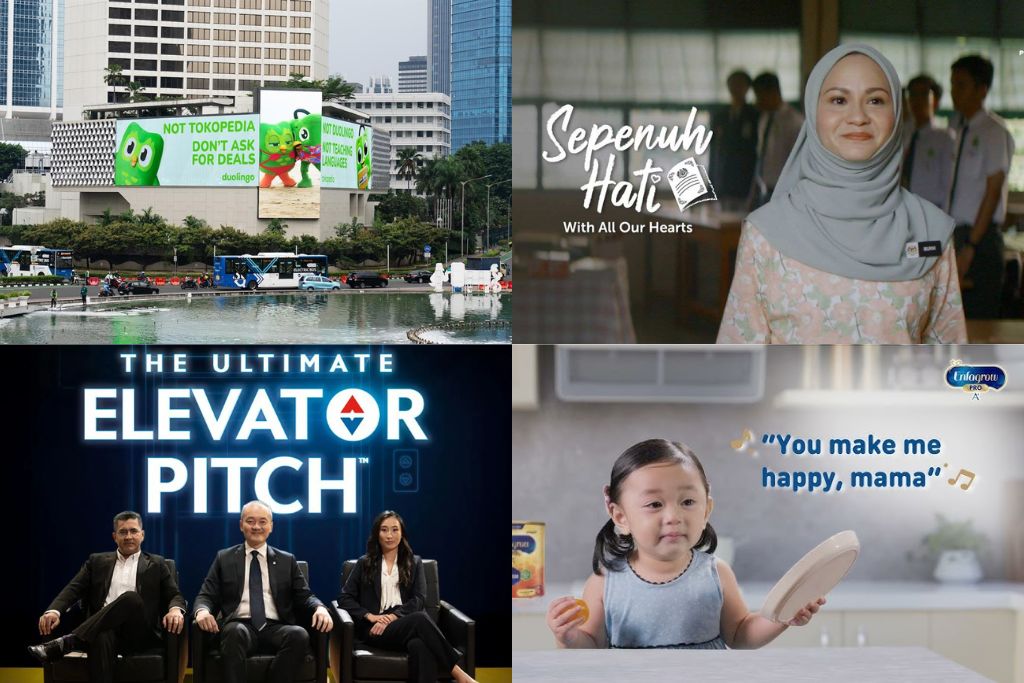
Big national names leaned into sentimental local storytelling and mostly pulled it off. PETRONAS’s long-form film “With All Our Hearts” leaned on emotional storytelling tied to national themes – classroom teachers, community moments and civic pride – and was a reminder that a corporate brand with deep local roots can still move people when it remembers to be human first. It’s the kind of film that runs in full at midnight, then gets clipped into a thousand heart-tugging Reels the next morning.
Beyond feel-good optics, PETRONAS also quietly strengthened its sustainability narrative in 2025, supplying locally blended sustainable aviation fuel to Malaysia Airlines, which allowed the brand to claim innovation credentials that go beyond warm commercials into operational proof. That’s the headline every marketer secretly wants: the ad that has a business case attached.
2) Grab: country-first activations and playing the national moment
Grab leaned into Malaysia’s ASEAN chairmanship with large outdoor work and civic-facing activations that felt both bold and useful. This was a rare example of a hyperscale platform acting like a neighbour who brought food to the block party: lots of presence, a pinch of patriotism, and plenty of media for PR teams to clip. When a super-app chooses to be civic, it becomes harder for critics to call it purely transactional.
3) Shopee’s festival economy and marketplace theatre
E-commerce platforms reminded everyone that shopping festivals still sell. Shopee’s 10.10 Brands Festival across Malaysia generated big headline numbers and predictable online frenzy, with claims of substantial savings for shoppers and huge traffic spikes for sellers, a ritual of urgency that remains a reliable conversion engine. But the model’s continued success also raised familiar questions about sustainability, seller margins and the environmental cost of impulse logistics.
4) When a deodorant ad becomes a national debate
The year’s most meme-able Malaysian PR lesson arrived courtesy of HYGR, a deodorant brand whose ad on LRT coaches sparked accusations of racial insensitivity and a public apology. It’s an instructive example: small creative decisions on big public canvases can trigger outsized reactions, and the community will happily supply the viral narrative. The speeds of outrage and apology are now as much a part of campaign planning as media buys and creative briefs.
5) The trend: local humour, big emotions, and festival commerce
Across Malaysia the winners were often those who married local humour and craft with festival timing. Petronas and AirAsia leaned into national moments and travel, while banks and telcos kept using pragmatic product stories to reach large, financially cautious audiences.
Meanwhile, the creative industry kept experimenting with micro-dramas and social serial formats that folded neatly into short-form consumption.
For Alliance Bank, we went the other way: embracing long-form. In a unique and landmark convergence of business, storytelling, and digital streaming, Ampersand Advisory created a documentary-style movie that offered unprecedented, behind-the-scenes access to the Accelerator Edition of the BizSmart Challenge – Alliance Bank’s flagship SME development programme.
6) Blurring the lines between sentimental storytelling and tech playbook
To help Enfagrow celebrate Mother’s Day, we at Ampersand Advisory collected real toddler sounds from mums, turned them into a song using AI music tools, and blasted it on radio, digital and streaming audio platforms. It hit record-book achievements and sparked heartfelt user-generated shares across feeds and stories. A.I. is often clever, but this was clever with a heart, delivering something that looked and felt handmade at scale.
Indonesia: the land of culture-first creative, meme-powered campaigns, and the comedy of commerce
1) Culture-first creativity: memes upgraded into ad strategy
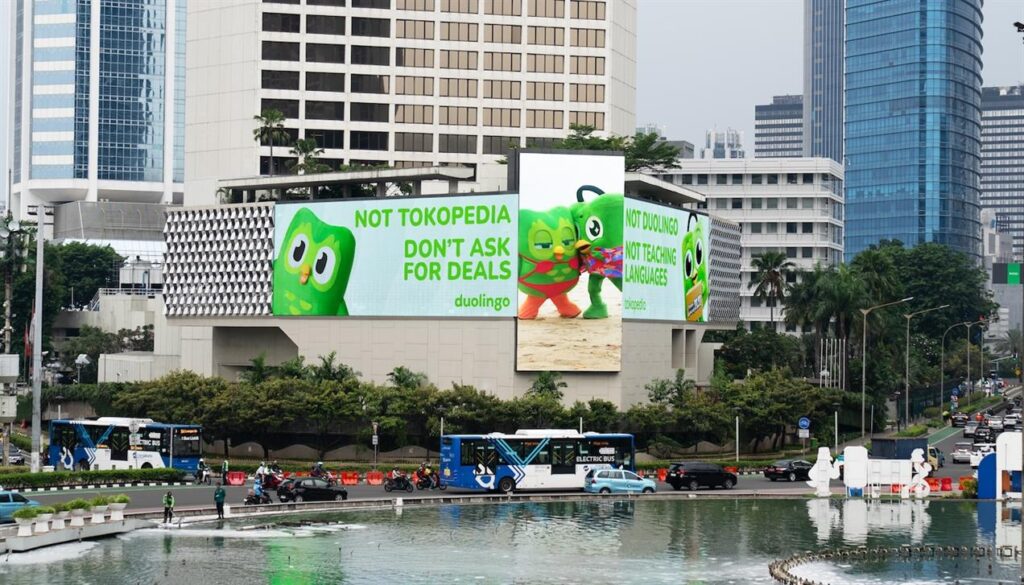
In Indonesia, a notable through-line was culture-first creative thinking, the sort where an agency starts with what people are already doing online and writes a campaign that looks like it grew out of that behaviour. A high-profile example was Duolingo’s memetic campaign executed in-country that used local humour and formats to land in feeds with the force of a viral meme. The campaign’s performance proved again that “culture-first” is not a boutique insight. It’s the operating system for virality in 2025.
2) Platforms as ecosystems: TikTok commerce and livestreams
Livestream commerce continued to mature, with influencers and e-commerce brands turning shopping into entertainment. Influencers with strong, trusted niche followings — from food reviewers to beauty educators — became the de facto product pages for many consumers. The result: better conversion on some items, but also the risk that the most engaging content becomes indistinguishable from hard-sell infomercials.
3) A wave of regulation and reputational caution
Political unrest and public protests through the year prompted brands to be visibly cautious. Analysts and PR shops urged brands to adopt a “do no harm” posture, recognizing that a misstep in messaging during periods of social tension can be expensive and long-lasting. Brands that stayed quiet were sometimes criticised for being absent; brands that posted too quickly were accused of opportunism. The right balance was rare and valuable.
4) Creators who converted attention into sales
Indonesia’s creator economy delivered consistent winners: beauty creators like Tasya Farasya, food entertainers like Tanboy Kun, and hijab-fashion narrators who turned culture into commerce. These creators weren’t always the biggest names; often they were the most trusted in a category. The lesson for brand teams was simple: reach is nice, relevance is ROI.
Singapore: finding balance between polished experiments, regulator realities, and attention fatigue
1) Big ideas, tight execution – until the public service test
Singapore’s marketing scene continued to produce tidy, well-executed ideas that scale nicely across earned, owned and paid channels. Yet the market also showcased “ad fatigue”; consumers reported tuning out brand messages more than in previous years. Agencies solved this by making fewer ads and more experiences: pop-ups, clever out-of-home and creative utility that offered something you could use, share or photograph.
2) The politics of the feed: election-era vigilance
GE2025 (general election season) taught brands about the thin line between civic engagement and rule-breaking ad mechanics: Singapore’s elections oversight removed hundreds of advertising items for rule breaches as parties tried to navigate new online norms. For non-political advertisers, the election underscored the need to keep targeting, influencer paid posts and sponsored content extra-scrutinised, because in a tight media environment, a misstep will be noticed.
3) Tech brands, fintechs and the silent features that won trust
Singapore’s fintechs and tech platforms focused on product trust and utility: small product wins, such as clearer fees, faster settlements and loyalty tweaks, created measurable lift in NPS and retention. For plenty of Singapore consumers, the flashiest ad was less persuasive than the app update that fixed an annoying bug. That’s marketing disguised as product development, and it’s effective.
Influencers: fewer celebrity megaphones, more category trust builders
2025’s influencer landscape matured in two ways. First, big celebrity influencers kept commanding high CPMs, but their effectiveness plateaued: audiences increasingly rewarded creators who had depth in a niche. Second, platform-native creators – short-form comedians, long-form micro-serial storytellers, credible product explainers – delivered better business outcomes in categories like food, beauty and finance.
Market lists from local influencer networks and platforms reflected the shift: curated top influencer lists in Malaysia, Indonesia and Singapore showed a mix of legacy celebs and creator-economy stars – many of whom have become micro-agencies in their own right, selling ideas, formats and workflows as part of partnerships. Brands that treated creators as collaborative partners – giving them briefs, budget and creative freedom – gained authenticity. Those who tried to make creators into mini-ads found their content ignored.
Controversies that taught the region a few blunt lessons
1) Creative shortcuts flop fast
Whether it was a deodorant ad on an LRT carriage in Kuala Lumpur or AI-generated creative that felt soulless elsewhere, the public punished campaigns that seemed careless. HYGR’s LRT apology is a textbook example: a regional audience is diverse, and small mistakes become big conversations.
2) Green claims must be backed up
Airlines and travel brands flirted with sustainability messaging, but regulators and watchdogs meant that any vague “green” talking point invited scrutiny. A high-profile Southeast Asian airline campaign faced pushback for unsubstantiated environmental claims in the region, a reminder that sustainability marketing needs real metrics or risk regulatory blowback.
3) AI is a tool, not a creative replacement
Attempts to shortcut production using generative tools sometimes backfired when the output felt tone-deaf or low-effort. The lesson for marketers: AI can boost productivity, but human editorial judgment remains the essential filter. (Global examples this year underlined this local truth.)
4) Regulatory attention rises with election cycles
Singapore’s careful enforcement on election-related ads, and the automatic spillover into brand scrutiny, showed how civic cycles increase reputational risk. For brands, a quiet period of careful governance often beats a loud campaign that isn’t fully vetted.
What made people share? Formats and behavioural hacks that kept working
1) Micro-dramas and serials
Mini-episodes tailored to short-form feeds delivered superior “watch-through” and shareability. Viewers liked stories they could binge in five minutes. Marketing-produced soap operas went from gimmick to a reliable content pillar for some FMCG and telco brands.
2) Culture-first, not campaign-first
Brands that started with local memes, youth rituals or Bahasa/colloquial shorthand landed harder than those that tried global templates. Duolingo’s meme-led playbook in Indonesia is a useful example of starting in culture rather than forcing culture to fit a campaign.
3) Utility over vanity
Small, useful product improvements – clearer app UIs, faster refunds, loyalty points that matter – created better brand talkability than glossy hero films in several verticals. People share utility when it saves them time or money; they tag friends when an insight is genuinely helpful.
4) Festival timing with local twists
Merdeka, Hari Raya, Ramadan, and local festivals remained predictable high-engagement moments. The differentiator was a local twist that felt genuinely rooted, not a cookie-cutter festive template.
Quick tactical takeaways for marketers who are tired of guessing
1) Localize like you mean it.
The cheapest route to virality is pretending a global brief will feel local. It rarely does. Start in the culture, then apply brand guardrails.
2) Tighten governance for user-facing placements.
Ads on transit, in schools, or tied to civic moments require a second (and third) sensitivity pass.
3) Treat creators as creative partners.
Pay, brief and collaborate. Influence the format, don’t try to own the voice.
4) Measure the product-spark, not the ad-spark.
Product fixes that lower friction are marketing wins with higher ROI than most hero films.
5) Sustainability marketing needs receipts.
If you claim “green,” be ready to show a believable operational program, not just a nice film.
Final notes – about buzz, culture and the great human variable
2025 was a year in which the internet was equal parts theatre and mood ring. Every campaign lived in the theatre where audience taste is both merciless and generous: they’ll elevate clever authenticity and punish lazy shortcuts. Marketers who succeeded learned to be modest about their intentions and maximalist about their craft. They treated creators like partners, their product teams like allies, and the public like an audience that deserved respect rather than manipulation.
If there’s a single snappy summary for the region: be useful, be local, be human. And if you’re thinking about running a deodorant ad on public transport next year, perhaps ask three people who aren’t in the creative team to read the concept first. Humanity will save you the embarrassment; humour can sometimes salvage a mistake, but only when it’s earned.