
Earlier this week, police data revealed something ugly: Malaysians have been swindled out of RM2.7 billion in online scams in just eleven months.
Not RM2.7 million. A whopping RM2.7 billion!
That’s more than many brands’ combined annual media spend. More than some start-ups’ entire valuations. More than the yearly revenue of certain local banks, retailers, and ad agencies combined.
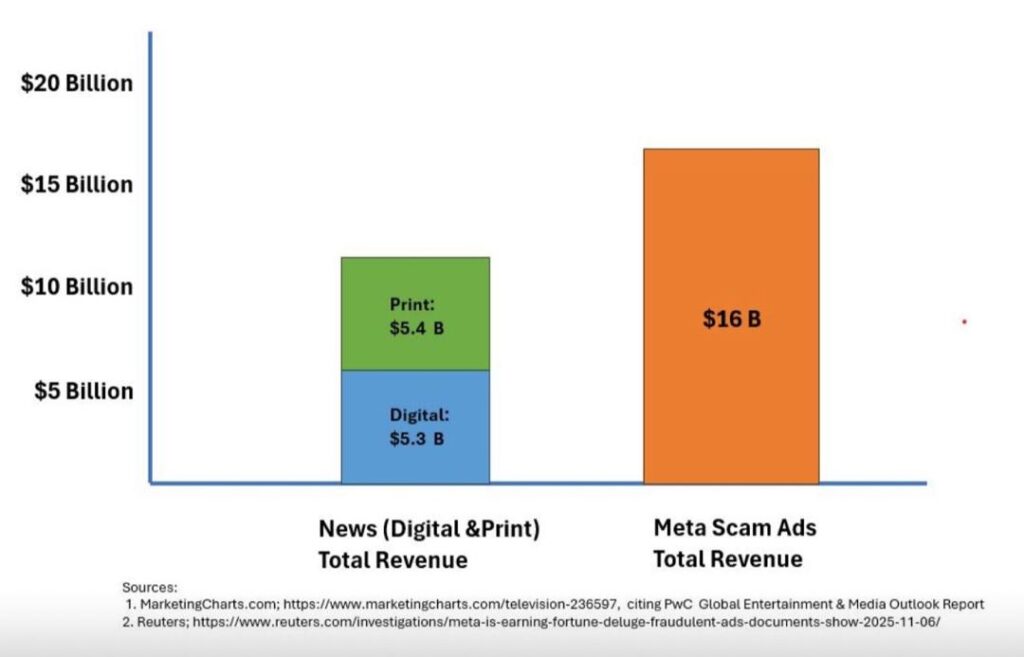
Yet — despite the scale — we don’t treat this as a national marketing failure.
But it is.
Because scams don’t work by brute force. They work using exactly the same methods marketers use: persuasion, targeting, segmentation, urgency, behavioural nudges, social proof, and emotional triggers.
In short — bad actors are out-marketing the good ones.
The Scammer’s Funnel: Familiar, Frictionless, and Ruthless
The police breakdown paints a clear picture:
| Scam Category | Cases | Estimated Loss |
| Telecommunications scams | 28,698 | RM715.7 mil |
| E-commerce fraud | 14,881 | RM123.7 mil |
| Non-existent investment schemes | 9,296 | RM1.37 billion |
| Loan scams | 8,029 | RM59.1 mil |
| E-finance fraud | 5,853 | RM458.1 mil |
| Romance/Love scams | 978 | RM43.7 mil |
Investment scams alone made up half the total losses — a heartbreaking testament to how belief, hope, and greed are exploited when wrapped in a veneer of financial credibility.
Telecom-based scams ranked highest in volume because they weaponise frequency — a tactic every media planner will recognise.
If you call 100,000 people, you don’t need a high conversion rate. You just need one percent.
Malaysia’s Trust Crisis Is a Brand Crisis
Look closely and you’ll notice a pattern: People aren’t falling for scams because they’re reckless.
They’re falling because scammers feel more believable, faster, and more personalised than official institutions.
Scammers:
Meanwhile, institutions and brands still rely on:
We’re protecting people with compliance language, while scammers speak the language of desire, fear, and human emotion.
And they are winning.
E-Wallets, E-Commerce, and The New Risk Reality
As Malaysia accelerates towards a cash-light economy — with e-wallet donations now common in mosques, churches, temples, and evengurdwaras — trust is becoming the new currency.
Convenience without confidence is chaos.
Digital adoption has outpaced digital literacy.
And when a technology shift happens faster than education, predatory behaviour fills the gap.
Where Do Brands Fit Into This?
Every marketer working in fintech, e-commerce, telco, insurance, payments, banking, retail and government messaging now shares a single mandate: Make trust a feature, not a disclaimer.
This means:
Brands don’t just sell products anymore — they sell reassurance.
A Shared Responsibility — and a Massive Opportunity
The National Scam Response Centre (NSRC) exists. The 997 hotline exists. Banks have fraud detection teams.
But the public still thinks: “If I get scammed, I’m on my own.”
This is the gap.
A gap where marketing can educate, reframe risk, and help Malaysians spot manipulation before it happens.
A gap where purpose isn’t a CSR paragraph — but a communication strategy aligned to real, measurable societal need.
A gap where brands can build loyalty not through discounts, but through protection.
RM2.7 billion wasn’t stolen from Malaysia.
It was engineered, persuaded, optimised, and executed — campaign-style.
If we want 2026 to be different, we don’t need louder warnings.
We need smarter communication.
Because in this war, it isn’t technology against victims.
It’s good marketing versus bad marketing.
And right now — the wrong side is ahead.