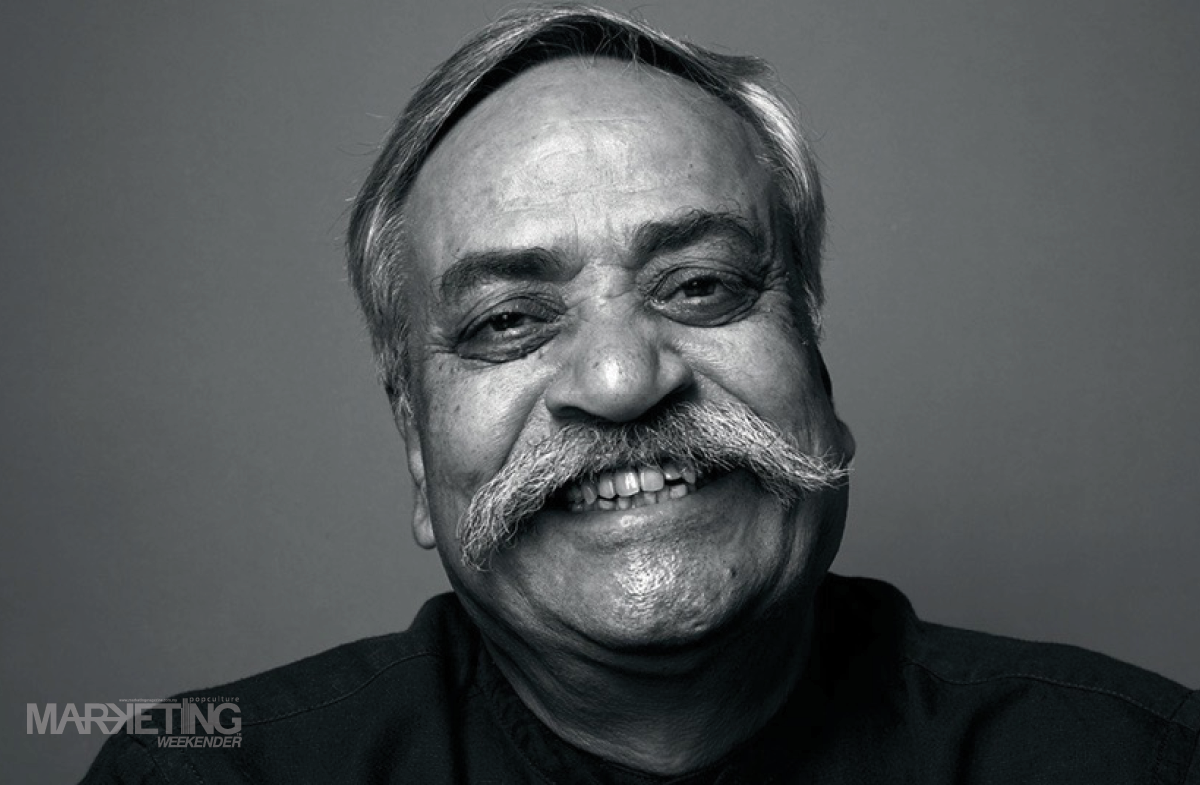
Kunal Sinha and Sandeep Joseph both worked in Ogilvy India with the late, great Piyush Pandey. Kunal was in the strategic planning team and worked closely with Piyush on multiple campaigns. Sandeep’s company was acquired by Ogilvy and he headed Ogilvy Interactive after the dotcom crash, from 2001 till 2004.
Any advertising professional could benefit from these 13 insights from the life of the phenomenon that was Piyush. Six from Kunal and seven from Sandeep. (though this isn’t a 6-7 situation!)
What we can learn from Piyush, even if we aren’t creative directors, as per Sandeep
Smaller towns have more authentic voices: a key lesson from the man who came from Jaipur, in Rajasthan, which in pre-liberalized India of the 1970s and 1980s was a relative backwater, much smaller than Delhi or the megacity of advertising, Mumbai. Piyush retained the voice of the people, and its authenticity, and later advocated for hiring ad professionals from outside the big cities, to find talent with more authentic local voices, as well as more hunger to prove themselves compared to those accustomed to big city luxuries.
Be confident, with basis: confidence is something that many Creative Directors do exude, some without justification! In Piyush’s case, he attended the premier College of the country, St Stephen’s, and he played cricket very well for its team. There is an old saying, “An Oxford man walks into a room as if he owns the world, and a Cambridge man walks in as if he doesn’t give a damn who owns the world.” St Stephen’s name had some of this aura in India. Piyush was naturally confident about his abilities, and the seeds of self-belief were sown even before he started working. But Piyush’s confidence wasn’t blind bluster: he understood the need to connect with consumers and was confident of his ability to do so, based on razor-keen observation and listening to the common people.
“Never say die” fighting spirit: personally I have been involved in pitches where Piyush saw the work very close to the deadline, changed it the very night before the pitch, and the strat team and media personnel then adjusted the deck to the new direction. And the pitch was won. It was never too late to do what he believed in, and to me it’s akin to football managers like Sir Alex Ferguson who pushed hard right at the end of the game, to secure a win, not being happy with a draw or a good effort.
Engage with senior client stakeholders: Piyush took advertising personally. He personally sold campaigns to client C-suite, and they grew to trust him. He was in the trenches, a general leading from the frontlines, not depending on servicing to get the work sold. He made time for clients and he leveraged his growing fame and credibility to push stuff he believed in, across the line.
Human connect with staff: Piyush was a people’s person. He would send personal thank you notes to creative folks who had done award-winning work, when Olgivy Mumbai had more than a thousand staff. He may not have had time to meet everyone personally, as he grew to global creative head honcho at Ogilvy, but he did reach out and he remained accessible.
Advertising as sport: Like many great managers today, consciously or subconsciously because of his cricket background, Piyush regarded the business of advertising as a sport. One mustn’t let defeat break one down, one had to play on the front foot (aggressively, taking the bull by the horns and not being cowed). One had to play for the team, not the individual accolades.
He beat Ageism: Piyush matured like a fine wine, some of his best work happened after he turned forty. He remained fired up to burnish his agency’s reputation on the global stage, and he empowered whole generations of younger creative whizkids to be confident and shoot their shots.

6 Ps of PP, as per Kunal
Partner: For Piyush, everyone was a partner. Colleagues in every function, at every level. Clients. No great work could be created unless the client was a partner who could make the work sharper and smarter. The craftspersons: from the film maker and sound editor to the hoarding contractor who took an outdoor ad and turned it into a talking point. And when he summoned us to sharpen the brand proposition and make it more rooted, ‘Oye planner, idhar aa’, (“hey, planner, come here!”) it was in the spirit of that partnership.
Point of view: Piyush believed that every ad that left the agency’s doors must have a point of view. Unfettered celebrations, challenging societal norms – Cadbury. Mobility is emancipating – Chal Meri Luna. Homes are expressions of the family – Asian Paints. That point of view made a brand part of people’s lexicon because it connected so deeply.
Popular: Many have pointed out how Piyush changed the paradigm of Indian advertising, from a burra-saheb tone to reflecting the popular, grassroots emotion, and it bears emphasis. This was cultural branding at its finest, and it stemmed from a deep understanding of and appreciation for the masses. In the process, he helped brands access much larger markets: Cadbury, from gift to everyday celebration, Fevicol – from a carpenter’s adhesive to being in every home closet.
Pride: He made every Ogilvy person take pride in their work, just as he exuded pride at every international festival. It compelled global creatives and marketers to understand the Indian idiom. It made every Indian advertising person hold their heads high when they stepped on to the podium, to pick up awards. It opened up the floodgates for other Indian advertising leaders to shine, and carry that pride forward. What a trailblazer!
Pet Pooja (literally “stomach worship”): In a kind of opposing stand to ‘stay hungry, stay foolish’, Piyush believed that sustenance was the fuel and the reward to great performance. Every good meeting would be followed up with a hearty lunch or dinner; no one who kept long hours went hungry (or thirsty). He himself sought out simple home food in cities where former Ogilvy India people now lived.
Prayer: No matter how wonderful the ideas were crafted, how well prepared the team was, a little prayer before the performance was an essential step in getting divinity on his side for Piyush. Maybe that turned the tide in Ogilvy’s favour, maybe that elevated the pitch or new campaign. It certainly was an admission of humility.
Om Shanti.

Sandeep Joseph is the CEO and co-founder of Ampersand Advisory, a leading agency with over 450 awards and 8 x #1 in 2025.
Kunal Sinha is the Chief Knowledge Officer of Ampersand Advisory, and is a strategic authority, who has written multiple books, spoken and lectured widely, and has worked across Asia.