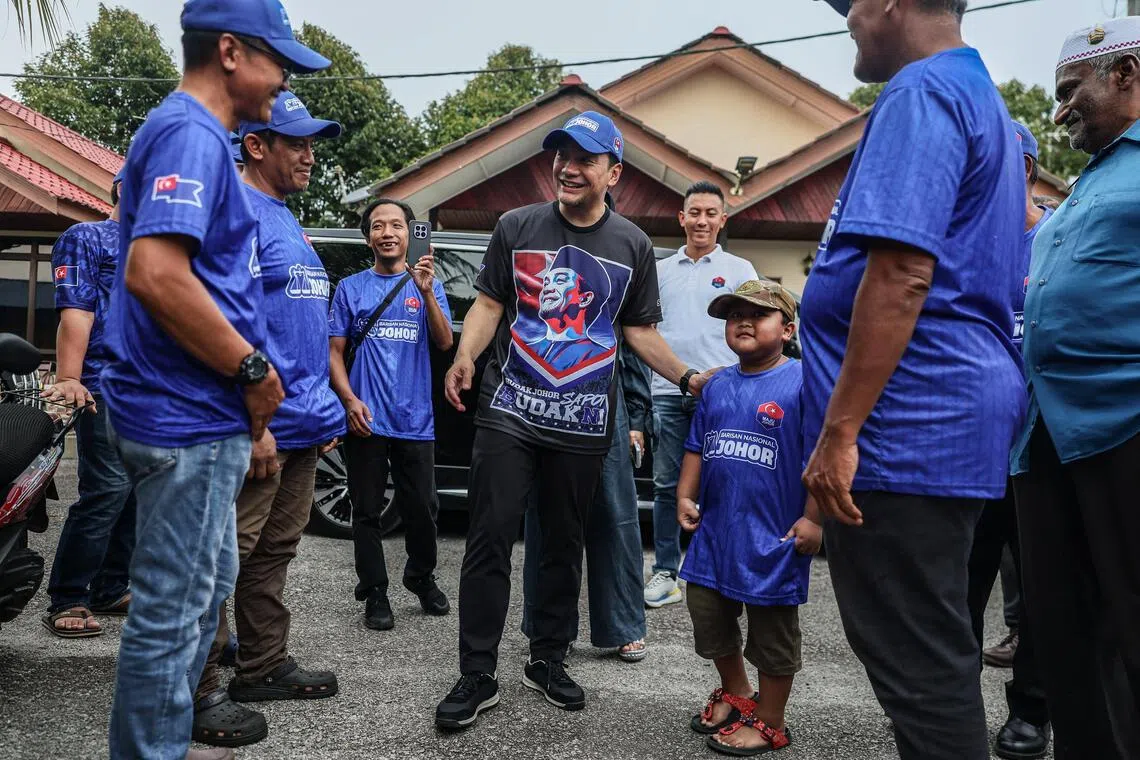
Sometimes the most powerful slogan is not created in a boardroom.
It does not emerge from months of workshops, consumer research, linguistic testing and presentation decks filled with carefully plotted brand territories.
It simply enters the conversation. “Onn tak Onn?” did exactly that.
The phrase is built around a deceptively simple piece of Malay wordplay. It refers to Johor Menteri Besar Onn Hafiz Ghazi while borrowing from the colloquial expression “on tak on?” — loosely translated as “are we on?” or “are we doing this?”
Three short words. One familiar rhythm. An immediate response built into the line.
From a marketing perspective, this is not merely a catchy phrase. It is an example of how a name can become a verbal brand asset when it connects naturally with the language people already use.
There is no explanation required. You hear it once and understand how to answer.
“Onn!”
That is the first lesson for marketers. The best phrases do not always ask audiences to stop and think. They invite people to instinctively participate.
It Worked Like a Social Password
Most advertising slogans are statements. They tell us what a company believes, what a product promises or how a brand would like to be remembered.
“Onn tak Onn?” works differently. It is a question.
That small distinction transforms the audience from a passive recipient into an active participant. The phrase is incomplete until somebody answers it.
It creates a call-and-response mechanism, much like a chant at a football stadium, a familiar line from a song or a private joke shared among friends.
This is why it travelled so easily.
It could be spoken at an event, used in a casual conversation, turned into a caption, repeated by an emcee or adapted for a piece of digital content. It was flexible enough to belong almost anywhere without sounding like traditional advertising.
In marketing terms, it became a social password.
People who understood the phrase immediately felt included in the cultural moment. Those who repeated it helped extend its reach. Every response became a tiny act of amplification.
No media budget was required for the phrase to travel from one conversation to another.
The audience effectively became the distribution channel. That is the kind of organic reach brands frequently attempt to manufacture but rarely achieve.
Familiarity Beat Formality
The brilliance of “Onn tak Onn?” lies in its informality.
It sounds like something one person might naturally say to another. It does not sound institutional, overproduced or carefully approved by several layers of management.
It belongs to everyday Malaysian speech.
This matters because audiences have become increasingly resistant to polished corporate language. They recognise the tone of advertising almost immediately. The harder a slogan appears to be selling something, the more likely people are to keep their distance.
But culturally fluent language reduces that distance. It gives communication the texture of ordinary life.
The phrase also demonstrates the value of phonetic simplicity. “Onn” is short, energetic and easy to repeat. The question itself contains rhythm, repetition and a ready-made answer.
It can be understood in less than a second.
That is an enormous advantage in an attention economy where brands compete not only against other advertisers, but also against messages, notifications, videos, memes and countless other interruptions.
A phrase that requires a paragraph of explanation is unlikely to survive. A phrase that can be understood, repeated and adapted almost instantly has a chance to become culture.
A Personal Name Became a Brand Code
Strong brands are often recognised through distinctive assets.
A colour. A sound. A shape. A character. A particular style of language. “Onn tak Onn?” turned a personal name into such an asset.
The word “Onn” carried two meanings at once. It identified an individual while also evoking the familiar idea of being ready, active or committed.
This double meaning gave the phrase its creative tension.
For brand builders, there is an important lesson here. Distinctiveness does not always require inventing an entirely new language. Sometimes it comes from discovering an unexpected connection between an existing name and an existing cultural expression.
The creative task is not to force relevance. It is to recognise relevance that is already hiding in plain sight.
Malaysia’s linguistic landscape is particularly rich territory for this. Malay, English, Mandarin, Tamil and regional dialects constantly overlap. Words are borrowed, abbreviated, remixed and reinterpreted.
Brands that genuinely understand these patterns can produce communication that feels locally alive. But there is also a warning.
Wordplay succeeds only when it feels effortless. Once it is visibly engineered, overused or inserted into situations where it does not belong, it quickly loses its charm.
Cultural fluency cannot be faked through translation alone. It requires sensitivity to rhythm, context, humour and the way people actually speak.
Memes Cannot Be Ordered
By the time organisations notice that a phrase has become popular, the public has usually done most of the work.
That appears to be part of what made “Onn tak Onn?” interesting. Its strength did not depend entirely on who first invented it. Its value came from the way people adopted, repeated and recognised it.
This is a useful reminder for brands obsessed with “creating the next viral campaign”. Virality is not a media format. It is an audience behaviour.
People spread language when it gives them something useful: a joke, an identity signal, a way to participate, a shorthand expression or a sense of belonging.
Brands can create the conditions for this behaviour, but they cannot command it.
The phrase also illustrates the importance of timing. A strong expression needs a moment around which people can gather. Without that context, even excellent copy may disappear.
When language, personality, culture and timing align, a phrase can move beyond communication and become cultural currency.
It begins to appear in conversations that the original creator could never have planned.
The Bigger Marketing Lesson
“Onn tak Onn?” is ultimately a lesson in compression.
It compressed a name, a question, an attitude and an invitation into three memorable words. It did not need a manifesto. It did not need an elaborate explanation. It gave people something they could immediately understand and make their own.
That is what modern brand communication often forgets.
Marketers spend enormous amounts of time deciding what they want to say. Far less time is spent asking whether ordinary people will want to repeat it.
The distinction matters. A line becomes memorable when an audience hears it. A line becomes powerful when an audience uses it.
For brands searching for their own cultural breakthrough, the question is therefore not merely whether a campaign is clever, strategically sound or beautifully produced.
The more revealing question may be much simpler: Will people actually say it? On tak on?
Share Post:


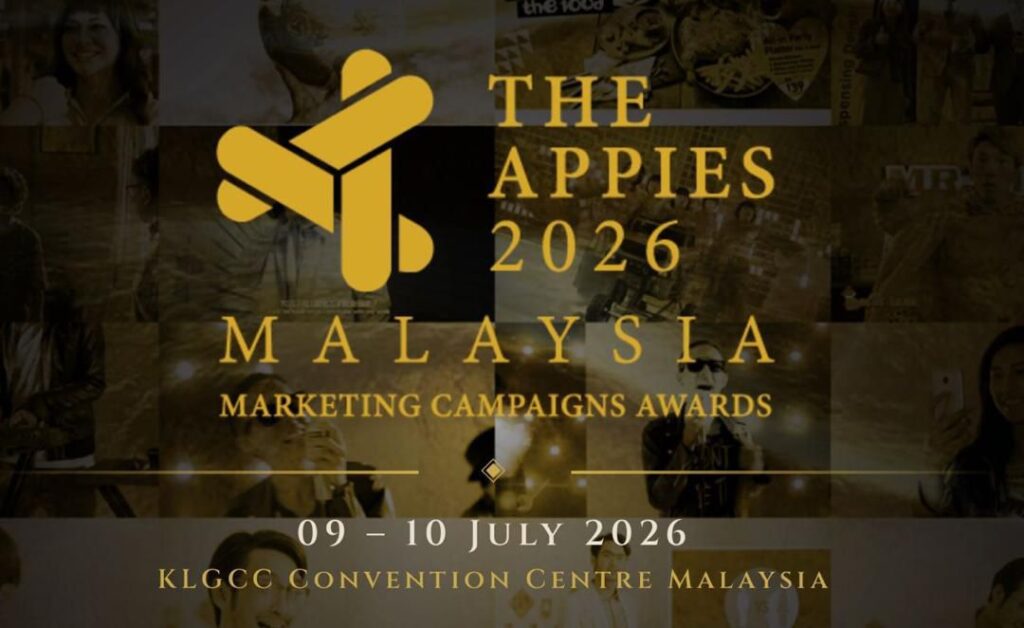
The APPIES is where Malaysia’s boldest campaigns, brightest ideas, and most impactful storytellers take the stage.
More than an awards show, it is the industry’s ultimate platform for creative, media, digital and marketing excellence, where live presentations meet live judging.
This is your chance to showcase work that moved audiences, shaped conversations, and delivered real results.
From breakthrough brand campaigns to innovative digital experiences, the APPIES celebrates the work that defines the future of marketing.
Step into the spotlight alongside the industry’s leading agencies, brands, creatives, strategists and changemakers.
Whether you are aiming for Gold, Silver, Bronze or the prestigious Best of the Best recognition, this is your moment to make history.
Your campaign deserves to be seen.
Your ideas deserve the stage.
Your work deserves the legacy.
KEY DATES
Haven’t subscribed to our Telegram channel yet? Don’t miss out on the hottest updates in marketing & advertising!