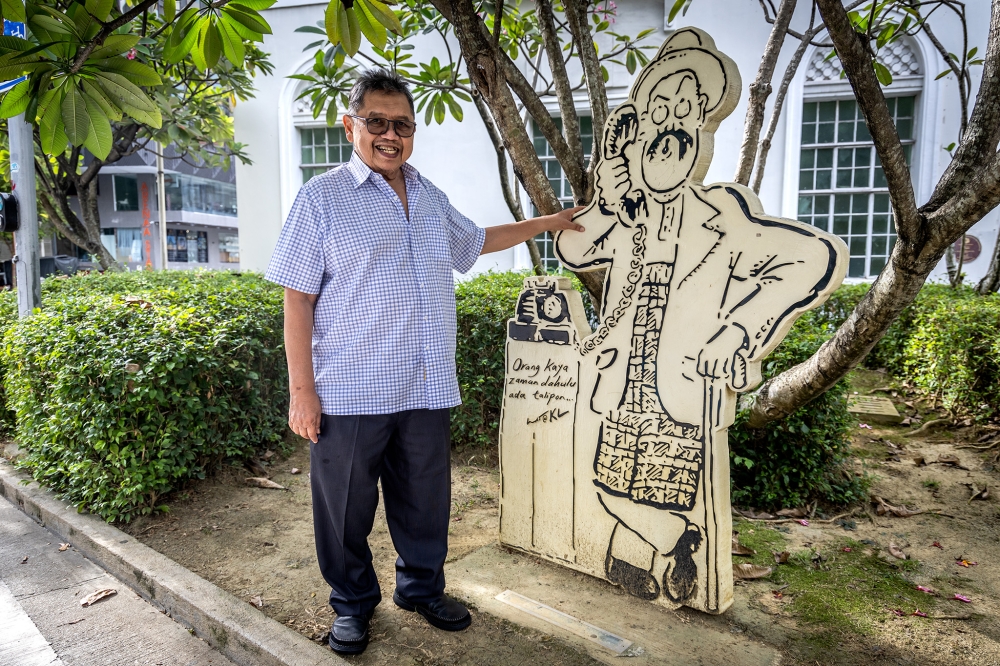
In an industry obsessed with what’s next, Datuk Mohd Nor Khalid—better known simply as Lat—is making a different kind of statement: keep going. Not louder. Not bigger. Just… keep creating.
Speaking in conjunction with National Artiste Day, Lat’s message was disarmingly simple, reports Bernama. Creativity, he suggests, is not a phase of life. It is the work of a lifetime. And more importantly, it is work that does not come with a retirement date. That idea lands differently today.
Across Malaysia’s creative industries—advertising, film, design, content—there is a quiet but growing anxiety about relevance. Younger creators worry about being replaced by AI.
Older practitioners worry about being replaced by younger creators. Everyone, it seems, is trying to stay current. Lat, at 70-plus, is not trying to stay current. He is staying consistent. And therein lies the lesson.
The Discipline of Not Stopping
Lat’s assertion that artists must continue creating—even after retirement—sounds almost old-fashioned.
But in reality, it cuts against a modern tendency: to treat creativity as output-driven rather than practice-driven. In marketing terms, we’ve become obsessed with campaigns, not craft. Lat reframes the conversation.
For him, the act of drawing is not tied to deadlines, briefs, or commercial outcomes. It is a discipline. A daily engagement with one’s own voice. “I still draw and am currently working on a new comic,” he said, almost casually.
There’s something quietly radical about that. No announcement. No hype cycle. Just the work continuing. For agencies and brands, this is a useful provocation.
Because the strongest creative identities—whether personal or corporate—are rarely built on sporadic bursts of brilliance. They are built on sustained, often invisible, practice.
Identity Is the Real Currency
Lat’s second point is even more critical: without identity, creative work does not last. He references the enduring appeal of P. Ramlee—a figure whose work continues to resonate decades after his passing. The reason, Lat argues, is not nostalgia alone. It is authenticity.
A distinctly Malaysian voice that did not attempt to imitate elsewhere. This is where the conversation becomes highly relevant for marketers.
Malaysia’s advertising landscape has long wrestled with this tension. On one hand, there is the pull of global aesthetics—sleek, Westernised, algorithm-friendly.
On the other, there is the richness of local nuance: dialects, humour, cultural contradictions, everyday textures. Too often, brands default to the former.
Lat’s perspective is a reminder that imitation may win short-term attention, but identity builds long-term memory. You can see this play out in recent Raya campaigns. The films that linger are not necessarily the most polished—they are the ones that feel recognisably Malaysian.
The kampung awkwardness. The family dynamics. The unspoken tensions. The small, human truths. That’s not accidental. That’s identity at work.
The Governent’s Role and Its Limits
Lat also acknowledges increased government support for the arts, noting that public appreciation has grown alongside it. This is an important shift.
Initiatives, funding, and national recognition—such as National Artiste Day—signal that creativity is not peripheral, but central to cultural and economic development. But support, while necessary, is not sufficient. Lat’s message subtly pushes responsibility back to the practitioners themselves.
You cannot outsource your voice. You cannot wait for validation. You cannot pause your craft and expect it to evolve on its own. In other words: policy can create platforms, but only practice creates artists.
A Note for a New Generation
There is a quiet generosity in Lat’s advice to younger creators—that it is acceptable to begin by being influenced by others. In an age where originality is fetishised, this feels refreshingly honest.
Every creative journey starts somewhere. The problem is not influence. The problem is never moving beyond it. Lat’s career is, in many ways, proof of this evolution.
From early observational sketches to the deeply personal storytelling of Kampung Boy, his work grew into something unmistakably his own. For today’s creators—whether illustrators, copywriters, filmmakers, or content strategists—the takeaway is clear: style is not found, it is formed. It is formed over time, through repetition, reflection, and persistence.
Creativity Doesn’t Retire. It Either Continues or It Fades.
What Lat offers is not just advice. It is a philosophy. That creativity is not about staying relevant, but staying engaged. That identity is not a positioning statement, but a lived expression. And that the real risk is not failure—but stopping.
For Malaysia’s marketing and creative community, this may be the most important reminder of all. Because in a world chasing the next big idea, the most enduring ones often come from those who simply never stopped working on their craft.
Share Post:

Haven’t subscribed to our Telegram channel yet? Don’t miss out on the hottest updates in marketing & advertising!