Advertising doesn’t die. It just ages badly. It clings to habits long after they’ve stopped working.
Like a former star still demanding the same stage, the same spotlight, the same applause — even when the audience has already walked out.
Influencer marketing is in that phase.
All the noise is still there.
The vanity metrics. The influencer decks. The breathless “campaign wrap” presentations stuffed with reach, impressions and celebratory emojis.
But underneath it, something has quietly collapsed.
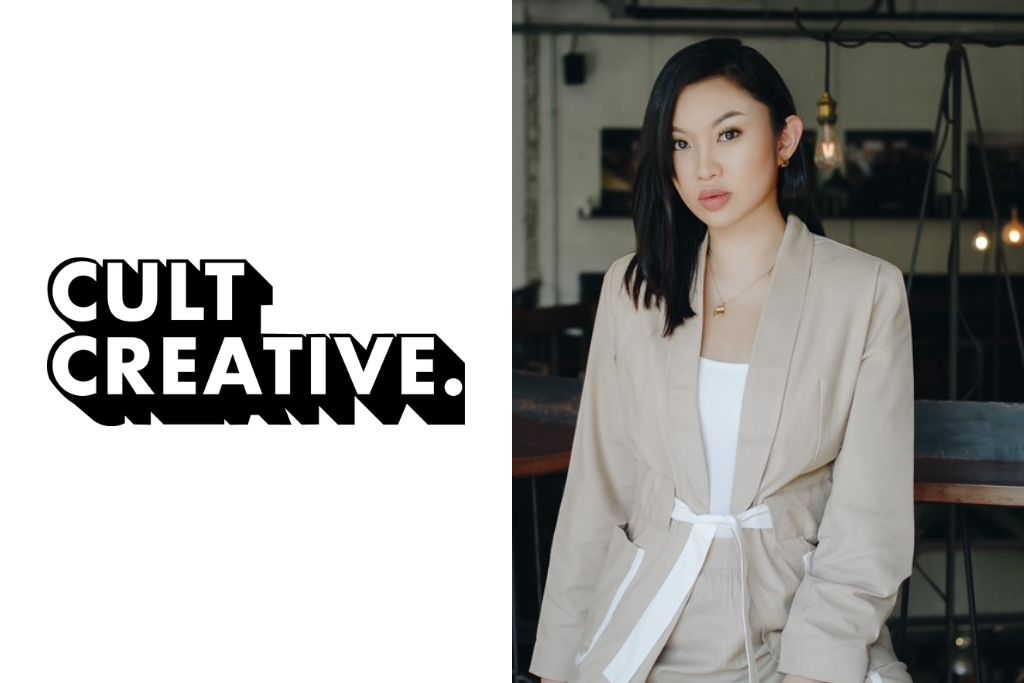
Shermaine Wong isn’t mourning that collapse. She’s building on top of it.
“Traditional influencer marketing was broken,” says the Founder & CEO of Cult Creative.
“Brands chased follower counts. Creators chased likes. Nobody chased outcomes.”
No outrage. No theatrics. Just diagnosis.
Then comes the line that reframes the entire conversation:
“Creators, culture, and conversion aren’t three separate bets — they’re one engine. Because marketers don’t need more content, they need content that moves people to act.”
That isn’t a slogan. It’s a structural argument.
The Graveyard of Pretty Campaigns
What many brands still proudly label “influencer strategy” looks more like theatre.
Pretty faces. Perfect lighting. Captions pretending to be conversations.
Shermaine’s thinking was shaped by watching far too many of these campaigns fail.
Across media, luxury, FMCG, entertainment and tourism, she kept seeing the same pattern: the more polished the campaign, the less it worked.
“I’d see months spent perfecting ‘perfect’ creative,” she recalls, “only for it to fail because it sounded like marketing, not conversation.”
She’s right. People can smell marketing. And when they do, they don’t share it. They scroll past it.
So Cult Creative didn’t ask how to do influencer marketing better.
They asked a more uncomfortable question:
What if the whole structure is wrong?
From Agency to Infrastructure
Most agencies love to call themselves “partners”. Some say “ecosystem”. A few say “platform”.
Shermaine isn’t interested in any of that.
Cult Creative, in her words, is “infrastructural”. Not decorative. Not performative. Structural.
A plug-and-play creator platform connecting brands, agencies and creative talent across Southeast Asia. A network of over 7,500 creators, working with more than 1,100 companies, facilitating over 1,200 creator–brand collaborations across the region.
But even then, she avoids the word “marketplace”.
“It’s infrastructural,” she says. “It’s about reducing friction between culture and commerce — so creators can earn with dignity, and brands can plug into real cultural talent without the chaos.”
That word — dignity — doesn’t appear often in marketing decks.
Because most of the industry still treats creators as inventory.
Shermaine insists they are something else — Cultural participants. Cultural workers. Cultural translators.
When Bata Became the Turning Point
Cult Creative’s philosophy didn’t crystallise with a glamorous brand.
It crystallised with Bata. A heritage shoe company. Heavy past.
Lost youth relevance.
Instead of forcing a “cool campaign”, Shermaine made it a cultural insertion.
They expanded beyond Klang Valley creators. They chose persona over popularity. Lived voices over polished personalities.
One creator filmed a simple “Back to School” comparison video — testing designer sneakers against Bata shoes for comfort and design. Shot in a trending format. No studio. No scripts. Just opinion.
“Culture isn’t chaos. It’s a system. And systems can be built,” Shermaine explains.
The outcome resulted in 8–10% engagement, 19.8 million organic views,
900,000 interactions from just over 70 videos. Foot traffic rose. SneakerLAH amplified it organically.
Not virality. Cultural relevance at scale.
When Unilever Moves, The Ground Shifts
For years, influencer marketing sat in the “experimental” column.
Then Unilever shifted its influencer spend from 30% to 50% of its total social budget. Not as a test. As a structural pivot.
“When Unilever makes that bet, it’s not experimentation. It’s strategic infrastructure,” Shermaine notes.
Creator marketing is no longer peripheral. It’s operational.
And Cult Creative’s positioning mirrors that: not a campaign machine, but a cultural operating system built for Southeast Asia.
The Micro-Influencer Engine
Shermaine doesn’t sell campaigns. She builds engines.
Her Micro-Influencer Engine runs on a simple human truth:
People don’t convert because of one exposure. They convert because of trust over time.
“We don’t treat creators as one-off posts. We treat them as cultural performance units.”
For a meal-delivery brand, they didn’t select celebrity food influencers. They selected working parents. The ones juggling guilt, fatigue and Sunday meal prep.
When they talked about the service, it didn’t sound like advertising. It sounded like relief.
As Shermaine puts it, “It was relief. And relief converts.”
Cultural Velocity: The Only KPI That Matters
Shermaine is blunt about what she doesn’t believe in — Reach. Impressions. Follower size.
“Vanity currencies,” she calls them.
What she believes in is cultural velocity.
“By 2027, winning brands will measure how fast an idea moves through a community — and how deeply it changes behaviour.”
Not who saw it. But who shifted because of it.
This is where Cult Creative’s tech and data stack comes in — combining platform APIs, creative intelligence, engagement pattern analysis and behavioural feedback loops — not to automate creativity, but to make culture measurable as movement.
Why Malaysia Matters
For Shermaine, Malaysia isn’t just her home base. It’s her training ground.
“A Malaysian creator shifts seamlessly between a Malay TikTok, a Chinese RedNote, and an English Instagram Reel — all with different cultural cues and humour styles.”
This isn’t just diversity. It’s cultural dexterity.
And that makes Malaysia a stress test for storytelling. If it works here, it’s already strong enough for Southeast Asia.
Proximity Over Polish
Shermaine doesn’t dismiss production value. She dismisses slowness.
“In five years, 70% of paid advertising will be repurposed creator content. Not because production doesn’t matter — but because culture doesn’t wait.”
Her model is ruthless in its simplicity — Spot the trend. Deploy creators. Launch within 48 hours. Measure. Adapt.
Most agencies are still debating colour palettes at that point.
And while high-production ads become brand theatre, creator content becomes brand movement.
Legacy Isn’t Valuation
Ask Shermaine about exits and you won’t get a startup pitch. You’ll get philosophy.
“I’m building trust. Trust that creativity can scale without losing its soul.”
Trust in creators. Trust in Southeast Asia. Trust in systems over slogans.
As a mother of three, she adds something even more human:
“I want them to know you can build something meaningful, raise a family, and lead confidently without having to choose.”
When Culture Stops Being Decoration
Beyond AI, creators, platforms and buzzwords, something deeper is happening.
Culture is no longer decoration. It’s becoming infrastructure.
And infrastructure doesn’t go viral. It endures.
Shermaine Wong’s real achievement may not be proving that creator marketing works.
It’s proving that culture itself can be built as a system — without stripping it of soul.
And when culture becomes structure, marketing stops being persuasion.
It becomes participation.
And that’s when it stops pretending — and finally starts mattering.