Across Malaysia and the region, companies are scrambling to catch the AI wave, convinced it will unlock growth, efficiency and competitive advantage. Yet a startling reality stands in the way.
According to the MIT Nanda report released in July 2025, 95% of first-wave corporate AI pilots failed to scale. Entermind’s new white paper, 7 Original Sins of AI Investment, cuts through the hype with surgical clarity. It reveals why so many well-funded attempts collapse in “pilot purgatory”, and what leaders must do to build AI that actually moves the business needle.
Drawing on insights from hundreds of global AI projects, the paper exposes the cultural, structural and strategic missteps that derail transformation. It urges organisations to think “AI-native”, redesign workflows from scratch, orchestrate the right talent mix and fuse engineering with empathy.
Entermind, a Data and AI consultancy, has launched a new white paper that peels the onion layer by layer on how to invest in AI the right way. The paper is called “7 Original Sins of AI Investment” in a biblical reference underlining its foundational importance if businesses are to trust AI to create true advantage.
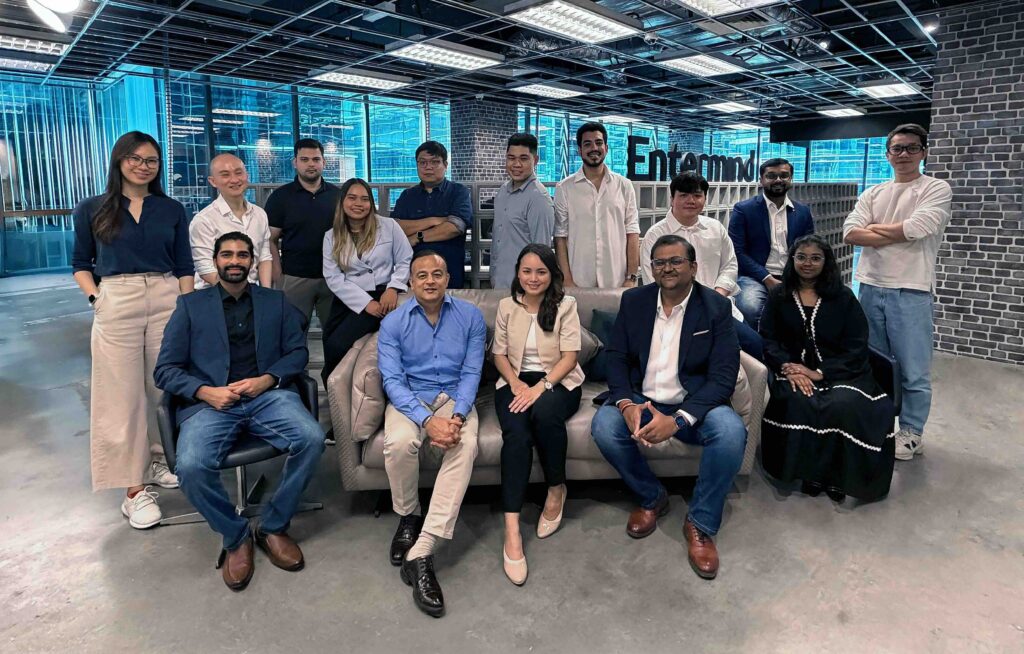
We speak to Prashant Kumar, CEO of Entermind….
You say companies keep “forcing AI into legacy workflows.” Let me flip that. Is the real problem that leadership wants the perks of transformation without the pain of dismantling the old ways? What’s the psychological block executives refuse to admit?
Absolutely. Plug-and-play is easy & safe. Generations of SaaS culture has made it the psychological norm. Unfortunately, there is no quick and easy way to do AI, if you want it to impact P&L. Deep learning requires deep orchestration – in order to create genuine competitive advantage. People, workflows and data need to be reconstituted on a white sheet to create a company Supermind.
“Static AI that doesn’t learn from humans” is a damning take. Tell me bluntly, are companies sabotaging their own AI because they’re terrified of what a truly learning system might reveal about their broken processes?
That’s a very interesting take. Companies are treating AI like any other tool. It needs to be treated more like an intern – bright, relentless & promising – but lacking context, chemistry and common sense. It needs human co-workers to help get better. Rethinking workflows is a great opportunity to mend its broken bits. When humans and AI team up well, it can be magical.
“If you own the house, you are owned by the house.” Isn’t that a polite way of saying corporate AI units have become internal empires with no incentive to succeed? Who exactly is protecting the mediocrity?
Well, we live in times of great flux. A natural instinct for any company in the face of disruptive new tech, is to assign executive ownership for how it should evolve to handle it. So far so good. A good change leader will look around to find the best mix of skills and teams – inside the org or outside – to meet the change goals. In-house AI units have double the failure rate of external units. Right mix is important. In-house can bring leadership, context and facilitation, outside can bring open perspectives and all the required skills. The two must tango.
You warn against building AI “for demos, not for the floor.” But isn’t that exactly how the AI industry sells itself – theatre first, utility later? Are enterprises victims of hype, or willing participants in their own illusion?
Well, hype has a life and purpose of its own. Businesses need to consider carefully how AI can truly help them deliver better customer value at lower cost. That really is the question to cut through all the fog, hype and noise. AI can make things faster, better and cheaper.
So, when faced with a demo, a business needs to ask itself, will it make things faster, better and cheaper. Will it add up to the customer end or to the cost end. AI theatre is shooting star; customer utility is the lighthouse. Enterprises are neither victims nor participants, they are students of change amidst a fast-evolving syllabus. And they need to learn fast.
In the section on federated rivers, you suggest decentralization is the future. That sounds great on paper. But do organizations actually have the cultural maturity for bottom-up AI, or will most drown in their own silos?
The good news is that a lot of lay employees are already consummate users of AI in their personal lives. Curious ones are also applying their personal ChatGPT to their work on their own initiative. People are not resistant to AI. They are merely resistant to enterprise AI. Because a lot of it has been historically disappointing.
The vision, the ambition, the technical nous, the standards have to be centralised; the design, the adaptation, the orchestration can be more decentralized. It needs to be a two-way street. The onus of AI readiness belongs to all. The narrative around why humans with AI will edge out humans without AI needs to be socialized in a constructive way.
P&L-first AI? Here’s the uncomfortable question. Are we overestimating AI’s business value because everyone is terrified of being the last adopter? What if entire industries are sprinting into a future they don’t truly understand?
It’s a fair concern and given how things have panned out in the last 3 years, it’s quite a likelihood. But here is a little totem. If you truly understand how your business works, what’s your leverage, why do your customers prefer you over others – it’s easier to assess what exact role AI can play in your business to strengthen your business model or to protect it. AI is rarely the solution; AI is part of the solution.
All conversations about AI must begin from your business. That makes the conversations more real. It also makes it a lot easier then to talk about what growth can it bring us, what costs can it save us, etc. A P&L first approach to AI is first about P&L, then about AI. At Entermind, we believe that tech must come to the business, and not the other way.
You warn companies not to “train brains they don’t own.” Isn’t the deeper message that we’re outsourcing our organizational memory to vendors who have no loyalty to us? Why aren’t more CEOs panicking about this?
CEOs do think about this and that’s why they have built in-house teams as some sort of custodians of this data. But technology is moving fast and sometimes companies are offered with false trade-offs by creating a binary illusion. Businesses need to believe that owning your learnings is possible. And must invest for long-term learning advantage. What at Entermind, we call owning the ‘Enterprise Supermind’.
This paper suggests that deviation – not data – will become the new moat. So what happens to companies that have spent a decade standardising everything? Has operational excellence accidentally become their Achilles heel?
Well, if you have standardised to your own innovative ever-evolving practices, it’s still an advantage. But if your processes are the standard and static checklist practice in the industry, it will get commoditised by models that are ingesting workflows to make these standards available to even new entrants.
There is much talk about AI needing both left-brain rigour and right-brain empathy. But in real organisations, empathy is usually the first thing to die. How do you teach a CFO that chemistry, not efficiency, might be the real multiplier?
Every company has customers and employees. And customers and employees are whole brain creatures. If AI has to work alongside them and be able to understand and capture nuances of their behaviors, experiences and advantage, it has to be orchestrated in a whole brain manner (the tech is already whole brain to begin with due to its ability to make subjective decisions and speak to humans). Smart CFOs understand this nuance.
If you had to confess an eighth sin – one no one in the industry wants to say aloud – what would it be? And who would it offend the most?
Unfortunately, a lot of the consultancies today have become hype hawkers. Find a consultancy which is neutral, which has the courage to be the contrarian. Advisors who will see you through all the way to success. Am sure this will offend those guilty.
The White Paper is available for free download at www.entermind.com