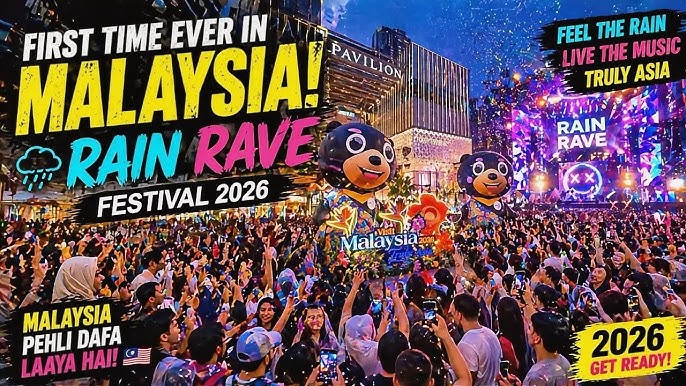
Bukit Bintang doesn’t usually come alive with water cannons and hip-hop on a Thursday night. But on 30 April, the city’s busiest shopping strip traded its usual retail rhythm for something louder, wetter and more deliberate.
The World Labour Day Celebration: Rain Rave Water Music Festival 2026 opened with a spectacle designed to be felt as much as seen.
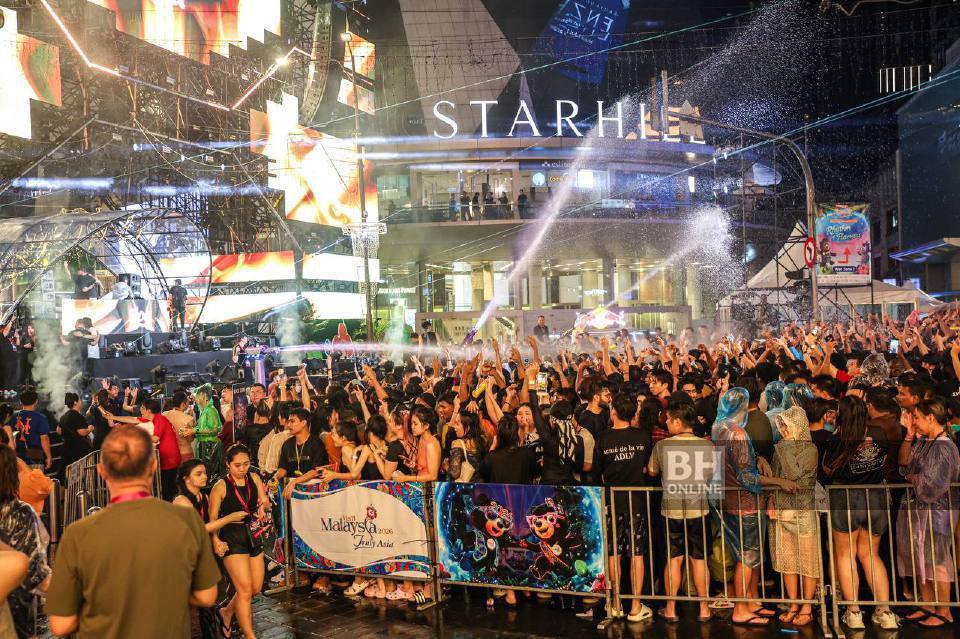
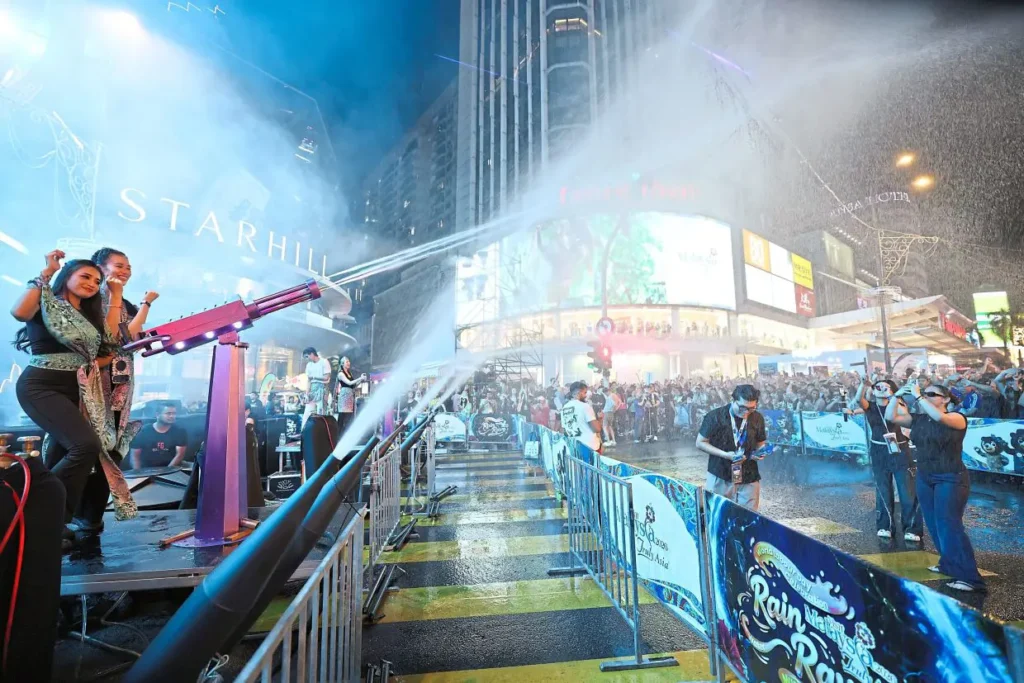
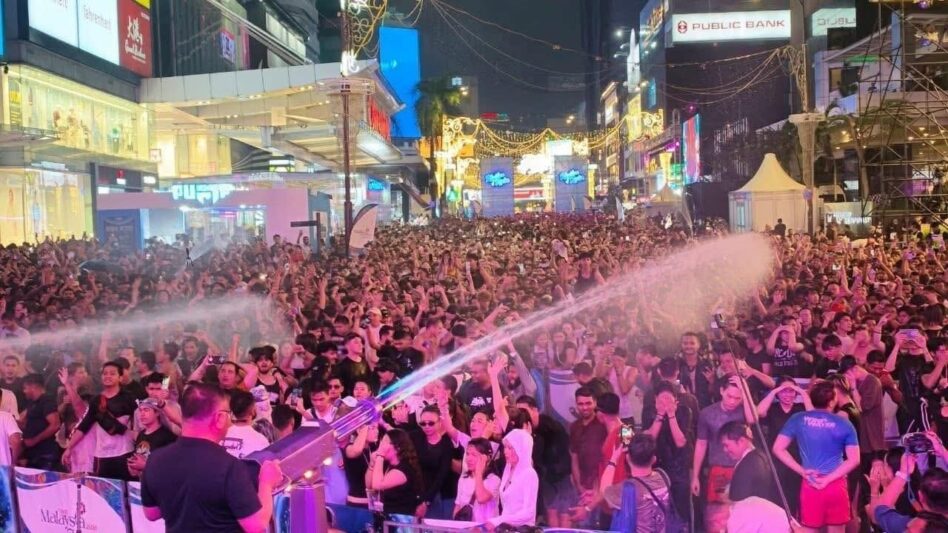
Water jets cut through the night air, LED walls pulsed in sync, and a crowd gathered not just for music, but for what is fast becoming a signature play in Malaysia’s tourism strategy.
This is not just a festival. It is positioning.
A Festival Built For The Street, Not Just The Stage
By daylight, the energy shifts. The headliners are no longer DJs, but hawkers, artisans and small business owners.
At the “Rhythm of Flavours” market, local vendors begin trading from morning, serving halal Malaysian street food to a steady mix of tourists and city dwellers. It is a simple idea, but a pointed one.
Instead of pushing visitors into malls alone, the festival reroutes footfall directly to small traders who rarely get this scale of exposure.
A short walk away at Lot 10, the “Rhythm of Cultures” zone slows things down further. Craft demonstrations, traditional performances and family-friendly activities give the festival a different kind of texture. Less spectacle, more substance. The kind that keeps parents around longer and tourists curious enough to linger.
For marketers, this is where the thinking sharpens. It is not just about attracting crowds, but about choreographing how those crowds move, spend and remember.
Malaysian Talent Takes The Mic
When night returns, the main stage flips the script again.
The opening line-up leaned heavily local. Young DJs like Werno, Ameer, Ethan and Cube Crusher set the tone, followed by familiar names such as Joe Flizzow and DOLLA. It is a deliberate stacking of the deck in favour of homegrown talent before international acts enter the mix.
By the time regional DJs from Thailand and China stepped in, the narrative was already clear. This is Malaysia first, international second. Not the other way around.
It is a subtle but important shift. For years, large-scale festivals here leaned on imported star power to draw crowds. Rain Rave flips that equation, using global acts to amplify, rather than anchor, the local scene.
Bukit Bintang Becomes The Real Venue
What is happening off-stage may matter more than what is happening on it.
The festival footprint stretches across Pavilion Kuala Lumpur, Fahrenheit 88, The Starhill, Lot 10 and surrounding hotels. Retailers, F&B outlets and hospitality players have effectively been drafted into the experience, rolling out promotions and packages tied to the event weekend.
In practical terms, this turns Bukit Bintang into a live commerce ecosystem. Visitors do not just attend a concert. They eat, shop, stay and move through a network of participating businesses.
It is experiential marketing scaled to a district level.
And crucially, it extends dwell time. The longer people stay, the more they spend. That equation has always been simple. What is new is how deliberately it is being engineered here.
A National Play, Not A KL One
Perhaps the most ambitious part of Rain Rave is that it does not stop in Kuala Lumpur.
Seven other states, including Johor, Melaka, Pahang and Langkawi, are running parallel editions over the same long weekend. Each hosts its own mix of food markets, performances and tourism activations, tied loosely under the same water music concept.
This decentralisation matters. It spreads visitor traffic beyond the capital and gives smaller markets a chance to capture tourism revenue that would otherwise concentrate in KL.
For Visit Malaysia 2026, the logic is straightforward. Build a national moment, not a single-city event.
Where Culture Meets Conversion
Strip away the water cannons and choreography, and Rain Rave reveals itself as something more calculated.
It is a platform for cultural export, yes. But it is also a conversion engine. One that links performance to purchase, experience to economic activity.
Hospitality bookings rise. Street vendors see higher turnover. Retail partners extend operating hours. Creative talent gets visibility that translates into future bookings and collaborations.
The festival becomes less about a weekend and more about a pipeline.
The Bigger Signal For Marketers
For brands watching from the sidelines, Rain Rave offers a clear signal on where things are heading.
Events are no longer just about attendance figures or social media buzz. They are being designed as integrated ecosystems where content, commerce and culture intersect in real time.
The question is no longer “how many people showed up?” but “what did they do when they got there?”
In Bukit Bintang last night, they danced. They got soaked. They queued for food. They wandered into shops they had not planned to visit. They stayed longer than expected.
And in that behaviour lies the real success metric. Rain, it turns out, can be measured in more ways than one.