There’s a telling shift in how Malaysians are experiencing the internet in 2026. It’s not just about connection or content anymore. Increasingly, it’s about risk.
New figures shared by Communications Minister Datuk Fahmi Fadzil paint a stark picture. Since January 1, the Malaysian Communications and Multimedia Commission (MCMC) has received 203,918 public requests to remove online content. A striking 91 per cent of those reports are tied to gambling and scams.
That’s not a marginal problem. It’s the mainstream.
Where The Problem Lives
Break the numbers down and the pattern becomes clearer. Gambling content alone accounts for 61 per cent of all takedown requests. Scams follow at 30 per cent.
Even more revealing is where these activities are surfacing. According to MCMC, 81 per cent of gambling-related content was found on Facebook. The same platform also hosted 58 per cent of scam-related posts flagged by users.
Other platforms show their own distinct patterns. Nearly all reported pornographic content, 99 per cent, was linked to TikTok. Meanwhile, 90 per cent of bullying and harassment cases were traced to Tumblr.
These are not small pockets of misuse. They suggest ecosystems where certain behaviours have found a natural home, whether by design, algorithmic drift or sheer scale.
A Public That’s Paying Attention
One detail stands out in Fahmi’s remarks. All these figures are based on public complaints.
That matters.
It signals a more vigilant user base, one that is no longer passively consuming but actively reporting. Malaysians are, in effect, becoming frontline moderators of their own digital spaces.
But it also raises a quieter question. If over 200,000 pieces of content were flagged in just over three months, how much is slipping through unnoticed?
The Platform Dilemma
For marketers, the implications are uncomfortable but unavoidable.
Platforms like Facebook and TikTok remain essential for reach, targeting and engagement. They are where brands go to find audiences at scale. Yet they are also where a significant volume of harmful or illegal content appears to cluster.
This creates a tension that brands can’t ignore. It’s no longer just about brand safety in the traditional sense of adjacency to inappropriate content. It’s about operating within environments where consumer trust itself may be under strain.
When users associate a platform with scams or gambling, even subconsciously, that perception can bleed into everything that appears there, including legitimate advertising.
MCMC’s role, as outlined by Fahmi, is reactive but necessary. When complaints come in, action follows.
Alongside enforcement, the government is also leaning into education. The Safe Internet Campaign has already rolled out 47 programmes across higher education institutions, reaching more than 23,000 students by the end of March.
It’s a long game. Awareness, after all, doesn’t trend the way viral content does.
A Shifting Brief For Marketers
There’s a tendency in marketing circles to treat regulation as background noise. Something for legal teams to handle while the business focuses on growth.
That approach feels increasingly outdated.
What’s emerging instead is a more complex brief. One where marketers must think not just about visibility, but about the quality of the environments they choose. About the signals those environments send to consumers. About the trust that underpins every click, view and conversion.
Because if the internet Malaysians are navigating is increasingly shaped by scams and gambling content, then brands are not just participants in that ecosystem. They are part of how it is experienced.
That makes every placement, every partnership and every platform choice a little more consequential than before.
Share Post:

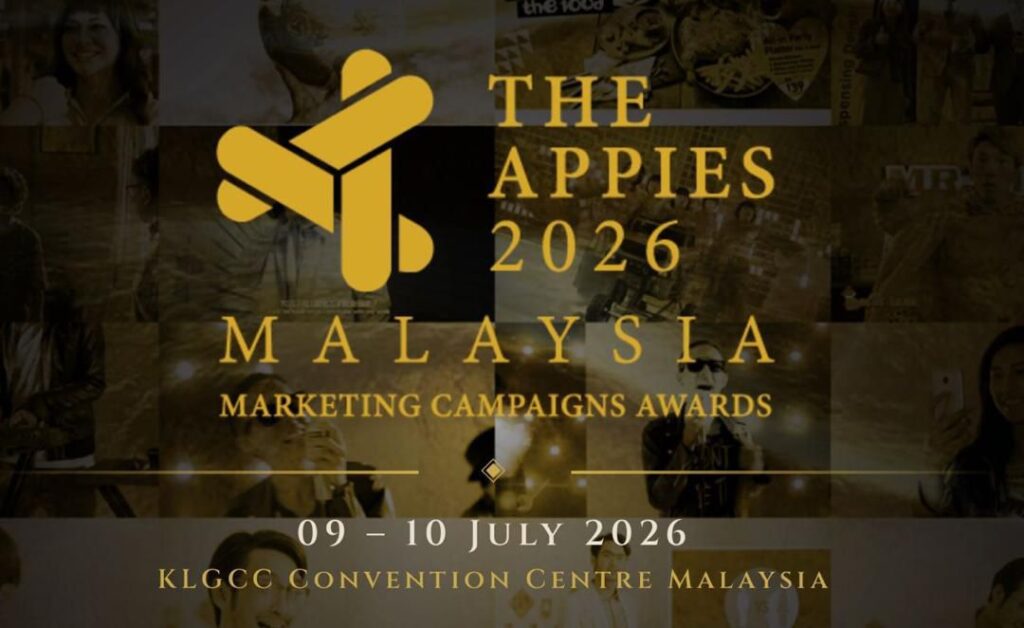
The APPIES is where Malaysia’s boldest campaigns, brightest ideas, and most impactful storytellers take the stage.
More than an awards show, it is the industry’s ultimate platform for creative, media, digital and marketing excellence, where live presentations meet live judging.
This is your chance to showcase work that moved audiences, shaped conversations, and delivered real results.
From breakthrough brand campaigns to innovative digital experiences, the APPIES celebrates the work that defines the future of marketing.
Step into the spotlight alongside the industry’s leading agencies, brands, creatives, strategists and changemakers.
Whether you are aiming for Gold, Silver, Bronze or the prestigious Best of the Best recognition, this is your moment to make history.
Your campaign deserves to be seen.
Your ideas deserve the stage.
Your work deserves the legacy.
KEY DATES
Haven’t subscribed to our Telegram channel yet? Don’t miss out on the hottest updates in marketing & advertising!