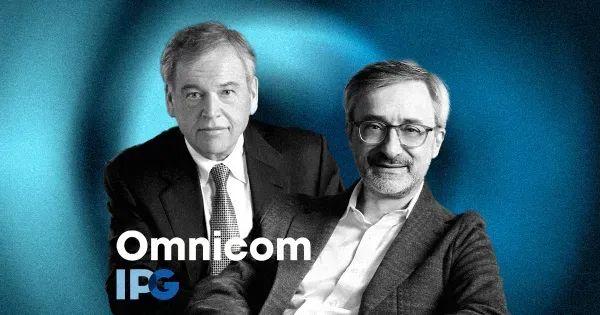
For decades, advertising holding companies collected agencies the way old rock stars collected guitars.
Every acquisition came with a new logo, a new positioning line and a new promise to clients that this specialist outfit understood consumers better than everyone else.
Now, the world’s largest agency groups are quietly taking a chainsaw to their own collections.
Omnicom Group has confirmed that it has already merged or sunset more than 20 major agency brands following its acquisition of Interpublic Group, while also trimming a “long tail” of smaller operations across its network.
The language coming out of Wall Street is clinical. Portfolio optimisation. Integration. Operational alignment. Cost synergies. But inside the global advertising industry, what is happening feels far more emotional.
Entire agency identities that once strutted confidently through Cannes beach parties and award shows are disappearing into corporate history.
Reception signs are being removed. Legacy websites redirected. HR systems merged. Creative departments combined under new reporting lines.
Some employees are quietly updating LinkedIn profiles before clients even know what has happened. It is less a merger than a cultural reckoning.
For marketers, the bigger question is whether this consolidation finally acknowledges something clients have been saying for years: they no longer care which agency brand sits on the door.
They care whether the work works. That shift has been building for some time.
CMOs battered by inflation, procurement scrutiny and shrinking attention spans have grown increasingly impatient with sprawling agency ecosystems where media, creative, CRM, commerce, influencer, social and data teams operate like neighbouring countries with complicated visa rules.
The old holding company structure often forced clients into navigating an alphabet soup of specialist brands, each with its own leadership, margins and internal politics.
Omnicom CEO John Wren appears to be betting that the future belongs to fewer brands with broader capabilities.
During the company’s Q1 earnings call, Wren said the integration had already helped drive new business wins by bringing together capabilities across media, creative and data services.
Clients such as Clorox, Dyson, Delta Air Lines, ExxonMobil, Kroger, Merck & Co. and Unilever were cited as examples of brands now engaging multiple capabilities within the combined network.
That matters because modern marketing problems no longer arrive neatly separated into departments.
A TikTok campaign can trigger supply chain pressure. A retail promotion now lives inside creator culture. Media buying decisions increasingly depend on AI modelling and first-party customer data.
The wall between advertising, commerce and technology has largely collapsed. Holding companies know this. Clients certainly know this.
The problem is that many agency structures still belong to an earlier era when television media buying and creative development lived in separate kingdoms.
The Omnicom-IPG integration may therefore be remembered less as a merger and more as an admission that the traditional holding company model had become too bloated for modern marketing realities.
There is another force accelerating the clean-up: artificial intelligence.
AI is beginning to automate parts of strategy, production, media optimisation and reporting that once justified large layers of specialist teams.
When machines can generate multiple creative versions in minutes and optimise media placements in real time, the logic of maintaining dozens of overlapping agency brands becomes harder to defend.
Scale suddenly matters differently.
The winners may not be the agencies with the most famous names, but the ones capable of combining technology, data and creativity into a seamless operating system for clients.
That partly explains why Omnicom is also targeting approximately US$3.2 billion in annual revenue equivalent from planned asset sales and dispositions.
The company has already completed disposals representing around US$1 billion in annual revenue. This is not simply housekeeping. It is portfolio surgery.
The financial targets are equally aggressive. Omnicom is aiming for US$900 million in cost synergies in 2026 and US$1.5 billion by mid-2028 as it rationalises its global footprint following the acquisition.
For agency employees, however, the numbers tell only part of the story. Across the industry, mergers often create a strange emotional contradiction.
Publicly, leadership talks about “exciting integration opportunities.” Privately, staff wonder whose culture survives, whose titles disappear and whether creative ambition can survive spreadsheet logic.
Advertising has always sold emotion externally while suppressing it internally. Yet clients may welcome the simplification.
Many marketers today are exhausted by fragmented agency relationships, endless coordination calls and duplicated capabilities spread across multiple rosters.
In an age where campaigns move at social speed, clients increasingly want fewer layers, faster decisions and teams that behave like business partners rather than departmental silos.
Ironically, after decades spent building giant agency empires, holding companies are now being rewarded for dismantling parts of them.
The age of collecting agencies may finally be ending. Somewhere in advertising history, a few famous agency logos are quietly fading into the archive room wall.
Share Post:

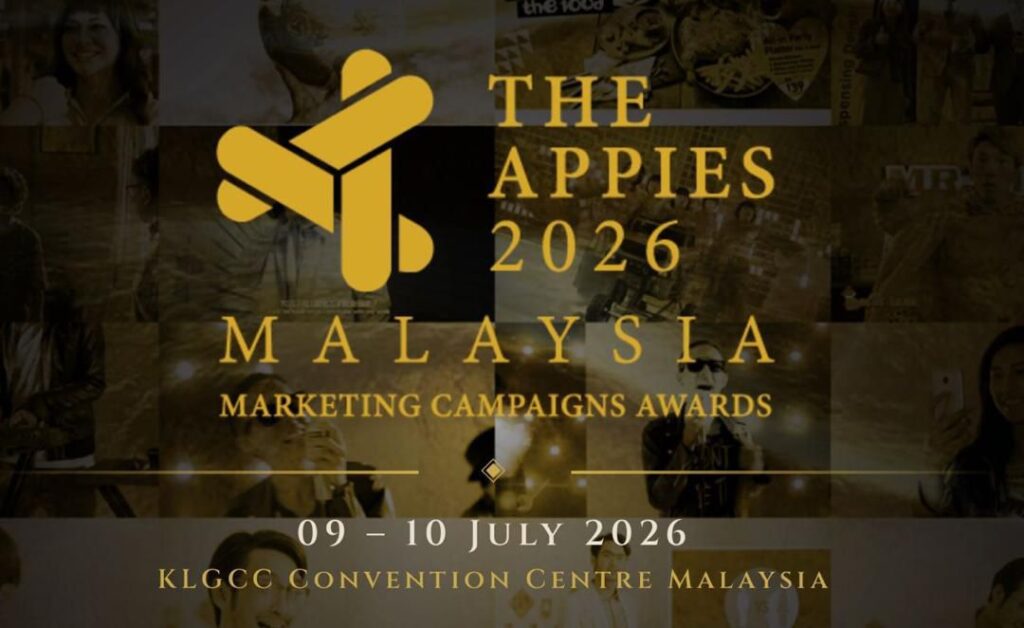
The APPIES is where Malaysia’s boldest campaigns, brightest ideas, and most impactful storytellers take the stage.
More than an awards show, it is the industry’s ultimate platform for creative, media, digital and marketing excellence, where live presentations meet live judging.
This is your chance to showcase work that moved audiences, shaped conversations, and delivered real results.
From breakthrough brand campaigns to innovative digital experiences, the APPIES celebrates the work that defines the future of marketing.
Step into the spotlight alongside the industry’s leading agencies, brands, creatives, strategists and changemakers.
Whether you are aiming for Gold, Silver, Bronze or the prestigious Best of the Best recognition, this is your moment to make history.
Your campaign deserves to be seen.
Your ideas deserve the stage.
Your work deserves the legacy.
KEY DATES
Haven’t subscribed to our Telegram channel yet? Don’t miss out on the hottest updates in marketing & advertising!