By Kunal Sinha
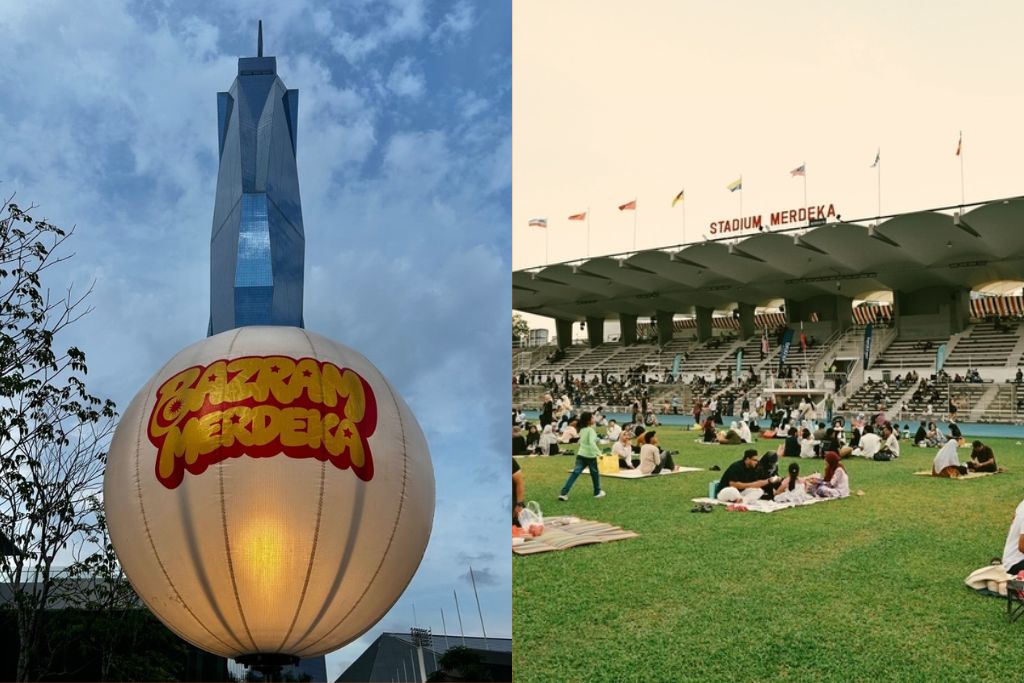
Standing at the edge of the Bazaar Ramadan at Stadium Merdeka on Saturday afternoon, the city felt compressed into a single corridor of heat, colour, and longing. The old colonial stadium rises behind you; ahead, Merdeka 118, the second-tallest building in the world, all glass ambition and vertical pride, catches the last light of the day.
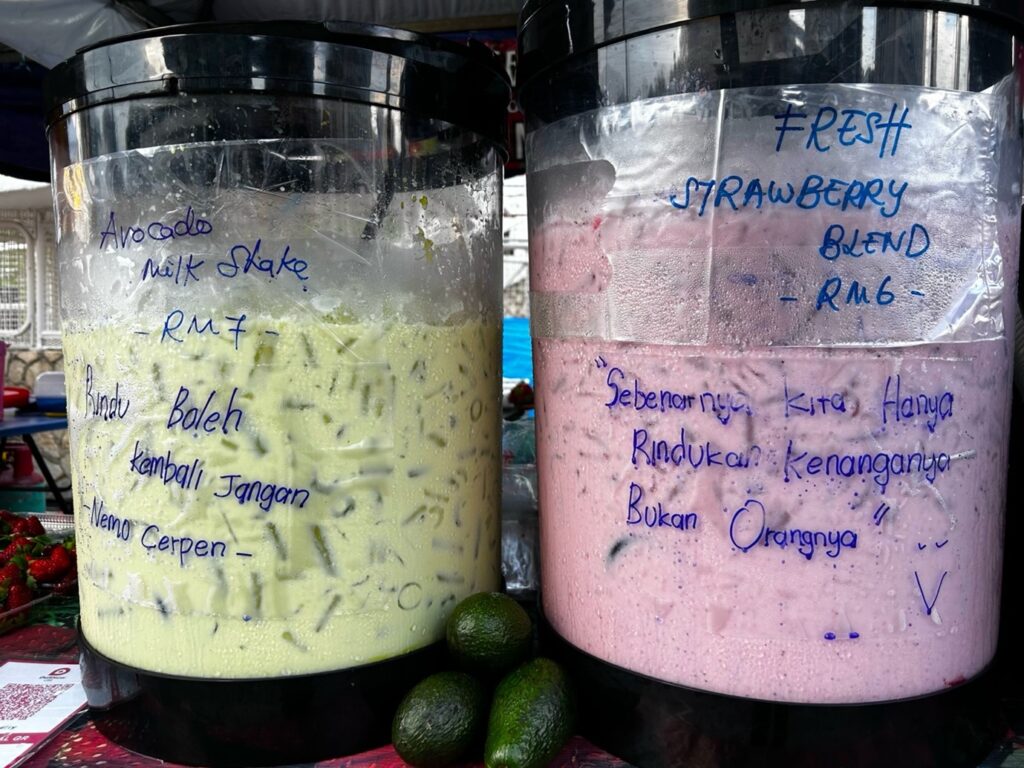
Between these two monuments to different ideas of Malaysia, hundreds of stalls stretch into the dusk: towers of kuih in colours that have no English names, whole chickens turning slowly over charcoal pits, towers of bright pink drinks in plastic cups sweating in the humidity, the smoke of satay drifting sideways through the crowd.
Set against the iconic backdrop of Stadium Merdeka and Merdeka 118, Bazram Merdeka blends nostalgia with modern city vibes. It is an encapsulation of what Malaysia is and has always been: ancient and modern, sacred and commercial, deeply local and perpetually becoming.
The families arriving here have been fasting since before sunrise. They move with purpose but without urgency. Fathers carry infants; teenagers scroll their phones even as they queue; older women handle the kuih with the authority of people who know exactly what they are looking for.
Buka puasa – the breaking of the fast – is at once a religious act, a family ritual, and an economic transaction that, multiplied across tens of thousands of stalls, across thirty days, across two nations with a combined Muslim population approaching three hundred million, generates commerce of remarkable scale.
The Scale of Sacred Commerce
The numbers that have emerged from Malaysia’s Department of Statistics are striking. Malaysia’s Ramadan and Aidilfitri bazaars generated RM3.2 billion in total sales and engaged 281,876 workers in 2025, an increase of 12.9% from RM2.5 billion in 2023, accompanied by a 17.6% increase in the number of persons engaged.
These figures cover registered bazaars only; the informal economy around the bazaars – home cooks selling through WhatsApp groups, small operators who set up just outside the official perimeter – adds a layer of activity that never enters a spreadsheet.
Ramadan bazaars alone contributed RM2.6 billion in sales in 2025, with Selangor leading state-level sales at RM558 million, followed by Kuala Lumpur at RM361.9 million and Johor at RM331.5 million. Even within KL, the concentration is remarkable: Petaling district topped Ramadan bazaar sales at RM163.9 million.
Across the Strait of Malacca, the numbers are of an entirely different order. Total consumer spending during Ramadan 2025 in Indonesia was projected to reach the equivalent of US$73 billion, though growth slowed to 5-7%, a deceleration from the 9-12% recorded in 2023 and 2024.
Indonesia is home to the world’s largest Muslim population, and Ramadan reshapes the entire economy for a month. The government disburses holiday bonuses to civil servants totalling the equivalent of over US$3 billion, families undertake the great mudik homecoming journey, and street markets multiply across every city and town. Indonesian household expenditure during Ramadan was 1.2 times higher in 2024 than the pre-Ramadan period, though the pattern of where that money lands has shifted in telling ways.
Food First, Everything Else Second
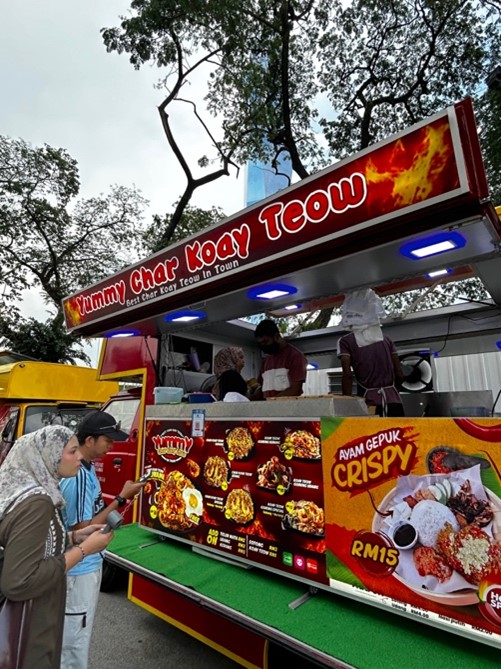
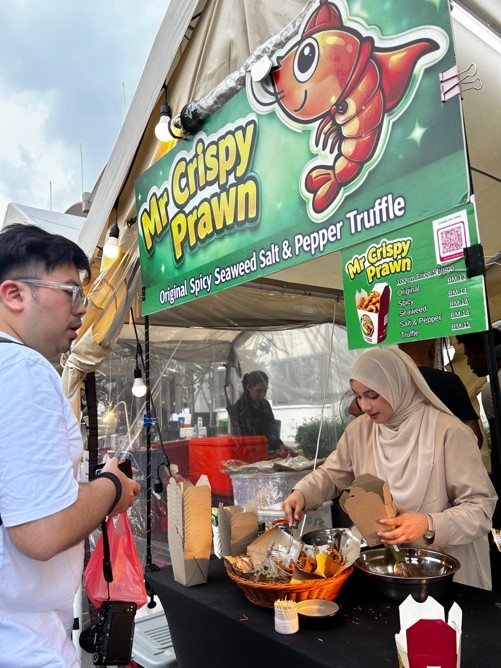
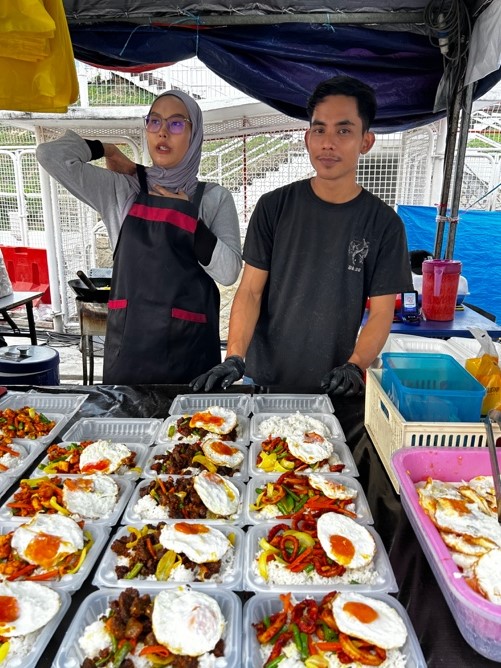
Food dominates the bazaar economy with an authority that no other category comes close to challenging. The Malaysian bazaar is, at its core, a food market, and the foods it sells carry enormous weight, both gustatory and symbolic. Nasi kerabu from Kelantan, ayam golek from the Klang Valley, bubur lambuk from Kampung Baru, kuih tepung pelita everywhere, even Taiwan mochi panas.
These are not merely products. They are arguments about identity, expressions of regional pride, touchstones of childhood memory. A family’s choice of where to buy their ayam percik carries meaning that a household goods vendor simply cannot replicate.
Clothing is the second most popular category for spending during Ramadan, after food.
The weeks before Eid generate serious demand for baju kurung, baju Melayu, hijabs, and the full coordinated family outfits that will be worn for the Raya open house season and photographed for social media. Prayer accessories – sejadah (prayer mats), telekung – also move well. Home furnishings, driven by the tradition of refreshing the house before receiving guests, represent another meaningful category: curtains, cushion covers, table linens, small decorative items.
In Indonesia, the same logic applies – food anchors spending, with fashion and personal care running behind, alongside the culturally specific categories of gift hampers, dates, and religious items that spike precisely because the month demands generosity.
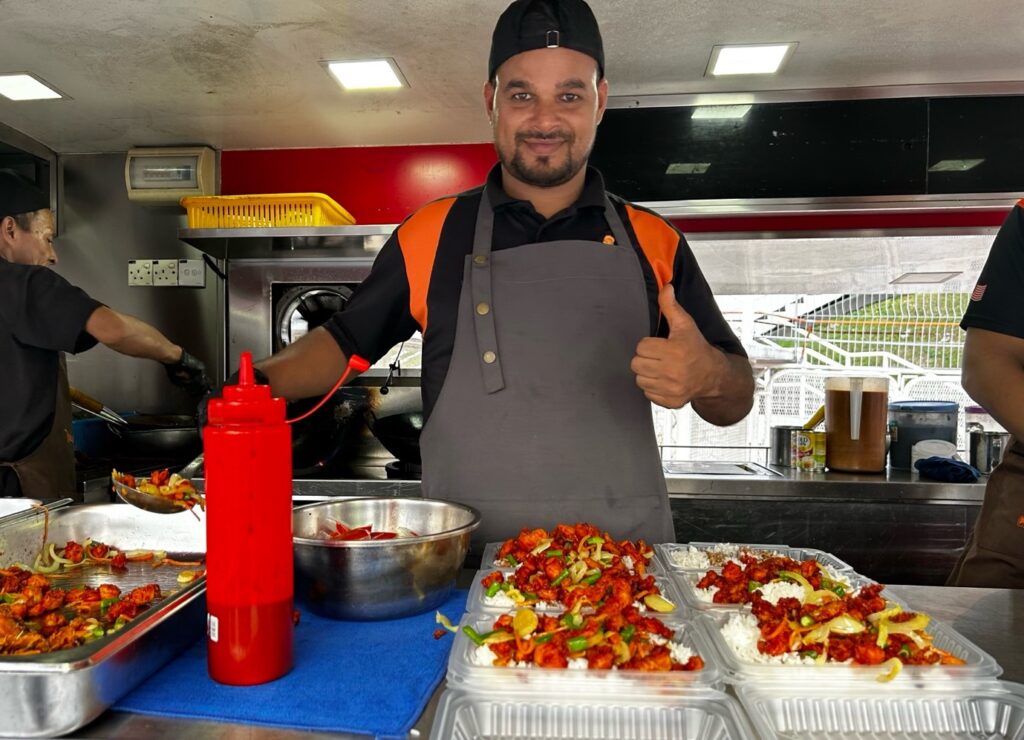
Yet within the bazaar itself, a hierarchy is becoming visible. Non-F&B traders have voiced concerns over slowing business, with food-related stalls continuing to dominate while vendors selling other goods struggle with both footfall and competition from online platforms.
A vendor who invested RM10,000 in stock and RM3,500 in plot rental at a Kelantan bazaar reportedly took in only RM500 after three weeks of trading. It is a brutal demonstration of how the bazaar’s commercial gravity has consolidated almost entirely around food. Analysts suggest that consumers prefer to buy clothing at air-conditioned shopping malls, arriving at bazaars tired after a day’s fasting and focused almost entirely on what they will eat that evening.
For food, the bazaar remains irreplaceable. For almost everything else, e-commerce and the mall have quietly won.
The Vendors: Local Enterprise at Its Most Visceral
The Ramadan bazaar is the most legible and emotionally resonant form of small-business activity in either country. Stall operators are overwhelmingly individual entrepreneurs, single families, or micro-enterprises operating seasonally. The school canteen worker who loses his daytime income when the school closes for Ramadan and opens an ayam golek stall to compensate is not an exception: he is the model.
Nur Afifi, a 36-year-old canteen operator in Putrajaya, moves roughly 150 rotisserie chickens a day at 25 ringgit each, gross sales that over thirty days can sustain his family for the rest of the year. The economics are concentrated, precarious, and enormously motivating.
What the data reveals, however, is that the ecosystem around these entrepreneurs has grown predatory. Vendor Kak Lom paid RM23,000 for two prime spots at a bazaar in Terengganu, nearly four times the previous record, through a council bidding process she described as brutal.
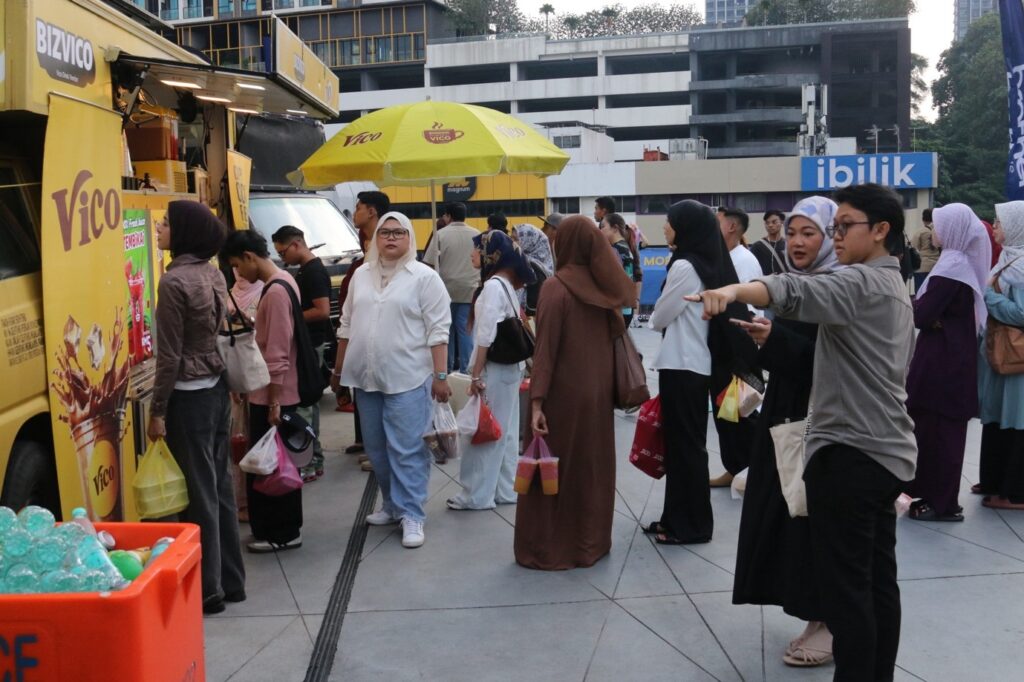
This is not an anomaly. The best stall positions at high-footfall bazaars across Malaysia have become expensive auction items, with local councils and private operators capturing value that once flowed more directly to the traders themselves. Vendors are caught in a double squeeze: record-high location costs on one side, rising ingredient prices forcing them to increase prices per item on the other.
The result is a paradox that sits uneasily beneath the festive atmosphere. The bazaar generates genuine, distributed wealth. 56% of Ramadan bazaar vendors offered discounted prices to minimize food surplus, 77.3% expressed willingness to donate unsold food to institutions, and 84.2% were open to sharing excess food with fellow vendors.
It is a pattern of communal reciprocity that the commercial logic of the bazaar has not yet extinguished. Yet the intermediaries who control location and infrastructure are taking an increasing share, concentrating returns in ways that undercut the bazaar’s original character as a genuinely democratic economic space.
In Indonesia, the pasar takjil, the street market that springs up each afternoon to supply the iftar snack – operates with even less formal structure, and accordingly, the returns to individual vendors are more direct. Around 65 home and small-medium businesses typically set up at a single mosque-based market, with around 500 visitors daily.
The vendor selling kolak and iced drinks at a Medan mosque market, normally operating a fruit ice stall on ordinary days, shifts her menu for Ramadan and absorbs the seasonal uplift directly. There are no auction processes. The entry costs are lower, the margins thinner, and the cultural texture richer.
Commerce as Culture, Culture as Commerce
What neither country’s economic statistics fully capture is the role the bazaar plays as infrastructure for something beyond consumption. The Indonesian concept of takjil war – the lively, affectionate scramble for iftar snacks that went viral in 2024 and brought together Muslims and non-Muslims, locals and tourists, in a shared ritual of anticipation – has since quietened under the weight of economic anxiety, with shorter queues and a subdued atmosphere compared to previous years. When the bazaar loses its energy, it registers not merely as a commercial signal but as a social one: something in the community’s confidence has shifted.
Malaysia’s relationship with its bazaars carries a specific kind of nostalgia.
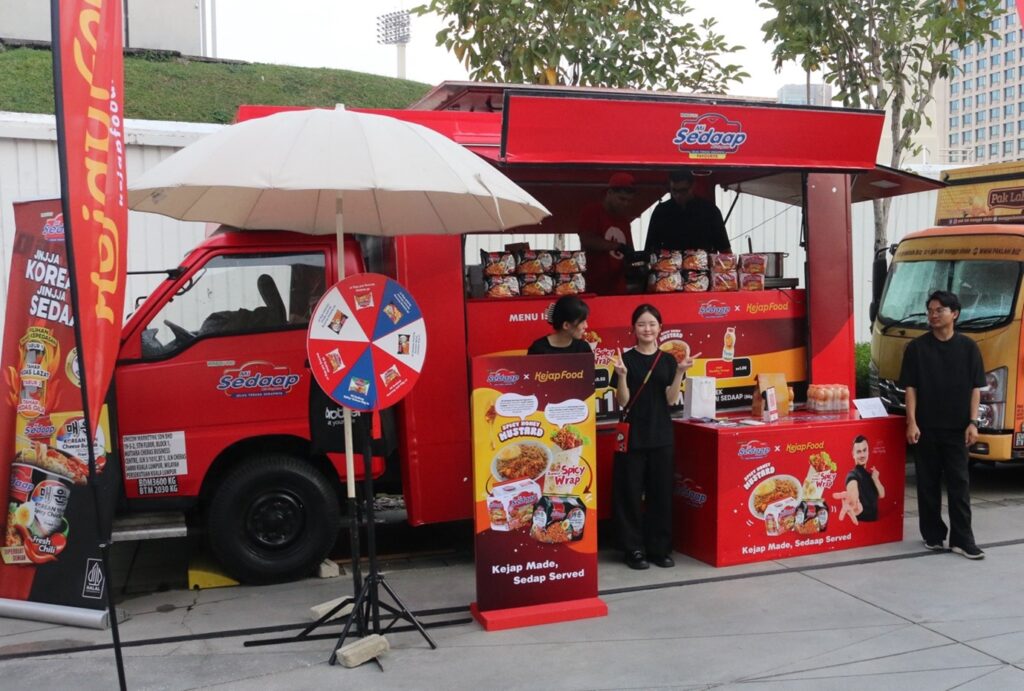
The number of stalls operated in 2025 rose 11.5% to nearly 97,000. This figure represents genuine expansion – more entrepreneurs, more product variety, more formats, more hybrid events blending food with fashion pop-ups and lifestyle brands.
Yet alongside the growth sits a persistent anxiety about what the bazaar is becoming. The discourse around bazaar mafia, middlemen who extract rents from small operators, and the creeping commercialisation of prime locations reflects a community trying to preserve something it loves precisely because it recognises, in the gathering of smoke and colour and evening prayer calls, a version of itself it does not want to lose.
All this raises a question about whose commerce, and at whose cost.
When the food vendor at Stadium Merdeka keeps her stall open until the last customer of the evening and then quietly collects her returns, she is doing something that a multinational brand, however culturally sophisticated its Ramadan campaign, cannot replicate: she is producing the bazaar itself. That production has a value far exceeding the ringgit figure on any government statistics table.
The obligation of policy, and of business, is to ensure that the economics reflect it.
Kunal Sinha is Chief Knowledge Officer at Ampersand Advisory. He is the author of several books on consumers, culture and creativity, and mentors executives on adapting to a world in constant flux.