In today’s Out-of-Home industry, some players compete on measurement, others on scale or technology. Yet leadership in OOH is ultimately about something more enduring: the ability to influence how brands occupy public spaces and how that spaces connects with daily lives. For Seni Jaya Corporation Berhad that responsibility has become both its challenge and its opportunity.
As one of Malaysia’s earliest OOH pioneers, Seni Jaya carries institutional history. But under the leadership of CEO Jeff Cheah, heritage has not been treated as a shield but as a platform for reinvention.
When Jeff assumed leadership in 2021, the company was at an inflection point. Movement was restricted, revenues were compressed and operational systems required renewal. The question was not simply how to recover, but how to remain structurally relevant in a media landscape that was evolving faster than ever.
“To stay relevant, we have to think beyond boards and screens. We have to consider influence and urban presence. Our transformation wasn’t just about becoming bigger, but about becoming more intentional.” Jeff Cheah, CEO of Seni Jaya Corporation Berhad.
“We’ve reshaped the business to be stronger and more scalable, and we’re seeing that momentum build,” Jeff reflects. “What matters now is growing in a way that lasts, even as the media landscape around us keeps changing.”
That distinction between growth and long-term relevance has shaped the company’s direction since.

What If OOH Worked as One Network?
Historically, OOH growth in Malaysia has been fragmented. Different operators controlled different formats and corridors. Campaigns were often stitched together across multiple vendors, with limited cohesion.
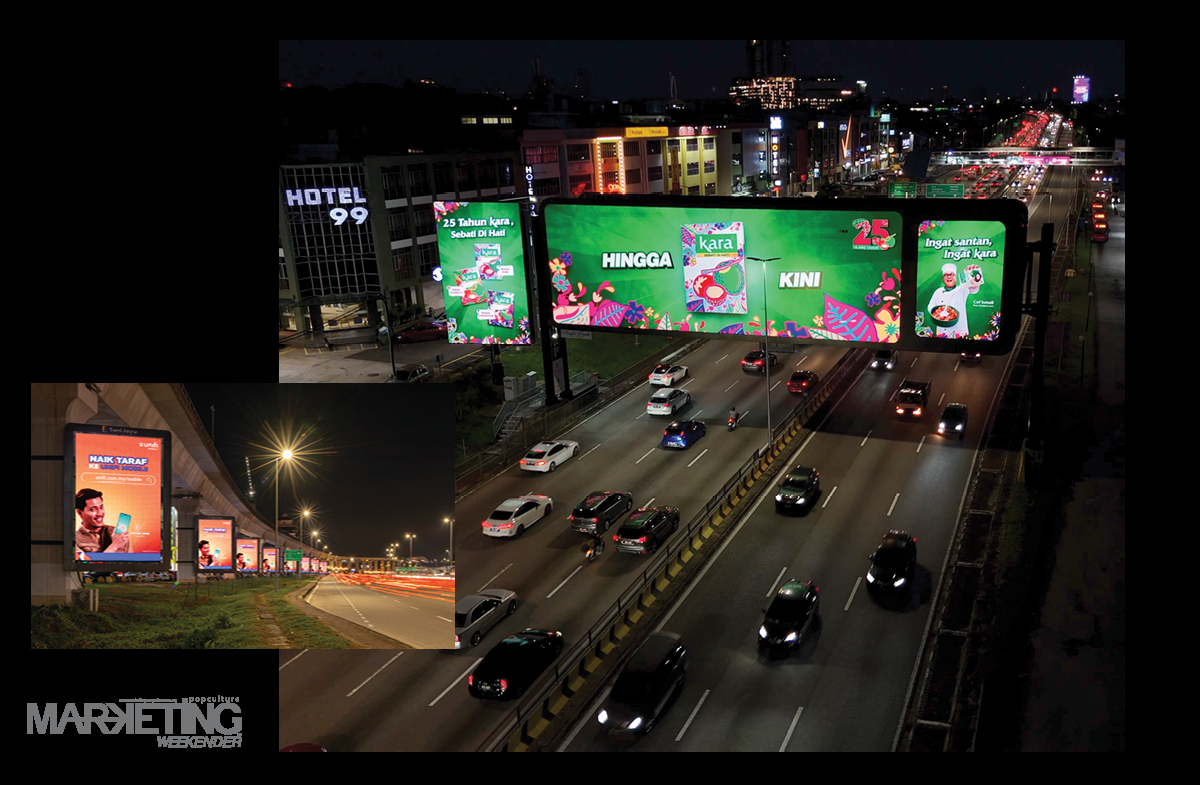
Seni Jaya’s response was not simply to expand its footprint, but to consolidate and integrate. By bringing complementary formats and operators under one strategic framework, the company has been building a more coordinated network across static, digital and transit environments.
The goal is not just to offer more inventory, but to provide continuity.
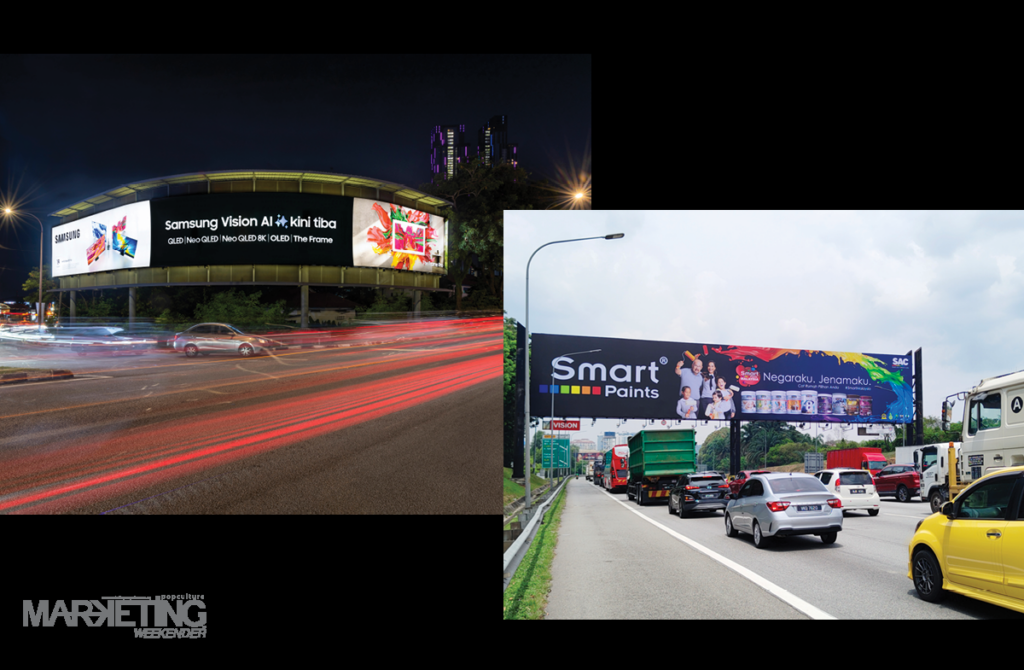
A brand can now move from highway exposure to urban retail districts to transit hubs with greater consistency in planning and execution. Instead of selling isolated sites, the company is increasingly structuring environments.
This shift reflects a broader understanding of how audiences move. Consumers do not experience OOH in isolation. They encounter messages across journeys that span work, leisure and transit. Integration allows OOH to mirror that lived reality.
It’s All About Owning the Environment
A defining feature of Seni Jaya’s evolution has been its move upstream in brand engagement. Traditional OOH models respond to briefs, but their new approach seeks to originate ideas that reshape how brands inhabit physical environments.
The collaboration with Samsung on MRT station naming and branding illustrates this philosophy. Rather than limiting involvement to advertising panels within a station, Seni Jaya facilitated a comprehensive spatial branding exercise.
Naming rights, environmental design and visual integration were aligned to create a coherent brand presence within public infrastructure.
By engaging at this level, the company positions itself not only as a media operator, but as a strategic partner capable of translating brand ambition into physical experience.
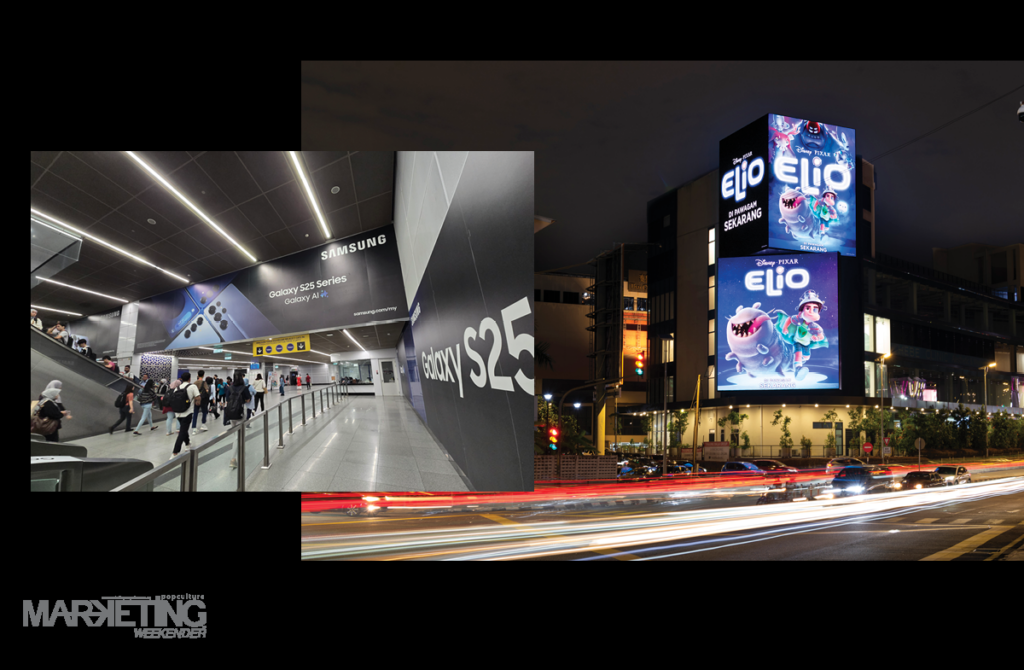
The same proactive thinking underpinned its engagement with cultural moments tied to the K-pop group BTS. The K-pop BTS BVERSE immersive exhibition was the first in the world and Seni Jaya is the IP owner in Malaysia. Leveraging the global fandom surrounding the group, Seni Jaya used its high-impact locations to extend digital excitement. Large-format screens and premium sites became communal touchpoints for fans, amplifying the cultural resonance of the moment.
These demonstrate that OOH does not exist in opposition to digital culture. It strengthens it. Physical environments provide scale and credibility that digital platforms alone cannot replicate.
When Design Becomes a Strategic Decision
While digital transformation is widespread across the industry, not all upgrades are equal. Simply converting static boards into digital screens risks creating uniformity rather than distinction.
Seni Jaya has approached format development with greater contextual sensitivity. Dual-layer screens introduce dimensionality that enhances visual impact. Synchronized gantries create rhythm and coordinated storytelling along high-speed corridors. Sculptural installations are designed to complement their architectural surroundings rather than dominate them indiscriminately.
In dense commercial areas such as Bukit Bintang, the forthcoming large-format installation reflects this thinking. It is conceived not just as a premium advertising site, but as part of a broader effort to elevate the district’s visual sophistication.
Cities such as Tokyo and New York City demonstrate how iconic OOH structures can contribute to a location’s global identity. Kuala Lumpur’s evolution requires similar ambition, but also sensitivity to local context.
Leadership in a Measurement-Led Era
As accountability frameworks, programmatic models and attribution dominate the OOH conversation, leadership now requires more than scale or technology alone. It demands structural influence.
Securing landmark sites, navigating regulatory landscapes and investing in integrated brand environments are long-horizon decisions. They reflect confidence not just in quarterly returns, but in the medium’s enduring role within urban life. As one of Malaysia’s earliest OOH companies, Seni Jaya could have relied on legacy. Instead, it has chosen to reinterpret it by positioning itself not merely as an operator of sites, but as a partner shaping how brands inhabit public space.
The next phase of Malaysian OOH will not be defined by a single format or metric. It will be defined by shared standards, clearer valuation and a collective commitment to credibility.
“As stakeholders in the OOH ecosystem, we must work towards a common measurement framework that reflects real audience value. Greater accountability will not only uplift the medium, but strengthen its position within the broader advertising market.”
For Seni Jaya, that means growth aligned with responsibility — contributing to an ecosystem where audience value is measured meaningfully and the medium’s role within the broader advertising market is strengthened.
At the end of the day, the future of OOH will belong to those who measure it with intent.