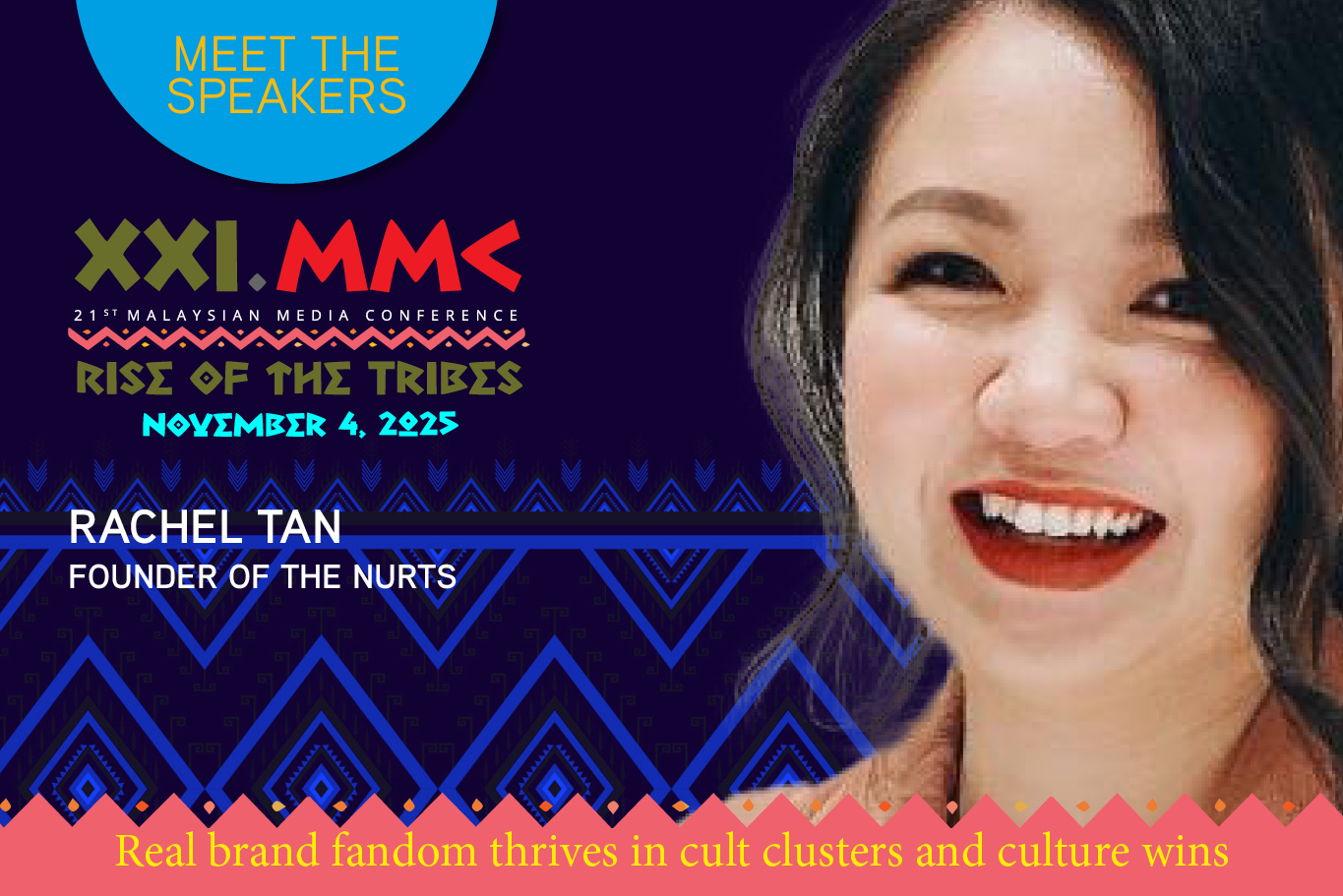
From leading Shopee and Klook to launching The Nurts, Rachel Tan has lived multiple lives as a corporate high-flyer, travel marketer, and now mompreneur shaping how families connect. Her focus on family-first values has guided the creation of playful yet purposeful tools for parents and kids, while redefining how households engage with brands.
At the 21st Malaysian Media Conference on November 4, Rachel will spotlight The Rise of the Family — exploring how trust, togetherness, and digital fluency are transforming the household into the ultimate media decision-maker. We sat down with her ahead of the conference for a preview of what’s to come.
Parents are the “gatekeepers” of family spending. What’s the last brand your kids convinced you to buy?
My kids aren’t super brand-conscious yet since they are 2,4 and 6, but they do know what they enjoy. One of the most consistent requests is sushi — not for the brand, but for the shared joy of eating together and the delicious food. We bond over food and conversations: who likes what food, who has tried wasabi and the list goes on.
When it comes to tangible items, they’ve asked for a wallet and a smartwatch. Again, not because of any brand loyalty, but because it made them feel grown-up and cool. It reminded me that spending decisions in families are driven by emotional connection, not just logos or marketing.
You’ve built a business around empathy. Do you think brands are truly listening to families, or just stereotyping them?
Some brands are starting to listen — but it’s still hard to break out of old habits. Listening to families means more than just surveys; it means deeply understanding how families live, connect, and grow together.
At The Nurts, we take inspiration from the everyday experiences of real families. We notice how kids and parents want to connect through play, learning, and shared moments. So instead of creating content that talks at families, we design tools that invite connection — where everyone grows together through collective development.
When brands stop assuming and start observing with empathy, they’ll find stories and rituals that truly matter.
What happens when family values clash with digital culture?
You get tension I suppose — and also the chance for transformation. We’ve all faced those moments: screen-time arguments, questionable content, or pressure to keep up with trends that don’t align with what we value.
But rather than avoiding the clash, I believe in co-navigating. In our home, we talk openly about digital habits, screen time, the consequences, boundaries, and values. Sometimes if they ask for something that they shouldn’t be exposed to, I explain and tell them as it is and converse as I would with another adult.
When families make decisions together about how they engage with technology, they create their own ways rooted in trust and conversation.
The Nurts grew from a card game. What does that say about simplicity in a digital age?
Our first product was The Nurts: Parenting Made Fun card game, which we funded on Kickstarter. It came from a very personal place when Adrian and I became parents and realised that there’s no playbook for raising kids. We wanted a way to get people thinking about what parenting really involves — decision-making, time management, navigating how to raise fulfilled kids based on their personalities but in a way that felt playful, not preachy.
In a world full of screens and fast content, that simplicity was powerful. The card game became a mirror — and a bridge. Sometimes the most meaningful tools are the ones that slow us down just enough to reflect, laugh, and connect.
How can brands speak to both kids and grandparents without losing authenticity?
By focusing on shared values, not just segmented demographics. At The Nurts, we try to create experiences that are layered: playful enough for kids to enjoy, thoughtful enough for adults to reflect on, and familiar enough for elders to feel included.
Whether it’s through storytelling, cultural references, or emotional moments, authenticity comes when every generation feels seen or heard.
What’s the one family ritual you’d never let algorithms replace?
Two, actually — bedtime stories and mealtimes together.
There’s something sacred about those few quiet moments before sleep – reflections of our day, the way kids open up with one last question (or more haha). Children feel most safe and seen when we are calm and cuddling them.
And mealtimes — whether it’s sushi night or simple rice with dishes, we try to make it a point to eat together. We’d say “makan” and then dig in. They’re sometimes easily distracted, but full of laughter over random conversations. It’s the one moment where everyone pauses what we are doing, shares, and listens together. No screens — just time, food, and presence.
What are the notable behaviour trends for this category we need to look out for when deciding on media channels?
One big shift we’re seeing is that families aren’t consuming content in silos anymore. A YouTube video that starts with the kids often ends with the whole family watching — or discussing it later at dinner. So brands really need to start thinking: “Is this something everyone in the family can enjoy or relate to, even in different ways?”
Then there’s the rise of community influence. Parents trust other parents. Decisions aren’t made in a vacuum — they’re shaped in WhatsApp groups, at playdates, in parenting forums. If a brand shows up there with honesty and value, it sticks far more than an ad.
And lastly, we’re seeing that “small moments” matter more than ever — a short reel that sparks a laugh, that “aha” moment, a relatable story that gets forwarded, a piece of content that starts a conversation in the car. Families need meaningful touchpoints. And that means showing up where their real life is happening — in the living room, in the car, in conversations, around shared values, and with warmth and relevance.
On November 4th, the 21st Malaysian Marketing Conference brings together media strategists, brand leaders, storytellers, and cultural observers to share case studies, fresh data, and lived experiences from the frontlines of tribe-driven marketing. Learn more: https://marketingmagazine.com.my/mmc/2025/
Share Post:

Haven’t subscribed to our Telegram channel yet? Don’t miss out on the hottest updates in marketing & advertising!