By The Malketeer
Love it, loathe it, or find it downright weird, Labubu is everywhere.
The elf-eared, toothy little monster has stormed from the shelves of Pop Mart to the arms of celebrities and collectors around the globe.
It has sparked queuing frenzies, social media obsession, and even airport security curiosity.
In doing so, it has become a masterclass in viral marketing and brand storytelling that transcends borders.
So how did a mischief-making vinyl doll from China become the world’s most wanted plush toy?
Born Weird. Branded Brilliant.
Labubu didn’t start out as cute.
It didn’t even start out as popular.
Created by Hong Kong artist Kasing Lung as part of his The Monsters series, Labubu is awkward, spiky, and unsettling.
Its vinyl head features oversized eyes, pointy ears, and an odd grin showing exactly nine teeth.
It is attached to a soft, plush body. It doesn’t speak. It doesn’t blink. It just… stares.
But therein lies the magic.
Labubu is different.
It is anti-perfection. It is flawed, fuzzy and full of personality.
It has sparked an emotional bond with fans who feel seen by this little oddball misfit.
The storytelling didn’t stop at Labubu.
The character belongs to a tribe that includes Zimomo, Tycoco, and Mokoko—each with their own story arcs, quirks, and collectability.
It is not just a doll. It is a universe.

The Power of the Blind Box
Pop Mart’s marketing genius lies in the “blind box” model.
Customers buy the box without knowing which character they’re getting.
The thrill is like opening a birthday gift—every time.
This has turned toy buying into a form of emotional gambling.
The chance of scoring a rare “chaser” figure is low (1 in 100 by some estimates), but that’s what makes it so addictive.
Some fans have trained themselves to feel the difference in weight or shape by shaking the boxes.
In an age where everything is algorithmically served, Labubu brings back the joy of surprise.
That element alone has driven millions of unboxing videos and TikToks.
Celebrities, Culture, and Chaotic Cool
The tipping point was in April 2024, when Lisa of Blackpink posted a photo with Labubu.
Then came Rihanna. Then Kim Kardashian. Then Beckham.
Suddenly, Labubu wasn’t just a toy.
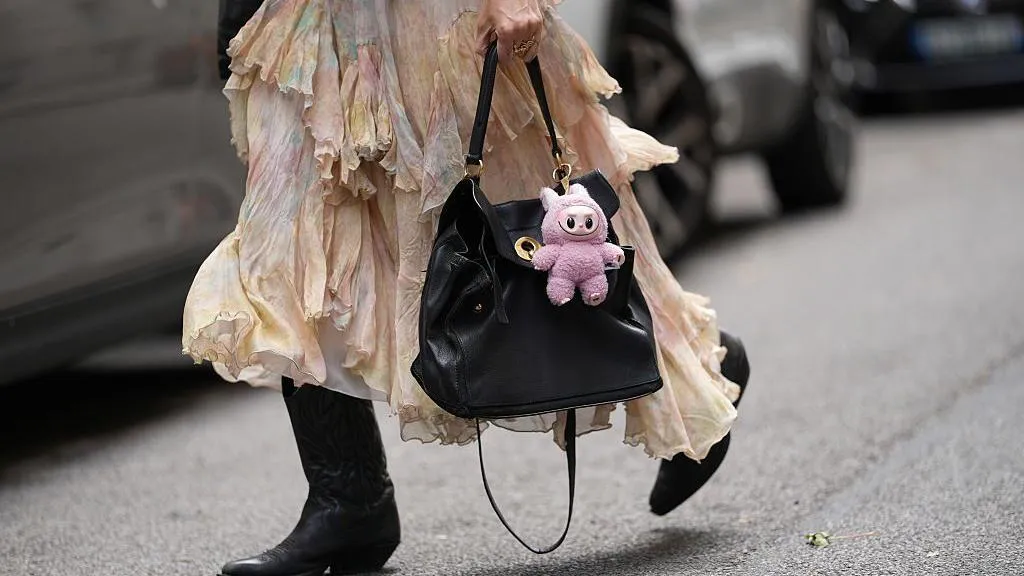
It was a fashion statement, a status symbol, a cultural moment.
Social media caught fire.
In Canada, fans like Fiona Zhang say the hype makes the toy even more desirable: “The more popular it gets, the more I want it.”
Even state media in China jumped in, hailing Labubu as an icon of “cool China” and proof that Chinese creativity has gone global.
For a nation keen on exporting soft power, Labubu’s success is more than cute—it’s strategic.

What Marketers Can Learn
Labubu didn’t conquer the world by being safe or slick.
It did it by being real, raw, and resonant.
And in doing so, it proved that even in an age of AI, algorithms, and attention deficits, the right story—told the right way—can still travel far and wide.
Weird, wonderful, and wildly successful.
Labubu isn’t just a toy.
It’s a marketing phenomenon.
And we’re all still watching.