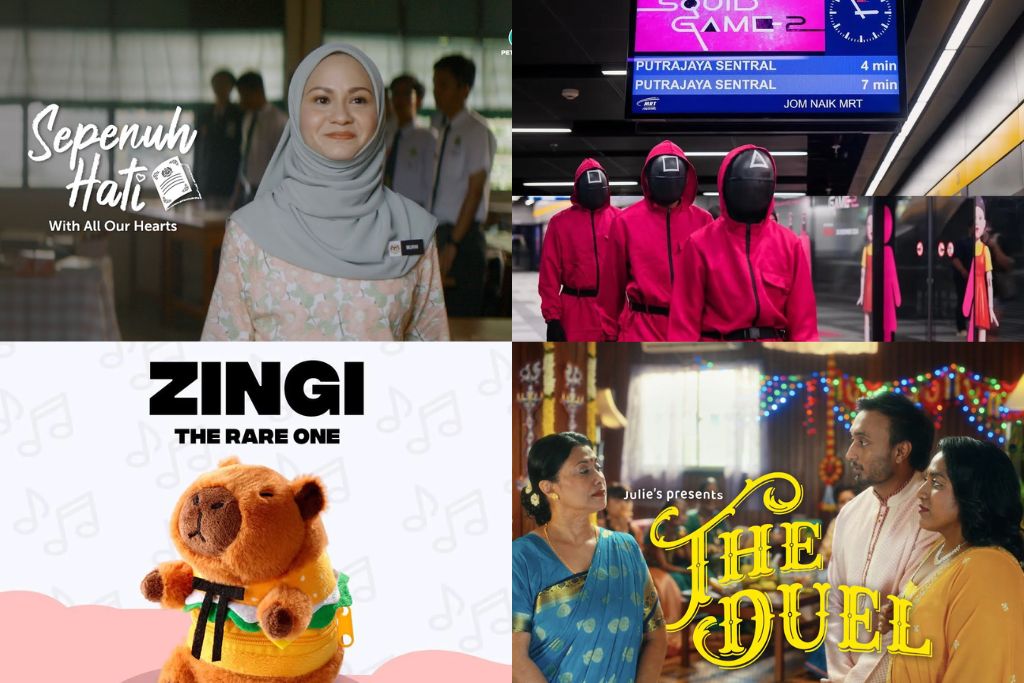
There’s a moment, somewhere between a capybara plushie and a Petronas tearjerker, when you realise something quietly radical happened in Malaysian marketing this year.
Brands stopped shouting. And started belonging.
For all the talk about AI, data lakes, and pipelines to nowhere, 2025 will be remembered as the year local marketers rediscovered an old truth: the campaigns that win hearts are never the loudest.
They’re the ones with soul.
The ones that feel unmistakably, unashamedly Malaysian — chaotic, sentimental, hilarious, tender, contradictory… and utterly human.
Here’s the truth of 2025, told through the work that made us laugh, cry and — most dangerously — care.
When Petronas Swapped Nostalgia for Honesty
Petronas doing a festive film is a bit like watching Malaysia play football.
You hope for magic, expect heartbreak, and occasionally get both.
But this year, With All Our Hearts tossed aside nostalgia for something closer to the bone. Gone were the sweeping violins and sepia childhoods. Instead, the film leaned into Malaysian candour — that way we tell the truth by pretending it’s a joke.
It worked. It felt real. It felt lived.
It felt like someone finally said, “Enough with the postcards. Let’s show the country as it actually laughs, argues, works, and loves.”
And audiences responded. Not with likes — with recognition.
Etiqa Didn’t Make an Ad. They Recognised a Malaysian Instinct
Etiqa’s Born here with you. Always here for you. is one of those rare brand films where nothing is being sold — and everything is being said.
No policies. No premiums. No breathless calls to “learn more.” Just a Pakcik sliding a plate across a counter and saying, “Makan dulu, bayar kemudian.”
In that small gesture, more brand equity is built than most insurance ads manage with three minutes of jargon.
What Etiqa captures isn’t sentiment. It’s behaviour.
The quiet, everyday kindness Malaysians offer without thinking: a stranger covering someone short at a parking machine, a stall owner ushering a passer-by under his umbrella, a neighbour doing the thing no one asked for, because it’s simply what we do.
In a year of loud, performative marketing, Etiqa went the other way. No spectacle. No swelling music. Just truth, filmed with restraint and respect.
Etiqa didn’t try to be loved. They behaved like family — and Malaysians felt the difference.
Julie’s Biscuits Did It Again, Without Even Trying
Julie’s has a habit of showing up during festive seasons and making every other brand feel like they’re trying too hard.
This Deepavali, they did it again — without noise, without gimmicks, without the usual festival clutter.
Their 2025 film didn’t lean on tropes of lights, kolams or choreographed cheer.
Instead, it told a small story that felt big: a family rediscovering each other through the awkwardness, warmth, and unspoken forgiveness that only Deepavali can coax out of us.
No melodrama. No moral-of-the-story banners. Just the gentle honesty of people trying — and sometimes failing — to love each other properly.
Julie’s didn’t release a Deepavali commercial. They released an emotional truth wrapped in tenderness.
And Malaysians — tired of overproduced “festive formulas” — recognised the sincerity instantly.
Because that’s Julie’s real superpower. They don’t make ads.
They make invitations to feel something real.
KFC’s Kepcibaras: Proof That Malaysia Will Love Anything Fluffy
And then came the plushies.
Capybaras, no less — three rotund fugitives who escaped the zoo and made straight for fried chicken.
The KFC x Naga DDB Tribal “Kepcibara” drop became a textbook example of how to engineer hype without manufacturing desperation.
It was silly. It was light-hearted. It was the kind of campaign a spreadsheet could never justify.
Which is precisely why it worked.
2025 will be known for many things, but history should file it under: The Year of the Malaysian Marketing Plushie Economy.
MR.DIY’s Deepavali Film That Glowed Brighter Than the Bulbs
Some brands spend a fortune trying to find their “purpose”. MR.DIY just turned on a light.
The Gift of Light was a Deepavali film that reminded Malaysians how powerful a small gesture can be.
A bulb. A neighbour. A simple act. No melodrama. No lecture on values.
Just the straightforward kindness we’ve forgotten to celebrate.
It’s astonishing how refreshing sincerity feels in a market overdosing on cleverness.
Grab’s Malaysia Day Stories Proved That Patriotism Isn’t a Hashtag
While many brands slapped Jalur Gemilang filters on their logos, Grab went a different route.
They handed the mic to riders, drivers, and everyday strangers who make the country work.
The Through Our Eyes, Malaysia series was understated but piercing.
A mother travelling across the city to her second job. A migrant worker helping a stranded commuter. A driver who carries half the nation’s secrets in his glove box.
It wasn’t about Malaysia the idea. It was about Malaysia the daily choreography.
Patriotism, without the capital “P”.
CelcomDigi Reminded Us That Raya Isn’t Just Nostalgia With Ketupat Props
Every Raya film wants to make you cry. Most succeed only in making you roll your eyes.
But CelcomDigi’s Without Saying Goodbye felt different — an unvarnished story about grown children, ageing parents, and the gap between what we feel and what we manage to say.
It was mature. Painful in places. Quietly triumphant in its final moments.
Not the usual formula — which is exactly why it connected.
Astro Won Gen Z Back the Only Way That Works: By Not Pretending to Understand Them
Astro’s Hari-Hari Astro push was a masterstroke because it refused to cosplay youth culture. No cringey slang. No comic skits written by 50-year-olds guessing what TikTok sounds like.
Instead, Astro built the entire campaign on creators who already had an authentic rapport with fans. The result was a chaotic, charming, culturally fluent stream of short-form entertainment.
This wasn’t “relevance”. This was humility — and Gen Z rewarded it.
RHB’s SME Documentaries Reminded Us That Hope Is Still a Marketable Asset
In a year when every brand tried to be funny, RHB chose to be earnest — and surprisingly, it paid off.
Their Real People. Real Progress. documentary series followed small business owners rebuilding their lives with grit, humour, and more than a little heartbreak.
The magic wasn’t the cinematography. It was the dignity.
A bank telling stories not about finance, but about the fragile courage of starting again.
Unifi Found the Sweet Spot Between Micro-Drama and Malaysian Reality
Micro-dramas have quietly become Malaysia’s new advertising currency.
Short. Emotional. Shareable.
Unifi’s Rumah Yang Kuat perfected the recipe — a raw little film about digital divides, family tension, and the people we fail to appreciate until life forces the issue.
It wasn’t glossy. It wasn’t patronising. It felt like something you might overhear through a neighbour’s window.
Sometimes, truth is more cinematic than any script.
Watsons Showed That Inclusivity Wins — Only If You Mean It
The All Kinds of Beautiful campaign wasn’t revolutionary in idea, but in execution.
A mixed pool of creators, street-level interviews, real people with real quirks — not “relatable models”, but actual Malaysians.
It wasn’t aspirational beauty. It was accessible beauty.
Audiences embraced it because it felt like the mirror finally stopped lying.
The Netflix–MRT Takeover Proved That Public Spaces Are Asia’s New Media Channel
Netflix Malaysia’s Squid Game activation at Ampang Park MRT reminded marketers of something we keep forgetting: OOH doesn’t have to be a backdrop. It can be theatre.
Pink guards. The Ddakji man. Young-hee towering over Malaysians on their morning commute.
It wasn’t a promo — it was an invitation to play.
And Malaysians did. Gleefully.
The Tiny Billboards That Brought Back Big Print Energy
If there was one campaign that proved old-school craft still matters in a hyper-digital year, it was the tiny billboards Fishermen Integrated created for Subway and Grab Malaysia.
To announce Subway joining Grab Signatures, the team didn’t flood feeds with banners. They went small. Literally.
Six miniature billboards — each exactly six inches wide, just like the iconic sub — were installed across Klang Valley MRT stations. Tiny posters. Tiny Grab riders. Tiny subs. Immense charm.
Commuters stumbled on them at Muzium Negara, Bukit Bintang and other stations, snapped photos, and turned the hunt into a social scavenger game. The work looked like classic print ads shrunk in the wash and accidentally left in the real world.
No AR gimmicks. No screaming copy. Just a single, clever thought: If the sandwich is famously six inches, why shouldn’t the billboards be too?
In a year owned by films, plushies and long-form storytelling, these little physical ads reminded everyone of something important: a smart static idea, executed with love, can still stop people in their tracks.

What Did 2025 Really Teach Us?
Not that AI will change everything. Not that data is the new oil. Not that short-form video is our new religion.
Not at all.
The real lesson is obscenely simple:
The campaigns Malaysians loved most this year were the ones that remembered they were talking to people, not “users”.
People who laugh at silly plushies.People who ache for home. People who miss their parents. People who want to feel seen, not targeted.
That’s the quiet rebellion at the heart of 2025.
Not innovation. Not disruption. Just humanity, in all its messy splendour.
And if the industry has the courage to keep walking down that road, 2026 might just surprise us even more.