When a US$2 billion cheque clears quietly, it rarely stays quiet for long.
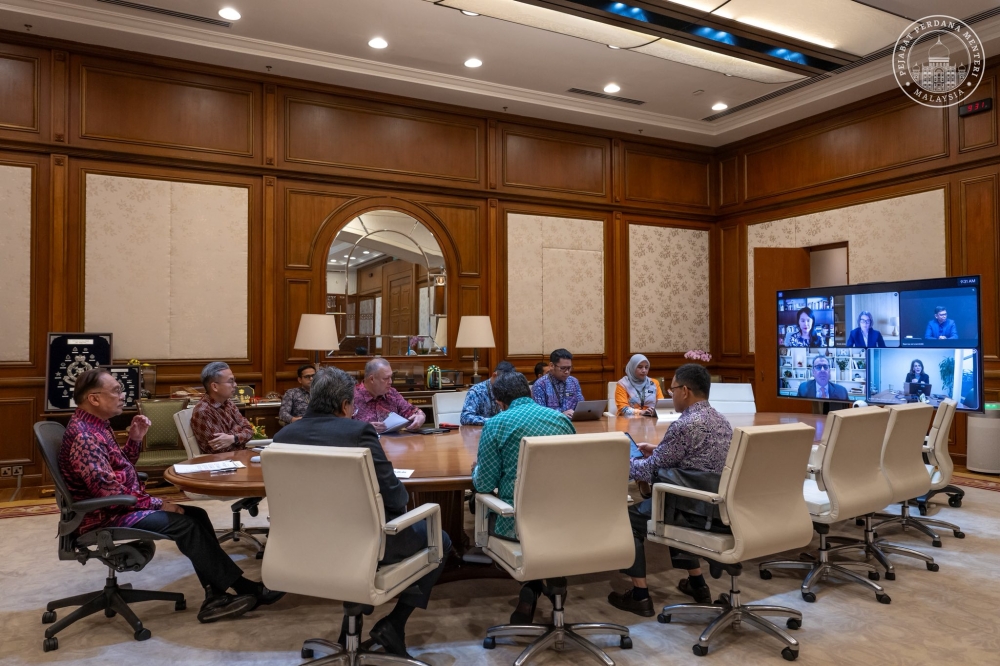
This week, Prime Minister Datuk Seri Anwar Ibrahim confirmed that Google’s US$2 billion investment into Malaysia — first announced in May 2024 — is not only on track, but exceeding initial expectations.
The project covers the development and operation of Google’s first data centre and cloud services infrastructure here.
By 2030, it is projected to generate US$3.2 billion in economic impact and create 26,500 jobs.
That’s the headline.
The subtext is more interesting.
Not Just Steel and Servers
Data centres used to be treated like industrial utilities — faceless buildings full of blinking lights.
Today, they are geopolitical statements.
When Google plants infrastructure in a market, it is making a long-term bet on regulatory stability, energy reliability, digital talent and policy coherence.
In Malaysia’s case, the bet aligns neatly with Putrajaya’s ambition to position the country as a regional hub for secure data flows, cloud computing and artificial intelligence.
This isn’t just about storage.
It is about sovereignty.
As more brands run marketing automation, retail analytics, CRM ecosystems and AI-led customer service through hyperscale cloud platforms, where that infrastructure sits begins to matter.
Latency, compliance, data residency laws — these are no longer IT footnotes.
They shape how marketers build customer journeys.
The 26,500 Job Question
The projected 26,500 jobs by 2030 deserves scrutiny.
These won’t all be engineers in hoodies writing code.
Data centre ecosystems create layered employment: construction, energy management, cooling systems, cybersecurity, compliance, managed services, and — critically — downstream digital services.
Agencies building AI-enabled creative pipelines.
Martech consultancies integrating cloud-based CDPs.
Start-ups training models on local consumer behaviour.
For Malaysia’s marketing and communications sector, this means something practical: infrastructure reduces friction.
When compute power and AI services are closer to home, experimentation becomes cheaper and faster.
A retailer in Subang can test predictive inventory models without routing everything offshore.
A financial brand in KL can deploy machine learning fraud detection with lower latency.
A media group can scale programmatic operations without worrying about cross-border bottlenecks.
Reading the Timing
The announcement comes amid heightened global scrutiny around AI governance, data localisation and tech sovereignty.
Malaysia is drafting its own AI governance framework, and regional neighbours are racing to position themselves as digital hubs.
In that context, Google’s continued engagement is a signal — not just to policymakers, but to capital markets and multinational brands.
It says: Malaysia is stable enough for long-term digital infrastructure.
For marketers, that matters. Because global brands often follow infrastructure.
If hyperscalers expand footprint, regional HQ conversations follow.
If cloud investment deepens, enterprise transformation budgets tend to increase.
Energy, ESG and Optics
The elephant in the server room is energy.
Data centres are power-hungry assets.
Malaysia’s pitch as a digital hub will increasingly hinge on sustainable energy commitments.
Brands operating on these platforms will face ESG scrutiny from consumers and shareholders alike.
If Malaysia can pair digital growth with credible renewable energy pathways, it strengthens the narrative.
If not, “AI hub” risks clashing with climate commitments.
For brand custodians, this is not academic.
Sustainability messaging cannot sit on one slide while infrastructure reality tells another story.
A Quiet Confidence Play
Perhaps the most understated element in the Prime Minister’s remarks was consistency.
The government’s message: announced investments will be facilitated and supported.
In an era where tech projects are frequently derailed by regulatory whiplash, predictability becomes competitive advantage.
Malaysia does not need to outspend Singapore or outscale Indonesia. It needs to be dependable.
Google’s US$2 billion commitment — and the projected US$3.2 billion economic impact — suggests that, at least in this instance, the dependability narrative is holding.
For Malaysia’s marketing community, the takeaway is simple: infrastructure precedes imagination.
If the pipes are being laid, the next question is what brands will build on top of them.
Because when hyperscalers commit, ecosystems shift.
And when ecosystems shift, so do opportunities.
The data centre may look like a warehouse.
But in 2026, it is closer to a launchpad.
Share Post:

Haven’t subscribed to our Telegram channel yet? Don’t miss out on the hottest updates in marketing & advertising!