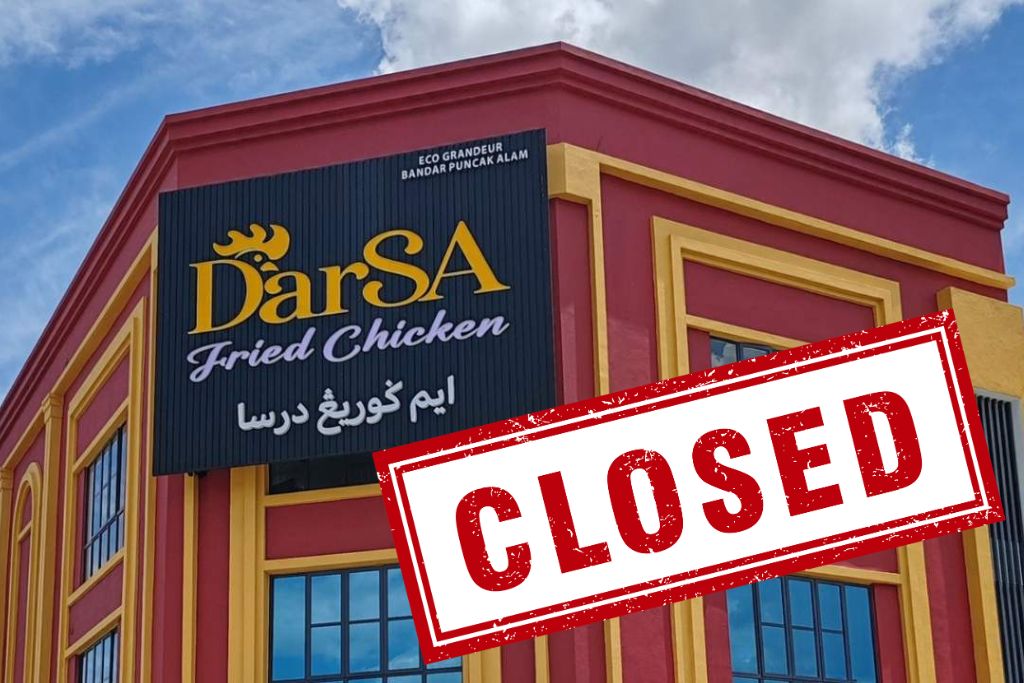
The closure of DarSa Fried Chicken’s (DFC) Bangi outlet has been greeted online with a noisy mix of schadenfreude, moral judgement and political point-scoring.
But for marketers and brand leaders, the episode is less about karma and more about what happens when a brand confuses momentum with meaning.
DFC did not fail because it was Bumiputera-owned, nor because it rode a moment shaped by geopolitics and boycotts.
Many brands are born out of cultural moments and do just fine.
The deeper issue is this: when identity becomes the headline, everything else is scrutinised more harshly—price, tone, service, response time, even who types the reply on Facebook at 11pm.
In today’s hyper-connected economy, brands are no longer judged in silos. They are assessed holistically and relentlessly.
Identity Is Not a Value Proposition
There is nothing inherently wrong with positioning a business as local, halal, Bumiputera-owned, or values-driven. In fact, authenticity rooted in lived experience can be a strength.
The problem arises when identity is mistaken for differentiation.
Consumers do not queue for identity alone.
They queue for taste, value, consistency, experience—and increasingly, emotional reassurance that the brand “gets it”.
When a brand’s strongest hook is who owns it rather than why it’s better, it leaves itself dangerously exposed once scrutiny begins.
DFC entered a fiercely competitive category where margins are thin, loyalties are habitual, and global players have spent decades optimising supply chains, menu engineering and price psychology.
In such an environment, a single misstep is never just a misstep—it becomes a stress test of the entire brand promise.
The Social Media Trap: One Voice, Many Consequences
Much of the damage attributed to DFC can be traced to a moment that marketers know all too well: a poorly handled social media exchange.
The lesson here is not about racism alone; it is about operational maturity.
Today, a brand’s social channels are not “just marketing”. They are frontline reputation assets.
Every reply carries the weight of the organisation, whether typed by a CEO or a junior administrator.
The public no longer distinguishes between intent and impact; they respond to what they see and how quickly a brand owns it.
Apologies, explanations and press conferences matter—but they work only when the underlying brand equity is strong enough to absorb shock.
For young brands still earning trust, credibility is fragile and forgiveness is not guaranteed.

Meritocracy Is Not Cruel—It Is Consistent
One recurring theme in public commentary around DFC is meritocracy: the idea that businesses ultimately succeed or fail on fundamentals, not slogans.
This may sound harsh, but it is also how markets function.
Consumers today are pragmatic. They are not loyal to causes at the expense of quality, nor are they blind to price-value imbalances—especially in a cost-of-living climate where discretionary spending is under pressure.
Emotional alignment may spark trial, but repeat purchase is earned, not gifted.
Even campaigns like “Buy Local” or “Buy First” succeed only when supported by compelling reasons to return.
Without product excellence, R&D, operational discipline and continuous brand investment, advocacy remains performative rather than transactional.
What This Means for Brands Today
The DFC episode is less a morality tale and more a cautionary one.
It reminds marketers that:
Brands that survive turbulence do so by narrowing their focus, not widening their rhetoric.
They invest in taste, training, consistency, listening and innovation—long before they invest in symbolism.
The Real Lesson
The real takeaway is not that “racism doesn’t sell” or that “karma caught up”. Those are convenient narratives.
The more useful insight is this: brands that outsource their value proposition to identity, outrage or sentiment eventually run out of runway.
In an ultra-competitive economy, the only sustainable advantage is doing the basics exceptionally well—then doing them better than yesterday.
Everything else is noise.