In Malaysia, a brand name is never just a name.
It is a signal — sometimes cultural, sometimes religious, sometimes political — whether the brand owner intends it or not.
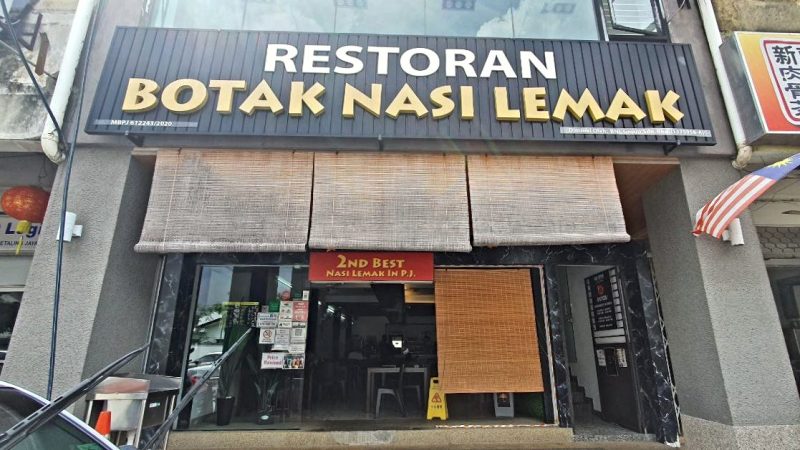
The recent online backlash directed at Botak Nasi Lemak, a Chinese-owned eatery that does not hold halal certification and has never claimed to, is less a story about food than it is about expectations, assumptions, and how consumers now read meaning into brands far beyond what is explicitly stated.
From a marketing perspective, this episode offers several uncomfortable but necessary lessons.
The Semiotics of “Nasi Lemak”
Nasi lemak is not just a dish.
It is a national symbol, emotionally coded as Malay, Muslim, and local.
When a non-Muslim-owned brand uses that signifier, some consumers instinctively read it as a promise — not because the brand made one, but because cultural habit has trained them to expect it.
Botak Nasi Lemak did not claim halal status.
It did not use “pork-free” disclaimers.
It did not lean into Muslim-targeted cues.
Yet the outrage suggests that for some audiences, the mere use of Bahasa Malaysia and a national dish created an implied contract.
This is a dangerous assumption — and not one brands alone can be blamed for.
Transparency vs. Projection
From a governance and branding standpoint, Botak Nasi Lemak did little wrong.
There was no deceptive messaging.
No misleading iconography.
No implied religious endorsement.
The backlash instead exposes a growing consumer behaviour problem: projection.
Consumers increasingly fill informational gaps with their own biases, then hold brands accountable for expectations that were never set.
In marketing terms, this is not a failure of communication — it is a failure of interpretation.

Ownership as a Proxy for Trust
Perhaps the most troubling dimension of the episode is how quickly halal discourse slid into ownership scrutiny and racial framing.
Halal certification exists to standardise process, not ethnicity.
Yet the debate veered toward who owns the business rather than what the business practices.
From a brand trust lens, this reveals a deeper issue: in an era of institutional distrust, some consumers no longer trust systems — they trust “people like us”.
Ownership becomes shorthand for safety, even when logic and consistency collapse under scrutiny.
Ironically, some Muslim-owned eateries also operate without halal certification yet are afforded automatic trust.
That contradiction is not a branding issue. It is a societal one.
The Cost of Over-Signalling
For marketers, there is a quiet warning here.
In Malaysia’s hyper-sensitive landscape, over-signalling — whether cultural, religious, or national — carries risk if it is not backed by explicit clarification.
At the same time, discouraging non-Malay businesses from using the national language or national dishes would be a cultural loss, not a gain.
Brands should not be penalised for participating in shared culture — especially when they do so without false claims.
A More Mature Consumer Compact
The simplest advice offered in the debate remains the most sensible: if in doubt, don’t patronise.
For brands, the lesson is not to retreat, but to be precise.
For consumers, the lesson is to distinguish between assumption and assertion.
And for marketers watching this unfold, the takeaway is clear: in Malaysia today, branding is no longer just about positioning.
It is about navigating unspoken expectations in a trust-fractured environment — where clarity matters, but fairness matters even more.
Because when everything becomes a signal, the real danger is not deception — it is misunderstanding.