As businesses across Asia-Pacific navigate a rapidly changing environment shaped by artificial intelligence, geopolitical tensions, regulatory change and rising stakeholder expectations, communications is becoming increasingly central to corporate decision-making.
The challenge is no longer simply about managing media relations or delivering consistent messages. Organisations must now understand shifting policy priorities, interpret complex stakeholder expectations, protect reputation in real time and make decisions that reflect the political, cultural and commercial realities of individual markets.
Few leaders understand this transformation as closely as Nitin Mantri, President, APAC We. Communications. As one of Asia-Pacific’s most recognised communications and public affairs leaders, Mantri brings a unique regional perspective on how organisations are navigating increasing geopolitical complexity, stakeholder scrutiny, AI disruption, sustainability expectations and reputation risk across the region.
In this exclusive interview with MARKETING Magazine Asia, Nitin Mantri discusses how organisations should approach AI responsibly, why reputation must be treated as a business asset, the growing strategic importance of public affairs and what will define the next generation of communications advisory services.
AI is changing how organisations listen, analyse and engage with stakeholders. It allows organisations to process information faster, generate insights at scale, and engage stakeholders in ways that weren’t possible before. But although AI can accelerate communication, it cannot replace human judgment.
The real challenge is not whether organisations should use AI, but how they should use it responsibly. Communications is fundamentally about people, trust, culture — that’s a human job.
This matters more in Asia-Pacific than almost anywhere else, because the region isn’t monolithic. Here, the same AI-generated message can resonate in one market and undermine credibility in another. Political systems, regulatory expectations, media ecosystems and cultural norms differ significantly across the region, making local judgment indispensable.
Across the region, governments are pushing toward becoming AI-forward nations, but most businesses are still at simple automation levels — chatbots and simple predictive tools rather than deeper application. That gap between ambition and practical use is exactly where our Future of Communications APAC research also lands. Technology is outpacing teams’ confidence in applying it. The organisations that get this right treat AI as a tool for better decisions, not a replacement for the people making them.
The competitive advantage won’t come from using more AI than everyone else. It will come from combining AI’s speed with human judgment, local insight and trusted relationships. In communications and public affairs, technology can improve decisions, but credibility will always remain a human responsibility.
Yes, it’s harder — and it’s not just about misinformation moving faster. What’s changed is that reputation is no longer built primarily on what a company says about itself. It’s built on what people experience, observe and share, often before the company has said anything at all. In many ways, we are moving from an attention economy to a reputation economy, where trust becomes a critical competitive advantage.
Leaders need to think about reputation as a business asset, and less as a communications outcome — which means transparency, faster response, and closer alignment between what leadership says and what the organisation actually does.
Our Brands in Motion research has consistently shown a gap between how comms teams rate their own effectiveness and how audiences actually experience that work. Closing that gap, not just producing more content, is where the real reputation work happens now.
Businesses today operate in an environment where policy has become a key driver of competitiveness. Across Asia-Pacific, government decisions increasingly shape market access, investment, supply chains, sustainability requirements, technology adoption and long-term growth. As a result, public affairs can no longer be viewed as a supporting function that engages only after policies are announced.
The most effective public affairs teams are integrated into business strategy from the outset. They help leadership understand emerging policy trends, anticipate stakeholder expectations, and identify where government priorities and business objectives intersect. That enables organisations not only to manage regulatory risk but also to identify opportunities for innovation, investment and long-term partnerships.
Equally important, public affairs today is about contributing constructively to policy conversations rather than simply responding to them. Organisations that build trusted relationships with policymakers, regulators and broader stakeholders before critical decisions are made are better positioned to anticipate change, navigate complexity and earn credibility over the long term. Those relationships also create strategic equity that organisations can draw upon when entering new markets, pursuing major investments, or responding to unexpected policy or geopolitical shifts.
Ultimately, businesses that treat public affairs as a strategic capability, not just a government relations function, will be better equipped to manage risk, shape opportunity and build long-term resilience in an increasingly dynamic policy environment.
Southeast Asia remains one of the world’s most compelling growth regions. It is home to a young and increasingly affluent population, rapid digital adoption, growing investment in infrastructure and manufacturing, and governments that are actively positioning themselves as destinations for innovation and regional supply chains. For businesses, the opportunities extend well beyond market growth; they include becoming part of the region’s next phase of economic transformation.
At the same time, Southeast Asia is often misunderstood as a single market. It is anything but. Each country has its own political system, regulatory environment, cultural context and pace of reform. A strategy that works well in one market may need to be fundamentally adapted in another.
Malaysia illustrates this well. The government’s ambitions around AI, digital infrastructure and advanced manufacturing are creating significant opportunities for investment and innovation. But the policy priorities, regulatory frameworks and stakeholder expectations that shape success in Malaysia differ markedly from those in Indonesia, Vietnam, Thailand or the Philippines.
The biggest risk for businesses is assuming that regional scale can be achieved through a one-size-fits-all approach. Increasingly, success depends on understanding local policy priorities, building trusted stakeholder relationships and staying ahead of regulatory developments rather than reacting to them.
Just as importantly, businesses need to recognise that trust is built locally. Reputation may be global, but it is earned market by market through meaningful engagement with governments, employees, customers, communities and the media. Communications therefore cannot simply be about consistent messaging; it must reflect local realities, cultural context and stakeholder expectations.
Organisations that invest early in stakeholder relationships and transparent communication build credibility that helps them navigate periods of change and creates the strategic equity to seize new opportunities when they emerge.
Ultimately, the organisations that succeed in Southeast Asia are those that combine a clear regional vision with strong local execution. They treat communications, public affairs and stakeholder engagement not as support functions, but as strategic capabilities that build trust, strengthen resilience and create long-term competitive advantage.
Geopolitical uncertainty is no longer an episodic risk; it has become a structural feature of the business environment. Whether it’s shifting trade relationships, technology governance, supply chain resilience, industrial policy or sustainability regulation, businesses are operating in a world where geopolitical developments increasingly influence commercial decisions.
As a result, companies are integrating geopolitical and regulatory considerations much earlier into business planning. Decisions about where to invest, how to structure supply chains, which technologies to adopt and how to engage with governments are no longer made solely on commercial grounds; they are increasingly shaped by the broader policy and geopolitical environment.
This has also fundamentally changed the role of communications and public affairs. Organisations need a far more integrated approach to stakeholder engagement, ensuring that communication teams are aligned around a clear understanding of stakeholder expectations and emerging risks. In an environment where different audiences may interpret the same issue through very different political, cultural or commercial lenses, consistency, transparency and context become critical.
At the same time, periods of uncertainty also create opportunities. Organisations that have invested in trusted relationships with governments, regulators and other key stakeholders are better positioned to anticipate change, contribute constructively to policy discussions and respond with credibility when circumstances evolve. That trust becomes a form of strategic equity, helping organisations build resilience, protect reputation and navigate uncertainty with greater confidence.
Ultimately, reputation is no longer managed only through communications. It is shaped by the quality of an organisation’s decisions, the consistency of its stakeholder engagement and the trust it has built long before a crisis emerges.
The next era of communications advisory will be defined by integration, intelligence and strategic counsel. Clients are no longer looking for specialists who operate in silos; they are looking for trusted advisors who can help them navigate increasingly interconnected business challenges, in which reputation, policy, technology, regulation, and stakeholder expectations all influence one another.
That is why the role of communications consultancies is expanding well beyond traditional PR. Today’s clients need partners who can combine strategic communications with public affairs, issues management, AI and data, stakeholder engagement, and reputation advisory to provide a more integrated perspective. Increasingly, the value lies not in executing individual workstreams, but in helping leadership make better decisions in complex and uncertain environments.
At We. Communications, for example, this means treating AI not as a standalone service, but as part of a broader advisory approach that combines technology, data and human insight. The goal is to help clients better understand risk, identify opportunities and make more informed strategic decisions.
For communications leaders, storytelling will always remain an essential skill, but on its own, it is no longer enough. The leaders who remain relevant will be those who understand policy, business strategy, data, AI and geopolitics and who are comfortable advising at the leadership table, not just executing campaigns. They also must be exceptional listeners, capable of interpreting stakeholder expectations and translating complexity into clear, actionable advice.
Share Post:


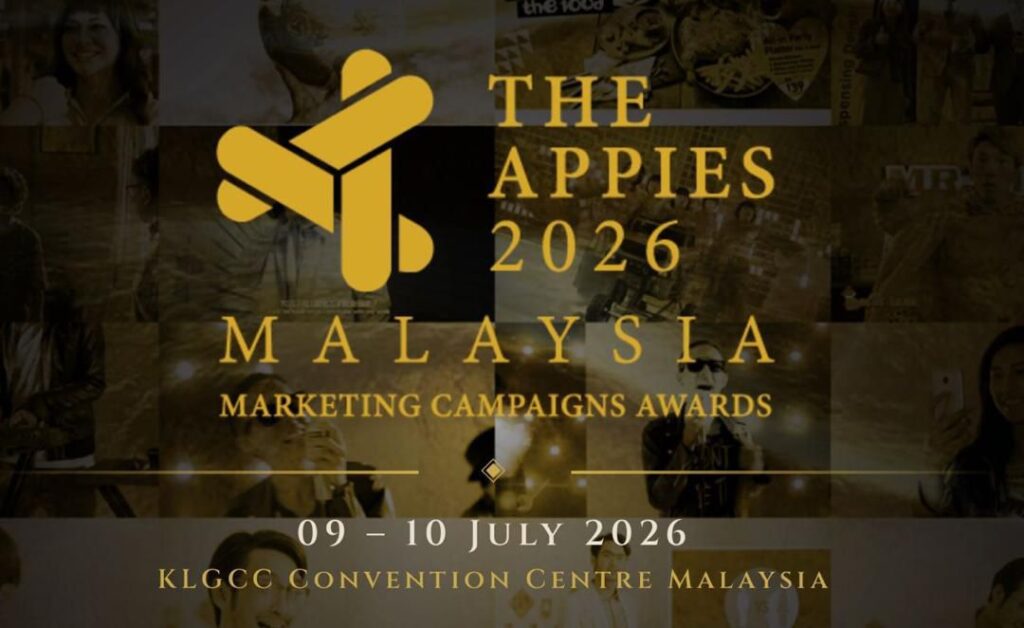
The APPIES is where Malaysia’s boldest campaigns, brightest ideas, and most impactful storytellers take the stage.
More than an awards show, it is the industry’s ultimate platform for creative, media, digital and marketing excellence, where live presentations meet live judging.
This is your chance to showcase work that moved audiences, shaped conversations, and delivered real results.
From breakthrough brand campaigns to innovative digital experiences, the APPIES celebrates the work that defines the future of marketing.
Step into the spotlight alongside the industry’s leading agencies, brands, creatives, strategists and changemakers.
Whether you are aiming for Gold, Silver, Bronze or the prestigious Best of the Best recognition, this is your moment to make history.
Your campaign deserves to be seen.
Your ideas deserve the stage.
Your work deserves the legacy.
KEY DATES
Haven’t subscribed to our Telegram channel yet? Don’t miss out on the hottest updates in marketing & advertising!