By The Malketeer
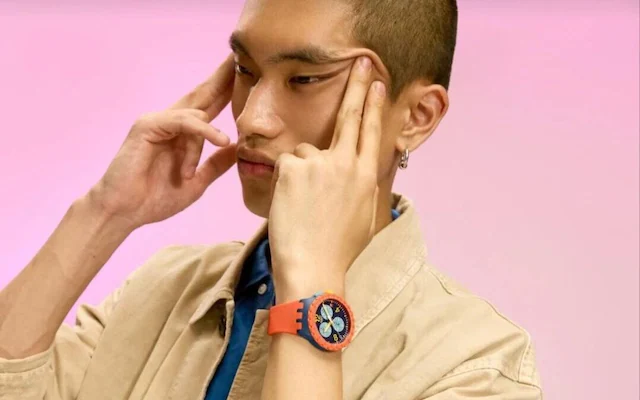
Over the weekend, the Swiss watchmaker issued a rare global apology after pulling campaign images featuring an Asian male model tugging at his eyes in the stereotypical “slanted eye” gesture.
For Chinese consumers, the gesture isn’t just tone-deaf—it recalls decades of racial taunts.
The backlash on Weibo was swift and fierce.
What puzzled many observers wasn’t just the offensive image itself, but how it managed to clear multiple layers of approval in a brand as seasoned as Swatch.
The Stakes in China
Swatch isn’t a small player in the region.
China, Hong Kong, and Macau together accounted for 27% of the group’s sales last year.
Yet even before this controversy, business had been shaky.
Revenues slumped nearly 15% in 2024 to CHF6.74 billion (US$8.4 billion), with China singled out for “persistently difficult market conditions.”
Add to that a new 39% US tariff on exports, and the timing of this reputational misfire could not be worse.
A quick apology in both Mandarin and English may soften the blow, but as Chinese fashion influencer Peter Xu (7 million followers on Weibo) put it bluntly: “It was pretty stupid to release images like those ones.”
Lessons for Global Marketers
Respect is the Ultimate Currency
Southeast Asia and China are not homogenous markets.
Success depends not just on exporting products, but on importing cultural intelligence.
What may be brushed off as “an oversight” in the West can turn into a cultural firestorm in Asia, amplified by social media ecosystems like Weibo, TikTok, and Xiaohongshu.
Swatch’s “slanted eye” blunder is not just another global brand misstep; it is a cautionary tale of what happens when cultural nuance is sacrificed at the altar of creative expression.
In a time when Asian markets are the growth engines for many multinationals, marketers cannot afford to forget the obvious: respect is the ultimate currency.
Share Post:

Haven’t subscribed to our Telegram channel yet? Don’t miss out on the hottest updates in marketing & advertising!